
Itera Observatory Hosts Total Lunar Eclipse Observation
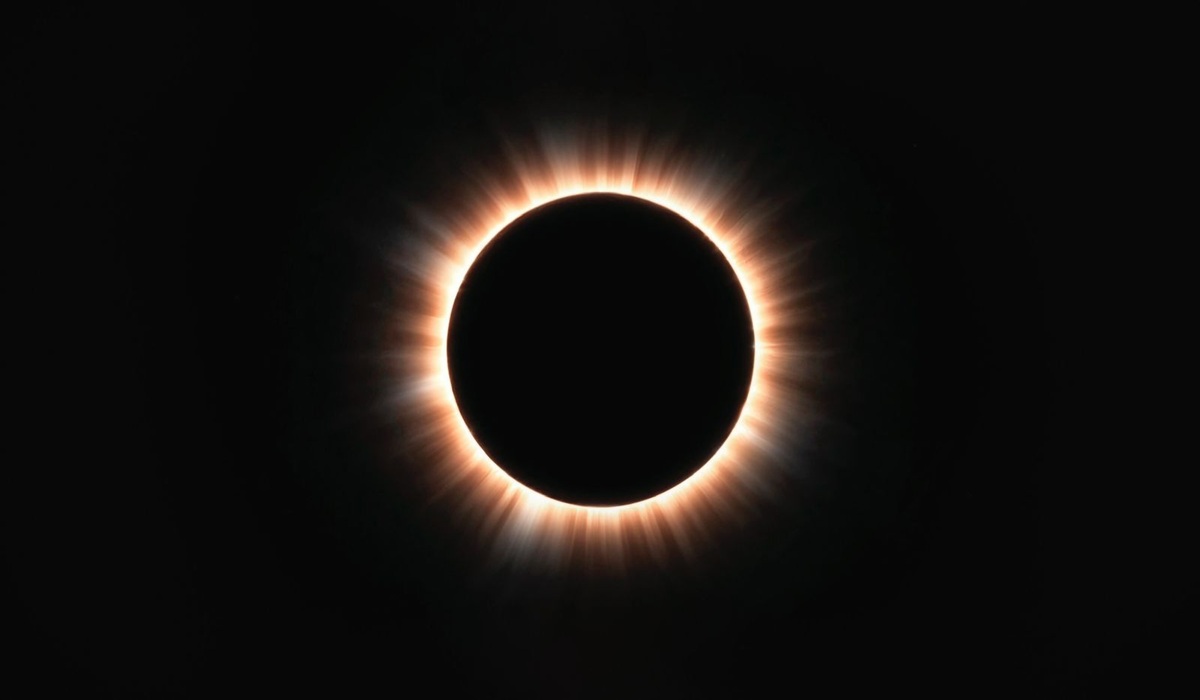
The Itera Lampung Astronomy Observatory (OAIL) will host observations of a total lunar eclipse phenomenon expected to occur on Tuesday, 3 March 2026.
The total lunar eclipse, coinciding with the holy month of Ramadan, will be observable across the Pacific region, including all of Indonesia.
Dr Annisa Novia I.P., S.Si., M.Si., a researcher at OAIL and lecturer in the Atmospheric and Planetary Science programme at Sumatera Institute of Technology (Itera), stated that observations will be conducted on a limited basis, centred at Itera’s General Lecture Hall (GKU) 2. The OAIL will utilise four telescopes: a Meade LX-90 8-inch f/10 Schmidt-Cassegrain, Baride Optics A-102 f/10 Refractor, Utopia III B, and Celestron C-11.
“A total lunar eclipse occurs when the Moon fully enters Earth’s umbral shadow, preventing direct sunlight from reaching the Moon’s surface. During this phase, the Moon will appear dark red or reddish-brown,” Annisa explained.
Based on geocentric calculations, the total lunar eclipse begins with the penumbral phase at 15:44 WIB (P1). The partial phase commences when the Moon enters the umbra at 16:50 WIB (U1). Totality occurs at 18:04 WIB (U2), with the eclipse peak at 18:33 WIB. The total phase ends at 19:02 WIB (U3), followed by the end of the partial phase at 20:17 WIB (U4), and the conclusion of the penumbral phase at 21:22 WIB (P4).
Annisa explained that at the Itera observation site, the Moon rises at 18:12 WIB. Consequently, when the Moon becomes visible above the eastern horizon, the eclipse will have already entered the total phase and be approaching its peak at 18:33 WIB. The initial eclipse phases (penumbral and partial) cannot be observed from Itera as the Moon remains below the horizon.
For this activity, OAIL is not opening observations to the public. The total lunar eclipse observation will be conducted internally by OAIL research staff, managers, assistants, and several students, academic staff, and lecturers for data collection and research purposes.
Nevertheless, the public can still witness the total lunar eclipse phenomenon through live streaming on OAIL’s official YouTube channel. OAIL invites the public to follow the broadcast to enjoy the beauty of the 3 March 2026 Total Lunar Eclipse from anywhere.
Overall, the eclipse’s duration from the beginning of the penumbral phase to its conclusion will last 5 hours, 41 minutes and 51 seconds. Although blocked from direct view during the early phases at Itera, the Moon will not become completely dark. Earth’s atmosphere refracts red sunlight onto the Moon’s surface, causing it to appear orange to dark red.
On 3 March, the total lunar eclipse will be visible in the evening in East Asia and Australia, and throughout the night across the Pacific region.