
ITB Environmental Expert: RDF Plant the Most Suitable Solution to Tackle Jakarta's Waste
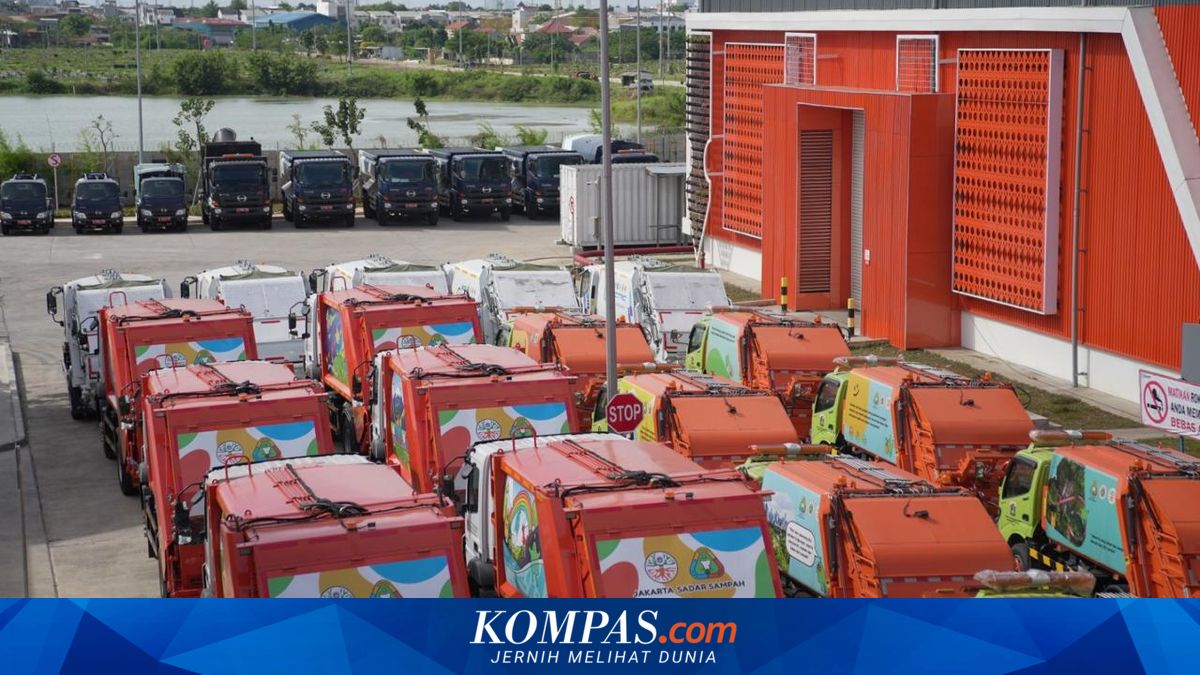
JAKARTA – Haryo S Tomo, an environmental engineering expert from Institut Teknologi Bandung (ITB), considers the refuse derived fuel (RDF) plant to be one of the most suitable solutions for addressing Jakarta’s waste problem, which reaches 7,000 to 8,000 tonnes per day. According to him, the RDF plant complements the waste management system already implemented by the DKI Jakarta Provincial Government, from temporary collection points (TPS) to final disposal sites (TPA). “The position of the RDF plant is as a complement to the existing waste management hierarchy in Jakarta, namely TPS and TPA. Its position is intermediate between TPS and TPA, using drying technology. Compared to other waste processing methods, this technology is appropriate for tackling Jakarta’s waste,” Haryo told Kompas.com on Thursday (26/2/2026). As a major city, Jakarta faces serious challenges in waste management. Based on data from the Jakarta Central Statistics Agency (BPS) for 2022–2023, there are more than 800 to 900 TPS scattered across the five regions of DKI Jakarta, including TPS Reduce-Reuse-Recycle (3R) and pool containers. Waste from these points is transported by around 1,300 trucks every day to the Bantargebang TPA in West Java. Quoted from Kompas.com on Monday (15/12/2025), the TPA, which has been operating since 1989, has now reached about 80 per cent capacity, with waste piles reaching 40–50 metres high. The Bantargebang TPA is estimated to face a capacity crisis in 2030–2031. The Bantargebang RDF facility can process up to 2,000 tonnes of waste per day, consisting of 1,000 tonnes of new waste and 1,000 tonnes of old waste. The processed output is sent to offtakers as an alternative fuel replacing coal. The Environmental Agency (DLH) then built a second RDF plant in Rorotan, North Jakarta, in May 2024. After several trials, the Rorotan RDF Plant officially began operations in December 2025. This facility has a capacity of 2,000 to 2,500 tonnes of waste per day, but currently processes only 600-700 tonnes per day following evaluations and input from local residents. On that occasion, Haryo explained that the mixed and easily degradable nature of Jakarta’s waste makes initial processing at the TPS level not always optimal. Waste that cannot be processed at the TPS is then processed at the RDF plant through shredding, further sorting, and drying. “In other regions, waste processing is done at the TPS level with destruction processes. The DKI Jakarta Provincial Government takes a different approach because intermediate processing is carried out at the RDF plant with drying. The results can be utilised by industry,” said Haryo. In terms of capacity, the Bantargebang RDF Plant can process 1,000 tonnes of new waste per day, while the Rorotan RDF Plant can reach 2,500 tonnes per day. If both operate at maximum, up to 3,500 tonnes of waste per day could potentially avoid being landfilled at the Bantargebang TPA. “If calculated from the waste production of 7,000 to 8,000 tonnes per day, that reduction is quite significant. This is a good step,” said Haryo. He emphasised that the main goal of the RDF plant is not to produce new products, but to reduce the burden of waste accumulation at the Bantargebang TPA. Therefore, improvements in operational governance, starting from optimal source separation followed by transportation, residue processing, and odour control, are still needed to minimise impacts on the community.