
Italian Oil Giant Discovers Jumbo Gas Reserves in Indonesia, Here's the Amount
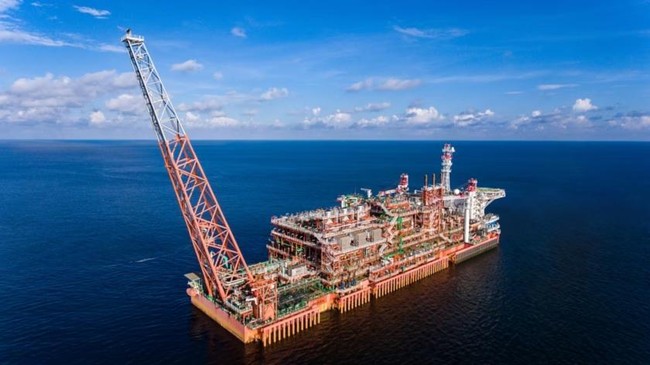
Jakarta, CNBC Indonesia - Italian oil and gas giant Eni has discovered a new massive gas reserve in Indonesia. The discovery comes from the Geliga-1 exploration well drilled in the Ganal Block, Kutai Basin, off the coast of East Kalimantan.
Energy and Mineral Resources Minister Bahlil Lahadalia revealed that the Geliga-1 well exploration results indicate potential gas resources of around 5 trillion cubic feet (Tcf) and 300 million barrels of condensate. This find is located in the Ganal Working Area (WK), operated by Eni with an 82% ownership stake, while the remaining 18% is held by Sinopec.
According to Bahlil, this discovery serves as a positive signal for efforts to strengthen domestic energy supplies amid continuously increasing demand. The exploration involving the Italian energy company Eni confirms that Indonesia’s oil and gas potential remains very significant, particularly in the Kutai Basin, East Kalimantan, which continues to show promising prospects.
Bahlil then expressed appreciation to Eni for the success of the discovery, providing evidence that Indonesia still has great opportunities to optimise its oil and gas potential as a pillar of national energy resilience and efforts towards energy self-sufficiency.
“In an era where almost the entire world is now safeguarding their reserves, once again we give thanks to God that this (discovery) is a blessing given, and we must truly focus on carrying out the President’s orders to seek new oil sources. This is the result of exploration, and after this they will also carry out development to conduct exploration in several other areas besides East Kalimantan,” said Bahlil, quoted on Friday (24/4/2026).
Bahlil explained that by 2028, the peak production that Eni can achieve is 2,000 MMSCFD, far exceeding its current production of around 600 to 700 MMSCFD. Production will continue to be increased until 2030, when it will be developed to 3,000 MMSCFD.
“This (discovery) is giant. Besides gas, we will also find that by 2028, we will produce condensate of around 90,000 barrels. And in 2029-2030, it can increase again to 150,000 barrels per day (from the Working Area managed by Eni),” he clarified.
He is optimistic that, along with the increase in Eni’s production, it aligns with the government’s strategy to meet domestic gas needs, and the increase in condensate production will also reduce oil imports.
The Geliga well was drilled to a depth of around 5,100 metres in water depths of about 2,000 metres. This discovery extends Eni’s record of successful exploration in the Kutai Basin, following the previous large reserve find in Geng North in 2023 and the Konta-1 well discovery in 2025. The results of this discovery affirm the significant potential of the gas system in that basin as well as the stability of resources in the area.
The Geliga discovery occurred after the final investment decision (FID) for several gas projects, namely Gendalo and Gandang (South Hub), as well as Geng North and Gehem (North Hub).
For its development, the North Hub project will utilise a new floating facility (Floating Production Storage and Offloading/FPSO). Its capacity reaches 1 billion cubic feet of gas per day (bscfd) and 90,000 barrels of condensate per day (bpd). In addition, this project will also utilise existing facilities, including the Bontang LNG plant.
Besides the Geliga well, Bahlil also mentioned the discovery prior to Geliga, namely the Gula well, which yielded around 2 TCF of gas and 75 million barrels of condensate. From both wells, the initial estimate of the combined Geliga and Gula resources has the potential to add production of up to 1,000 mmscfd of gas and 90,000 bpd of condensate.
In addition to impacting the increase in national oil and gas reserves, the jumbo gas discovery in the Ganal Block also opens opportunities for accelerating the development of integrated gas infrastructure. Eni is currently evaluating a development scheme that synergises with the North Hub project and existing facilities such as the Bontang LNG plant, to accelerate the monetisation of the discovery and optimise added value for the state.