
It Turns Out Iran Is Not an Arab Country, Here's Why
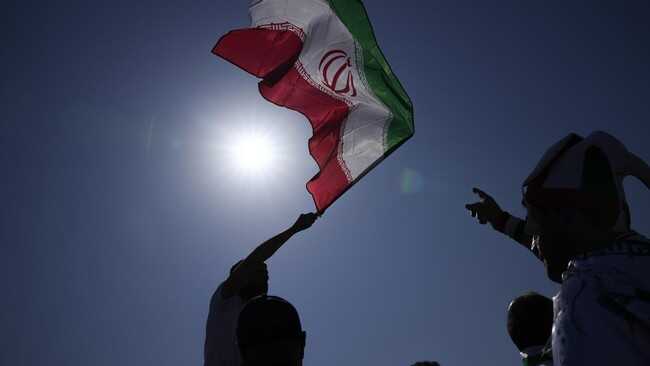
Iran is often erroneously regarded as an Arab country, whereas in reality Iran has clear cultural, language, and historical differences compared with Arab countries. When discussing the Middle East, many people might assume that all countries in the region are Arab, but that belief is far from accurate.
One of the main differences between Iranians and Arabs lies in ethnicity. The majority of Iran’s population comes from the Persian ethnic group, accounting for about 60% of the country’s population. Although there are several other minority ethnic groups in Iran such as Azeri, Kurdi, Lur, Baluchi, and Arab, the Persian ethnicity has historically been the dominant group in the country.
By contrast, Arabs mainly inhabit the Arabian Peninsula as well as parts of North Africa and the Levant. The majority of people in countries such as Saudi Arabia, Iraq, Jordan, Egypt, and Syria identify themselves as Arab. Arab peoples share common cultural traits and strong linguistic ties due to the use of the Arabic language.
Persian (Farsi)
Language differences are another important factor separating Iran from Arab countries. The official language of Iran is Persian, or Farsi, which belongs to the Indo-Iranian branch of the Indo-European language family.
Persian has its own writing system, adapted from the Arabic alphabet, but its vocabulary, grammar, and linguistic roots are entirely different from Arabic.
In contrast, Arabic is a Semitic language and is the official language in more than 20 countries in the Middle East and North Africa.
In terms of grammar structure, root-and-pattern morphology, and historical development, Farsi and Arabic have significant differences.
Although Iran uses a modified Arabic script and the majority of its population is Muslim, as with many Arab countries, this similarity does not make Iran part of the Arab world. While Persian has borrowed some Arabic vocabulary, mainly due to the influence of Islam, the language remains distinct and is not mutually intelligible with Arabic.
Differences in History
Iran’s history is also a key aspect that sets it apart from Arab countries. The ancient Persian Empire, founded by Cyrus the Great in 550 BCE, was one of the largest empires in history and is renowned for its rich cultural achievements and advanced administrative system.
The Persian civilisation built a distinctive culture, including grand architecture, art, literature, and advances in science and philosophy. The Achaemenid, Parthian, and Sassanian empires were among the most influential Persian empires shaping Iran’s culture and identity.
By contrast, Arab history is closely linked to the emergence of Islam in the 7th century CE. The Prophet Muhammad united the tribes of the Arabian Peninsula, which subsequently spurred the rapid expansion of the Islamic Caliphate across the Middle East, North Africa, and other regions. This gave rise to a vast Arab-Islamic civilisation that has influenced many regions and cultures, including portions of territories that are now part of Iran.
Geographically, Iran lies in Southwest Asia, near the Gulf of Oman, the Persian Gulf, and the Caspian Sea between Iraq and Pakistan. Moreover, Iran is situated in the Middle East and is often mentioned alongside Arab countries such as Saudi Arabia and the United Arab Emirates.
History of Iran
Iran descends from the ancient Persian civilisation that dates back thousands of years, long before the emergence of the Arab state. Great empires such as the Achaemenids (6th century BCE) marked Iran as a centre of history and culture before the Islamic era.
Meanwhile, Arab cultural identity developed separately on the Arabian Peninsula and only spread widely after the emergence of Islam in the 7th century CE.
The majority of Iran’s population is of Persian ethnicity, although the country is also home to other ethnic groups such as Azeri, Kurdi, and Arab in smaller numbers.
Unlike Arab countries whose collective identity is closely tied to the Arabic language and membership of the Arab League, Iran is not part of that political and cultural bloc.
The notion that Iran is an Arab country often arises from religious factors. The majority of Iran’s population is indeed Muslim, as in many Arab countries in the Middle East.
However, religion does not determine ethnic identity. Historically, linguistically and culturally, Iran stems from Persian civilisation, not Arab. This difference underscores that Islam and Arab identity are two things that cannot be equated.