
It Is Time for Indonesia to Revive the Non-Aligned Movement
The world is entering an increasingly concerning phase of geopolitical tension. Armed conflicts are expanding, rivalries between major powers are intensifying, and international law is increasingly being sidelined by the logic of force.
Tensions in Ukraine remain unresolved, conflicts in the Middle East continue to escalate, whilst strategic rivalries between the United States, China, and Russia are spreading across nearly all domains—from trade and technology to military influence.
In such circumstances, the world appears to be reverting towards bloc-based political patterns. Major powers are strengthening their strategic alliances, building new security networks, and mobilising political support from other nations.
In many cases, developing countries find themselves in difficult positions, often facing pressure to side with one of the major powers.
This situation is reminiscent of Cold War dynamics, albeit with far more complex configurations.
The world now faces a major paradox: the global economy is becoming increasingly interconnected, yet global politics is becoming more polarised. It is precisely amid this historical crossroads that Indonesia should assume a constructive role.
As a nation born from anti-colonial struggle, Indonesia possesses a distinctive diplomatic heritage rooted in the principle of free and active foreign policy. This principle was designed to safeguard Indonesian independence amid rivalries between major world powers.
Indonesia does not bind itself to any bloc, nor does it adopt a passive stance towards international matters. Rather, Indonesia seeks to play an active role in promoting peace and global cooperation.
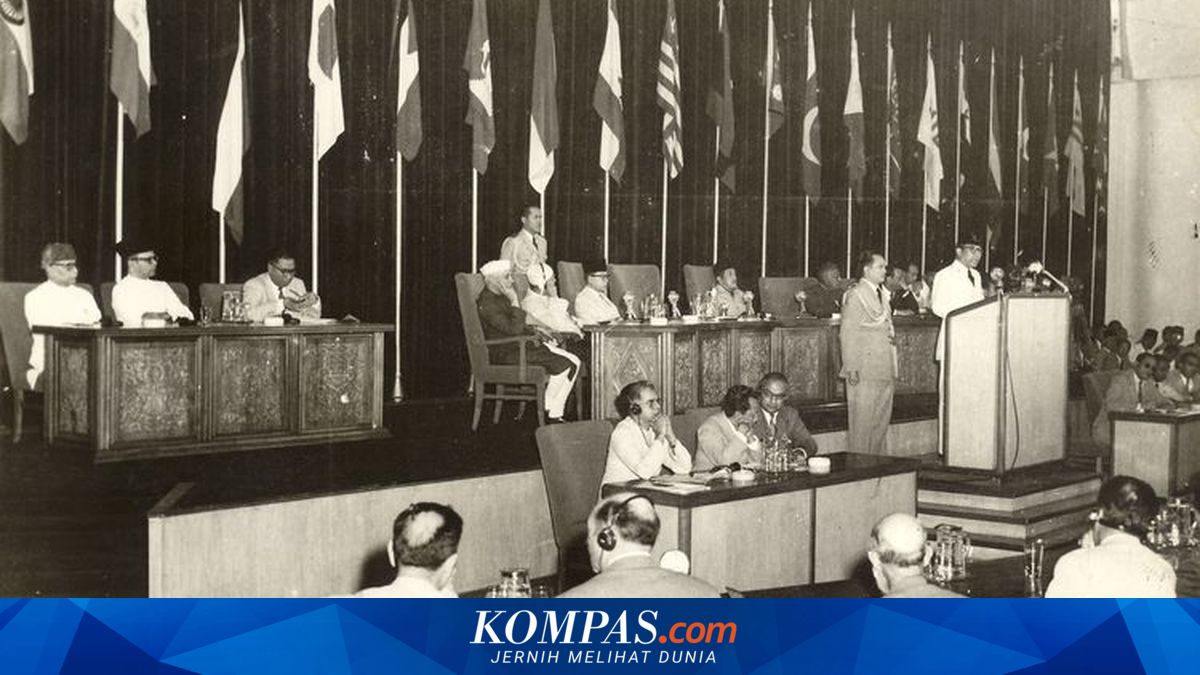
At that time, dozens of newly independent nations gathered to declare to the world that they no longer wished to be objects of global politics.
Asian and African nations wanted to determine their own fate without submitting to the domination of major powers.
The Spirit of Bandung subsequently evolved into the Non-Aligned Movement, a global initiative aimed at safeguarding the autonomy of developing nations amid Cold War rivalries between the United States and the Soviet Union.
Non-alignment does not mean adopting a neutral stance without conviction. Rather, it represents an effort to preserve political autonomy and freedom to determine one’s own policy direction in international relations.
Indonesia played a crucial role in the emergence of this movement. Alongside global figures such as Gamal Abdel Nasser, Jawaharlal Nehru, and Josip Broz Tito, President Sukarno was one of the principal architects of developing nations’ solidarity.
This historical legacy bestows upon Indonesia considerable moral legitimacy in global affairs.