
It is Time for Indonesia to Lead the Global 'Orchestra' to Combat Islamophobia
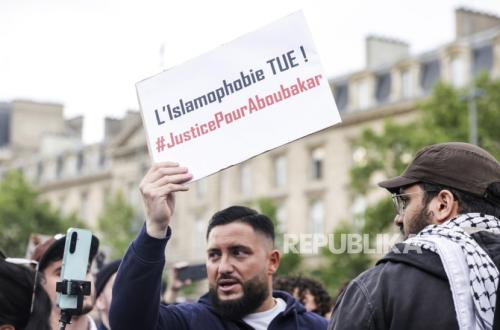
15 March is commemorated as the International Day to Combat Islamophobia, designated by the United Nations in 2022. This observance emerges from global recognition that hatred and discrimination against Muslims have become a widespread phenomenon across numerous regions of the world.
However, in recent years, the significance of this commemoration has become increasingly urgent. The world has witnessed various humanitarian and geopolitical crises directly intersecting with anti-Muslim sentiment—ranging from the humanitarian tragedy in Gaza, escalating discrimination against Muslims in India perpetrated by extreme nationalist groups, to increasing attacks on mosques and Islamic symbols in numerous Western nations.
In this context, Islamophobia is no longer merely a social prejudice. It has evolved into a political and structural phenomenon that can trigger systematic violence against Muslim communities.
Therefore, the International Day to Combat Islamophobia must be understood not simply as an annual symbol, but as a moral and political moment to build global awareness of the dangers of religion-based hatred.
From Prejudice to Dehumanisation
Islamophobia often originates from stereotypes: the assumption that Islam is synonymous with violence, that Muslims constitute a security threat, or that Islamic symbols are signs of radicalism. Such narratives continue to be reproduced in political discourse, media, and even public policy in numerous countries.
The problem is that these stereotypes readily develop into a process of dehumanisation. When a community is continuously portrayed as a threat, violence against them can be considered normal or even justified.
History demonstrates that many major humanitarian tragedies have been preceded by such dehumanisation processes. Therefore, combating Islamophobia is not merely a matter of protecting religious minorities, but also part of the effort to preserve universal human values.
Islamophobia and Global Stability
Islamophobia also carries significant geopolitical implications. The world is currently home to nearly two billion Muslims distributed across various regions. When a community of this magnitude feels systematically marginalised or stigmatised, the consequences extend beyond the social sphere to encompass political and security dimensions.
Polarisation based on religious identity can deepen conflict, reinforce extremist narratives, and worsen civilisational tensions. Therefore, combating Islamophobia is in fact part of the effort to maintain global stability.
In an increasingly interconnected world, hatred towards one religious group in one location can rapidly trigger emotional and political resonance elsewhere.