
ISSES Says Police Reform Acceleration Commission's Recommendations Fail to Address Key Issues
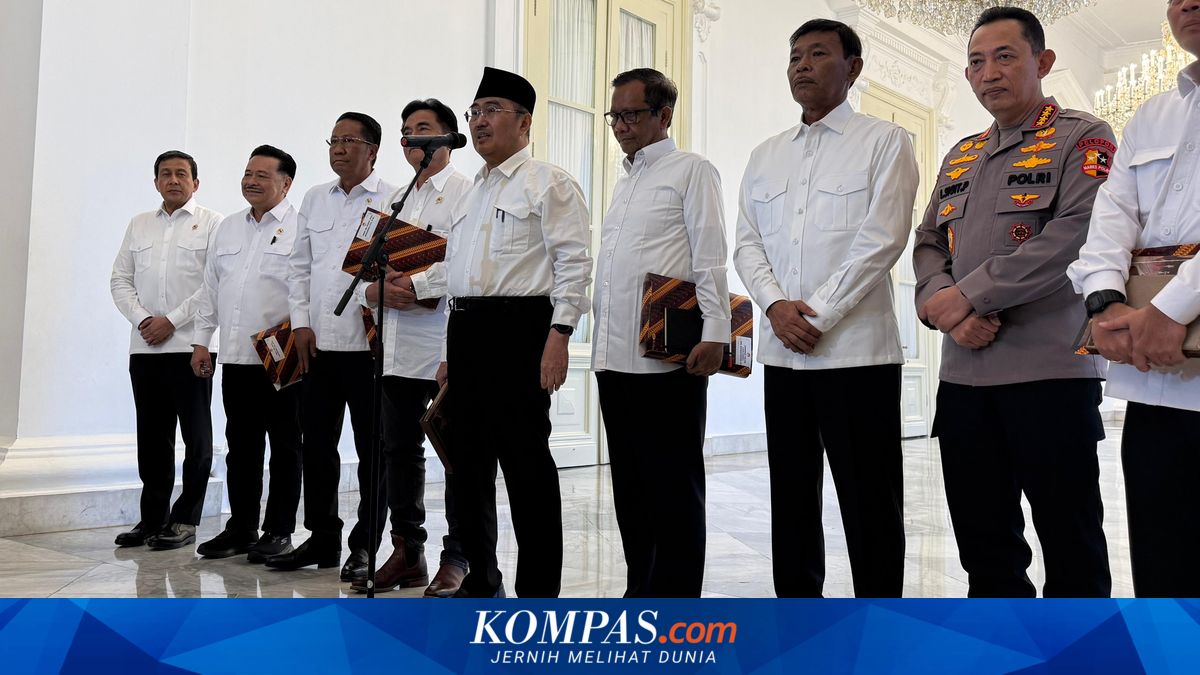
JAKARTA - A police observer from the Institute for Security and Strategic Studies (ISSES), Bambang Rukminto, has provided several notes regarding the police reform recommendations presented by the Police Reform Acceleration Commission on Tuesday evening (5/5/2026).
According to him, the recommendations presented do not yet address several longstanding societal issues, such as the use of the police for power politics, the multifunctional role of the police outside structures, or the role of the National Police Commission as the police spokesperson.
“The recommendations of the Police Reform Acceleration Commission, when viewed critically, essentially move along a moderate reform path, with a direction that more reflects the reorganisation of governance rather than changes to power structures,” Bambang told Kompas.com on Wednesday (6/5/2026).
“Without concrete independence, it risks becoming merely a formal channel that dampens criticism, rather than an effective control instrument,” he stated.
Bambang also highlighted the limitation of the police chief’s term of office. According to him, limiting the term is important to prevent personal power concentration and to strengthen elite circulation within the police.
However, he believes this step does not automatically address deeper problems, namely organisational culture, patronage patterns, and a still highly vertical power orientation.
“Without reform in the career system, promotions, and internal accountability mechanisms, term limits could potentially become an administrative solution with limited impact,” he explained.
According to him, this provides clarity in command but at the same time strengthens the executive-centric policing character with minimal external checks and balances.
“In this context, the main challenge is to ensure that strengthening effectiveness does not sacrifice accountability. If not, the entire reform package risks stopping at the level of technocratic adjustments, rather than fundamental transformation in the relationship between the police, the state, and society,” he clarified.
“In other words, these recommendations only offer a new consensus on power hegemony,” he added.