
Israel's Newest Fear: Being Surrounded by a Bloc of Sunni States
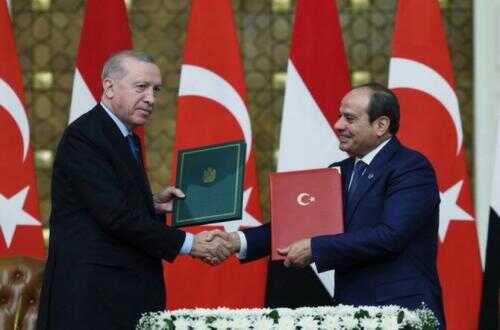
REPUBLIKA.CO.ID, TEL AVIV – An Israeli political analysis has warned of what it describes as a subtle geopolitical shift led by Turkey and Egypt. The coalition is said to aim to form a regional Sunni alignment that could reshape the power dynamics in the Middle East around Israel.
The report was published by the Israeli news platform Mida and is based on research by the Europe-based Gatestone Institute. Its conclusion is that while international attention remains focused on Iran, a parallel diplomatic process is underway that could bring significant long-term strategic consequences for Israel, the United States, and the wider region.
According to the analysis, Turkish President Recep Tayyip Erdoğan has launched an extensive diplomatic initiative aimed at strengthening cooperation among Sunni-majority countries under Ankara’s direction.
The report claims that this effort aims not only to reconcile with former regional rivals but also to create a coordinated political and strategic bloc, described as a “Sunni ring” surrounding Israel, presented as an alternative to Iran’s regional network of allies.
In the past, the most significant opposition to Israel has come from Iran and regional Shia groups such as Hezbollah in Lebanon and the Ansarullah Houthi in Yemen. A coalition of Sunni-majority countries would be a new and concerning dynamic for Israel.
Referring to the Middle East Monitor, the report highlights Erdoğan’s regional tour in early February 2026, where he visited Saudi Arabia and Egypt and then hosted King Abdullah II of Jordan in Istanbul.
Analysts quoted in the report describe these meetings as the culmination of a broader normalization process that began in 2022, when Turkey sought to mend strained relations with Gulf and Arab countries after years of tension over Ankara’s support for the Muslim Brotherhood.
Particular emphasis is placed on the warming of Turkish-Egyptian relations, which is described as a major turning point after more than a decade of political rivalry following the political upheaval in Egypt in 2013. During Erdoğan’s visit to Cairo, the two countries signed a framework military agreement reportedly worth $350 million, including joint arms production, intelligence cooperation, and military exercises.
The report adds that the delivery of Turkish air defense systems and ammunition is expected, while bilateral trade could reach $15 billion. From a strategic point of view, the analysis argues that Egypt’s participation would significantly expand the influence of any such alignment, given Cairo’s control over the Suez Canal and its central role in North African and Mediterranean security.
The report states that this could give Egypt logistical influence over maritime routes considered vital to Israel’s economy. This assessment reflects the ongoing debate among Israeli strategists about shifting regional alliances amid broader geopolitical changes in the Middle East.
Last week, former Israeli Prime Minister Naftali Bennett echoed these fears. He said that Turkey, with the support of Qatar, is replacing Iran as Israel’s main strategic threat.
Another factor adding to Israel’s fears is the defense pact between Saudi Arabia and Pakistan agreed upon a few weeks ago. If Turkey can persuade both countries to join, Pakistan’s nuclear capabilities would pose a serious threat to Israel.
Steven Cook, a fellow at the Council on Foreign Relations, wrote, “Israel has long calibrated its defense strategy according to Iran’s capabilities. But if Turkey succeeds in influencing Saudi Arabia or strengthening its relations with Pakistan, the strategic map will change in an instant. This is no longer just about missiles coming from Iran—it’s about a Sunni world with nuclear capabilities.”