
Israel-US War Against Iran Leads to Russia Being Flooded with Energy Export Orders
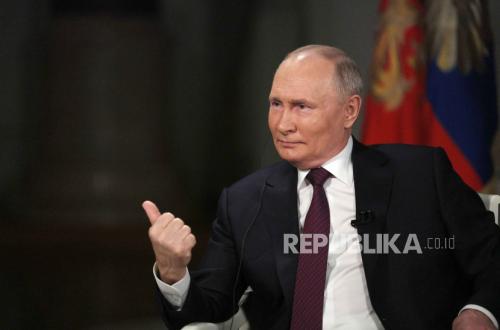
REPUBLIKA.CO.ID, JAKARTA — As the global energy map changes due to geopolitical tensions, Russia is finding new opportunities. Amid restrictions from Europe, demand for Russian oil is sharply increasing from alternative markets. This situation is not only altering global energy trade flows but also creating a domino effect on world oil prices, ultimately affecting energy-importing countries like Indonesia. Kremlin spokesperson Dmitry Peskov revealed that global demand for Russian energy is now very high. According to him, this demand even has the potential to exceed the available supply capacity. This is occurring alongside Russia’s market shift from Europe to other regions deemed more promising. This statement reinforces Moscow’s energy policy direction. Previously, Russian President Vladimir Putin also stated that halting energy supplies to European countries could provide strategic advantages for Russia. Moscow even plans to redirect energy exports to new, more profitable trading platforms, in line with Europe’s plans to gradually restrict and ban energy purchases from Russia, as reported by Ria Novosti. This dynamic shows that energy geopolitics is entering a new phase. As Russia redirects exports to alternative markets, global energy prices could face upward pressure due to supply-demand imbalances. In this context, the impacts are beginning to be felt in developing countries, including Indonesia. Dr Aswin Rivai, an economic observer and lecturer at FEB-UPN Veteran Jakarta, assesses that the surge in energy prices due to geopolitical dynamics will complicate the direction of global economic policy. He wrote, “Global economic uncertainty is strengthening again amid rising geopolitical tensions and a surge in world energy prices.” According to him, this situation makes global monetary policy increasingly difficult to predict. Furthermore, he emphasised that changes in the stance of global central banks are reinforcing this uncertainty. “The ‘two-way’ approach is essentially an acknowledgement of the reality that economic risks are now symmetric,” he wrote. This means central banks must now prepare for both possibilities simultaneously: a surge in inflation or a slowdown in economic growth.