
Israel Kills Three Journalists in Southern Lebanon, Civil Protection in War Zones Comes Under Scrutiny
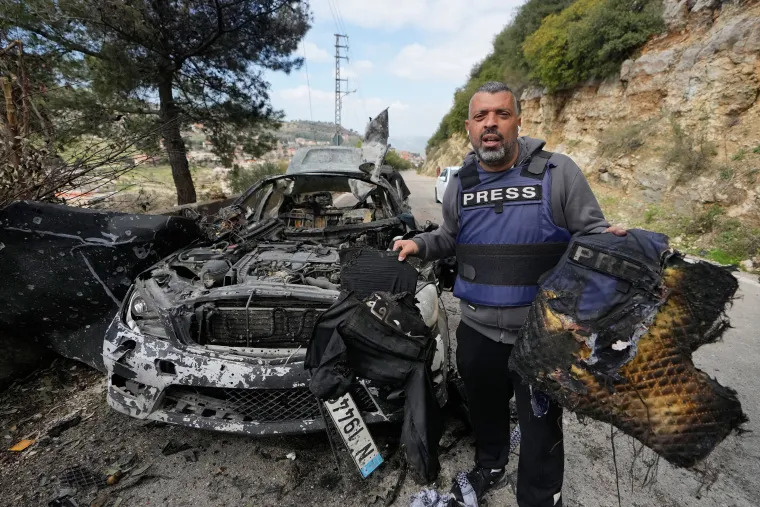
An Israeli airstrike targeted a media vehicle on the Jezzine highway in southern Lebanon on Saturday (28/3), killing three journalists who were covering the latest conflict between Israel and Hezbollah. The victims were Al-Manar TV correspondent Ali Shoaib; Al-Mayadeen TV reporter Fatima Ftouni; and her brother, freelance journalist Mohammed Ftouni. Their television stations stated that the three were en route to a reporting location when the attack occurred in the southern Lebanon region. The Israel Defense Forces (IDF) Situation Room confirmed to the Committee to Protect Journalists (CPJ) that it carried out the strike. The Israeli military accused Shoaib—whom they referred to as Ali Hassan Shaib—of being a Hezbollah member, but provided no evidence. Israel did not mention the other two fatalities in its statement. CPJ’s Regional Director, Sara Qudah, said the organisation is investigating the attack. She emphasised that journalists are civilians and must not be targeted. CPJ also highlighted a pattern of accusations against journalists without credible evidence in conflicts involving Israel over the past several decades. Lebanon’s President Joseph Aoun and Information Minister Paul Morcos strongly condemned the attack. Aoun described it as an “outright crime” that violates norms and international agreements protecting journalists in wartime situations. This strike occurred days after an Israeli airstrike in Beirut killed Al-Manar’s head of political programming, Mohammed Sherri, along with his wife. Since the latest war between Israel and Hezbollah broke out on 2 March, Israeli airstrikes have also reportedly hit several civilian facilities, including Al-Manar’s headquarters and the Al-Nour radio station. In previous conflicts in the Gaza Strip, Israel has also faced international scrutiny over journalist deaths. In October 2023, Reuters journalist Issam Abdallah was killed by tank fire while reporting from Lebanon near the Israeli border. Six other journalists were injured, including Dylan Collins and Christina Assi from AFP. An independent AFP investigation concluded that two 120 mm tank rounds were fired from Israeli territory. These findings were corroborated by investigations from CPJ, Human Rights Watch, Amnesty International, and Reporters Without Borders. Hezbollah Secretary-General Naim Qassem stated that the group will continue what he described as “defensive fighting” against Israel. Israeli Prime Minister Benjamin Netanyahu announced an expansion of the security zone in southern Lebanon up to the Litani River. This move has triggered concerns over a long-term occupation. Escalation in Lebanon has intensified following Israeli military launches of a series of airstrikes on the outskirts of Beirut and the capture of two Hezbollah commando unit members. Israeli Prime Minister Benjamin Netanyahu affirmed that strikes on Iran and Lebanon will continue despite claims of an agreement from Donald Trump. Pakistan has offered itself as a mediator. Israel is considering mobilising 450,000 reservists to address the escalation of the conflict with Lebanon, including options for ground operations. The CPJ 2025 report: Israel recorded the highest number of journalist killings with 84 victims. 2025 became the deadliest year for the global press with a total of 129 deaths. Three Palestinian journalists were killed while on duty for an Egyptian aid agency in Gaza. ISRAEL launched another airstrike targeting medical facilities in the Gaza Strip. The strike on Monday (25/8) hit Nasser Hospital in Khan Younis, killing five journalists. POLRES Metro Jakarta Barat is investigating the death of a journalist from Palu, Central Sulawesi, initials SW, 33, in a hotel room in West Jakarta. Three witnesses have been examined.