
Israel-Iran War and Global Risks from the Closure of the Strait of Hormuz
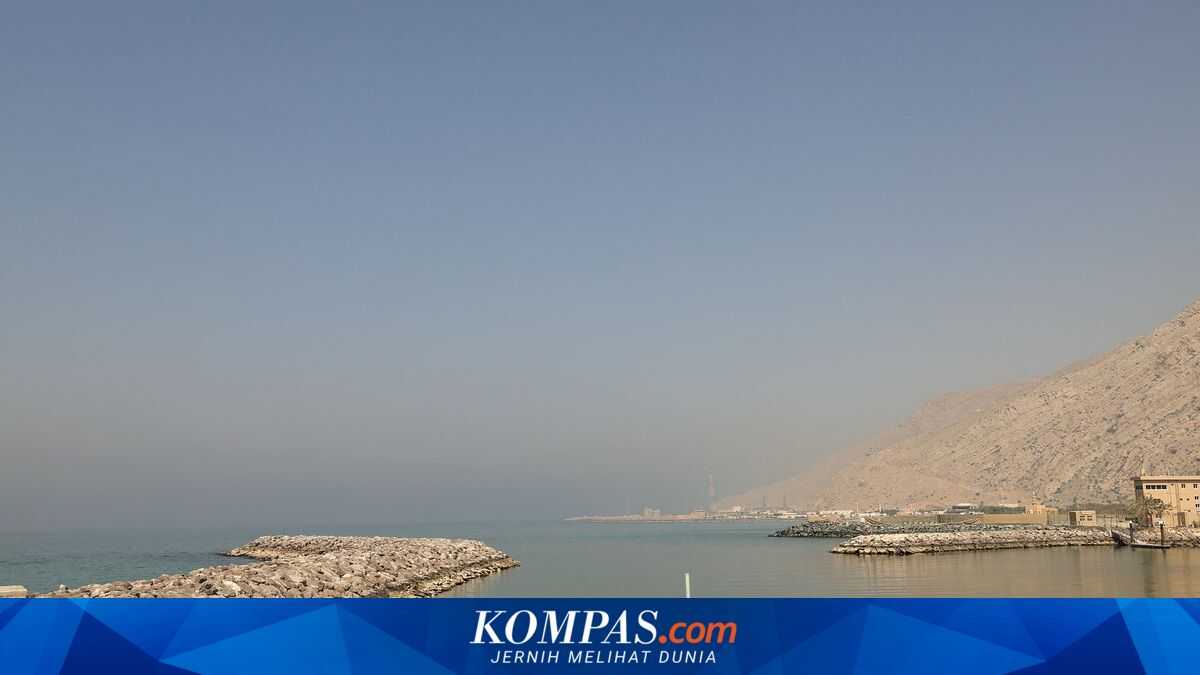
The war between Israel and Iran that erupted on Saturday 28 February 2026 threatens not only regional stability but also carries serious implications for global energy trade. Both nations are currently focused on the Strait of Hormuz, a strategically vital maritime passage with a narrowest point measuring 33 to 39 kilometres wide.
“A prolonged closure of the Strait of Hormuz will cause a global recession,” said Bob McNally, former energy policy adviser to the 41st President of the United States and founder of Rapidan Energy.
Iran’s role at the Strait of Hormuz underscores the critical importance of this passage to the global economy. The Islamic Revolutionary Guard Corps (IRGC) controls the northern side of the strait, particularly at Bandar Abbas, with land-based headquarters deliberately constructed to maintain security and national interests. On the opposite side lies Omani territory. Several other islands, including Greater Tunb, Lesser Tunb, and Abu Musa, remain disputed with the United Arab Emirates (UAE). However, since 1971, Iran has maintained control of the strait.
The strait serves as a vital corridor for oil exports from the Persian Gulf states to Asia, Europe, and North America. According to the US Energy Information Administration (EIA), the Strait of Hormuz is the world’s most important oil trading chokepoint.
Energy consultant Kpler notes that tanker traffic transporting oil through the strait averaged approximately 14 million barrels per day throughout 2025, equivalent to roughly one-third of total global crude oil exports. Half of these exports are shipped to China.
Beyond crude oil, 20 per cent of global liquefied petroleum gas (LPG) exports also pass through the strait, primarily originating from Qatar.
The breakdown of oil revenues from the Gulf region includes: UAE $28.5 billion, Saudi Arabia $11.7 billion, Iraq $2.8 billion, Kuwait $2.1 billion, Qatar $1.7 billion, and Iran $1.25 billion.
Additionally, altasinstitute.org reports that on 7 August 2025, total trade value in the Persian Gulf–Strait of Hormuz region reached $1.2 trillion or Rp 19.44 quadrillion, representing 20 per cent of global container shipments.
The critical importance of this passage makes the Strait of Hormuz a significant bargaining tool in geopolitical policy.