
Israel Continues Al Aqsa Mosque Closure; HNW Urges OIC to Take Concrete Action
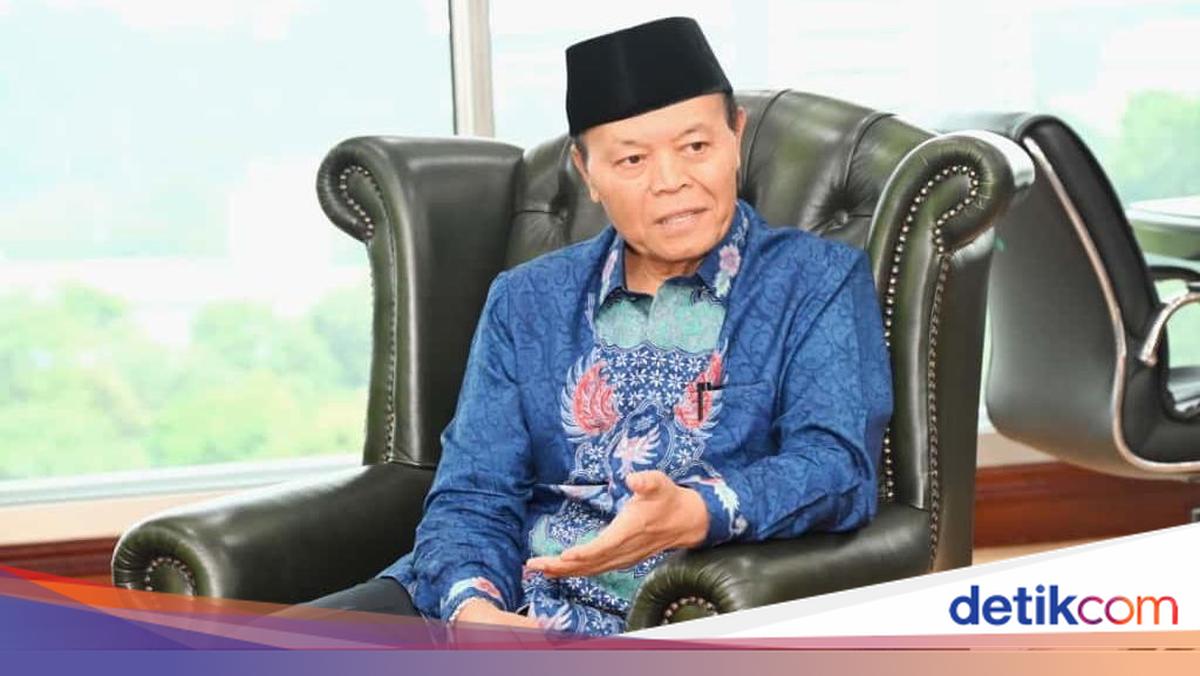
M Hidayat Nur Wahid, Vice Chairman of the People’s Consultative Assembly of the Republic of Indonesia (MPR RI), has expressed alarm over the closure of Al Aqsa Mosque by Israel, which has now persisted for eleven days through the end of Ramadan. He has called upon the Organisation of Islamic Cooperation (OIC) to assume a more serious and concrete role in protecting the first direction of prayer for the Islamic community.
“Al Aqsa Mosque is in danger. Israeli Zionists have closed it for eleven days, preventing Muslim worshippers from performing Tarawih prayers, Friday prayers, and now from conducting Itikaf in the mosque during Ramadan. If this continues unchecked, there is concern that Eid al-Fitr prayers cannot even be conducted at Al Aqsa Mosque. The very existence of Al Aqsa Mosque faces serious danger. The OIC, which was established with the purpose of protecting Al Aqsa Mosque, must act immediately. The OIC Secretary-General should not merely issue strong statements rejecting the ongoing closure, but must take concrete and effective action by coordinating member states and activating all available organs and authorities,” Wahid stated in a written statement on Thursday (12 March 2026).
Wahid emphasised that all OIC organs should regard this as a serious matter. He expressed hope that the OIC could serve as a channel for opening effective dialogue with real impact to end conflict, reduce tensions, and unite OIC member states in the Middle East against being played off against one another by Israel. The OIC is expected to unite in protecting Al Aqsa Mosque.
“There are several important organs within the OIC that need to be ‘activated’ so that the closure of Al Aqsa Mosque can be brought to an end,” he stated.
First, the OIC organ that should take decisive steps is the Islamic Summit, the highest decision-making body of the OIC, comprising heads of state or heads of government of member states.
“The OIC Secretary-General or member states such as Indonesia should urgently propose that an Extraordinary Islamic Summit be convened to specifically address and take concrete steps to resolve the matter of Al Aqsa Mosque’s closure by Israeli Zionists,” he said.
Next, Wahid noted, the forum that could be expected to act is the OIC Council of Foreign Ministers (CFM). Should an Extraordinary Islamic Summit not be feasible in the near term, an OIC Council of Foreign Ministers meeting could serve as an alternative option to produce more concrete decisions and steps to save Al Aqsa Mosque.
“The Council of Foreign Ministers should be pressed to undertake more concrete political steps, and if necessary, legal steps in accordance with international law frameworks to protect Al Aqsa Mosque, which has been designated by UNESCO as an Islamic heritage site. Moreover, eight OIC foreign ministers who are also members of the Band of Brothers have already issued a joint statement rejecting the closure of Al Aqsa Mosque, a development that further demonstrates that the Band of Brothers has lost both its moral legitimacy and its effectiveness. These foreign ministers should follow up their joint statement with collective action of greater tangible impact to end the closure of Al Aqsa Mosque,” he said.
Wahid also questioned the role of the Al Quds Committee, established under Article 11, Paragraph 1 of the OIC Charter.
“This is an OIC organ that has been created and whose role must be maximised once again in protecting and saving Al Aqsa Mosque,” he added.
Furthermore, Wahid stressed, the role of the OIC Secretary-General is vital in ensuring that the original purpose behind the establishment of the OIC in protecting Al Aqsa Mosque is properly realised.
“In accordance with his mandate and authority, such as promoting good communication between member states and ensuring that organs such as the Al Quds Committee function in line with their intended purposes,” he added.
Wahid stated that the role of all OIC organs is essential in order to give the Muslim community confidence that efforts to protect Al Aqsa Mosque continue to be pursued.
Moreover, Wahid noted that there is currently a movement pressuring Muslims who are near Al Aqsa Mosque and able to travel there to come and demonstrate their commitment to worship there.
“There is a movement encouraging Palestinians to converge on Al Aqsa Mosque so that it will be opened, enabling Muslims to revive it during Ramadan through Tarawih prayers, Itikaf, and subsequently Eid al-Fitr prayers,” he said.
Wahid emphasised that this nonviolent movement should be collectively supported as it is protected by human rights, particularly fundamental rights such as the right to worship and practise one’s faith through prayer at Al Aqsa Mosque.