
Israel Considers Death Penalty for Palestinian Prisoners
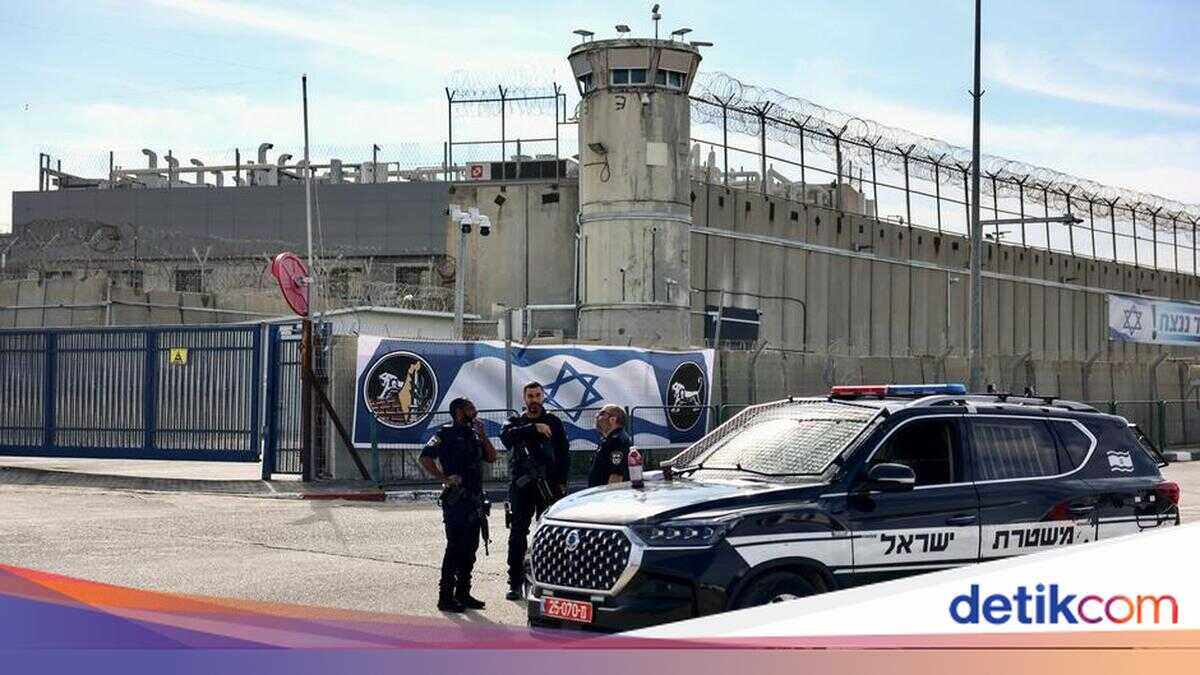
The last time Israel carried out an execution was in 1962, when it put Adolf Eichmann to death — one of the principal architects of the Nazi Holocaust — following a lengthy trial in Jerusalem.
However, several decades later — and in the wake of the Hamas-led terror attack on 7 October 2023 — a renewed push has emerged among Israeli lawmakers to pass controversial legislation reviving the death penalty, specifically for Palestinians convicted by Israeli military courts.
Opponents of the bill consider the policy unethical and discriminatory, as it draws a distinction between Jewish Israelis and Palestinians. In its current draft, the death penalty is mandatory for certain offences committed by Palestinians tried in military courts. Furthermore, there is no provision for clemency or sentence reduction.
The bill passed its first reading in November 2025 in Israel’s parliament, the Knesset. It was subsequently referred back to the National Security Committee for further deliberation and must still pass second and third readings before becoming law. It remains unclear whether and when the process will be completed.
The bill is sponsored by members of the far-right Jewish Power party, with support from Likud and Yisrael Beitenu. Following the vote, National Security Minister and Jewish Power leader Itamar Ben-Gvir called it “the most important bill in the history of the State of Israel.”
“Let every terrorist know — this bill will serve as a deterrent. This bill will instil fear. This bill will make them think a thousand times before carrying out another 7 October attack,” he said.
Widespread domestic criticism
Opponents within Israel — ranging from security officials, former Supreme Court justices, and doctors to rabbis — have criticised the bill in an open letter as “extremely radical and extraordinary” legislation.
Hagai Levine, Chair of the Israeli Association of Public Health Physicians, who attended discussions at the Knesset, rejected the legislation. “We oppose this kind of death penalty, which is racist and lacks comprehensive consideration of the various factors that ought to be taken into account,” he said. Levine also previously led the medical team of the Hostages and Missing Persons Families Forum during the war.
He acknowledged that a segment of Israeli public opinion has shifted, with demands for harsher penalties following the 7 October attack. Over the years, there have been several attempts to revive the death penalty, but none had progressed far.
“I became a doctor for the hostages and their families. I have witnessed the devastating impact on people’s lives and the killing of innocent civilians. I fully understand the desire for revenge. But decisions must not be made on the basis of anger. We are a democratic state. We must make sound decisions in the interest of the nation,” he said.
Approximately 1,200 people were killed in the brutal attack, and 251 Israelis and foreign nationals were taken hostage by Hamas. In the subsequent war in Gaza, more than 70,000 Palestinians have reportedly been killed, with many more still buried beneath rubble. Hundreds of Israeli soldiers have also been killed.
From Ramallah, Amjad Al Najjar, spokesperson for the Palestinian Prisoner Society, told DW that the bill “terrorises the Palestinian people” and creates enormous tension and fear among the families of Palestinian detainees.
What does the bill contain?
According to the Knesset announcement following the first reading, the draft legislation stipulates that a person who causes the death of an Israeli citizen “intentionally or with reckless indifference, motivated by racism or hostility towards a population, and with the aim of harming the State of Israel and the national revival of the Jewish people in their homeland — shall be sentenced to death.”
On a separate track, the bill also expands the jurisdiction of military courts in the Israeli-occupied West Bank — a territory under military administration that exclusively tries Palestinians under military law. Military courts would be able to impose the death penalty by a simple majority of the judicial panel, and such sentences cannot be commuted.
However, the bill does not clearly define what constitutes acts that “harm the State of Israel” or the “revival of the Jewish people in their homeland.”
UN and Palestinian criticism
Opponents from Israeli, Palestinian, and international quarters consider the bill a violation of the right to life, warning it risks executing innocent people and has not been proven to be an effective deterrent.
A number of UN Human Rights Council experts have urged Israel to withdraw “the bill proposing mandatory death sentences for acts of terrorism, which would violate the right to life and discriminate against Palestinians in the occupied territories.”
In their statement, the experts emphasised that the elimination of judicial and prosecutorial discretion would prevent courts from considering individual circumstances, including mitigating factors, and from imposing proportionate sentences.
The Palestinian human rights organisation Addameer stated in its position paper that the enactment of new legislation imposing the death penalty exclusively on Palestinians marks a serious escalation in a long pattern of violations against Palestinians, including hundreds of extrajudicial executions.
Israeli political commentator Tal Schneider also noted that Israel’s domestic intelligence agency, Shin Bet — also known as Shabak — had in the past opposed such policies over concerns they could provoke further attacks.
History of the death penalty
The death penalty in Israel applies to war crimes, crimes against humanity, and certain offences under military law tried in military courts. In rare cases involving terrorism, death sentences handed down by military courts were subsequently commuted to life imprisonment through the appeals process.
Only two people have ever been executed following death sentences in Israel. The first execution took place after the 1948 Arab-Israeli War.