
Israel and the 11 Countries That Have the Iron Dome, the Iron Dome Shield Against Rockets
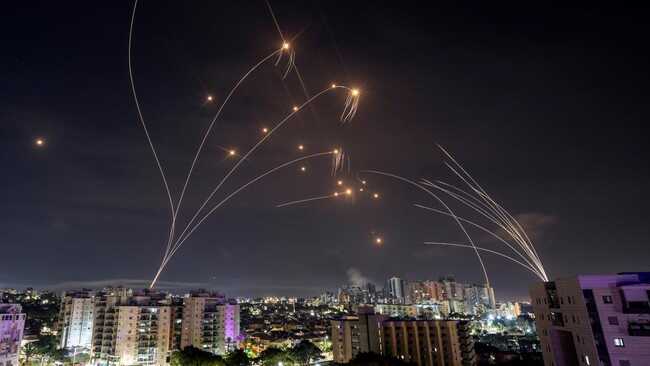
Israel & 11 Negara Ini Punya Iron Dome, “Kubah Besi” Penangkal Rudal. Iron Dome, or the ‘Iron Dome’ in Indonesian, was created by Israel to protect itself from enemy rocket attacks. The Iron Dome air defence system, developed by Israel to counter short-range rocket attacks, has attracted increasing global attention. Its success in shielding civilian populations from air threats has led many countries to consider, or even purchase, the technology as part of their national defence strategy. The Iron Dome system was developed after the conflict known as the ‘Summer War’ in 2006 between Israel and Hezbollah. The militant group based in Lebanon fired almost 4,000 rockets at Israel, causing extensive damage. Iron Dome has intercepted more than 1,500 targets between 2011 and April 2016. The Iron Dome missile defence system, or ‘Kippat Barzel’ in Hebrew, is widely regarded as one of the most important tools in Israel’s defence arsenal. The ‘Iron Dome’ is designed to protect Israeli civilians from air attacks by firing guided missiles to intercept incoming rockets and other short-range threats. This mobile defence system, which can operate in all weather conditions, has been fully operational since March 2011. The Israeli Ministry of Defence stated that the system has undergone several upgrades and has ‘prevented an untold number of rockets from striking Israeli communities’. Iron Dome was developed in Israel by the state-owned Rafael Advanced Defense Systems with support from the United States - and Washington has continued to fund the system. The Israel Defence Forces (IDF) say that Iron Dome is a combination of several components: its own technology, the machines used to intercept incoming rockets, the soldiers who operate the system, and the commanders who supervise its network. How does it work? In practice, Iron Dome uses radar to track incoming rockets and determine whether the rocket’s trajectory threatens the protected area, such as strategic locations or population centres. If the rocket does pose a threat, the command and control centre responds by launching a Tamir missile to intercept it. However, the system is not configured to shoot outside the protected area, and rockets that do not threaten people or buildings are usually ignored and allowed to fall. A 2023 report from the Congressional Research Service (CRS) described Iron Dome as a mobile system for countering rockets, mortars, and artillery, capable of intercepting launches from 4 to 70 kilometres away. There are believed to be at least 10 batteries deployed nationwide, each designed to protect a populated area of about 155 square kilometres. Each battery is equipped with 3 to 4 launchers and each launcher carries up to 20 Tamir missiles. The Center for Strategic and International Studies (CSIS), a US think tank, estimates that one Iron Dome battery costs more than US$100 million to produce, or around Rp 1.68 trillion. Since 2011, the United States has provided billions of dollars to Israel for Iron Dome batteries, interceptors, shared production costs, and general maintenance since the system became operational. Much of this funding has been authorised by the US Congress, where a bipartisan majority has consistently supported funding for Iron Dome Israel. Weaknesses of Iron Dome However, Iron Dome also has weaknesses. Analysts warn that the defence system could face challenges when required to respond to large-scale rocket barrages. The Center for European Policy Analysis (CEPA) stated in June 2021 that the system could be vulnerable to saturation attacks – strikes designed to overwhelm the Iron Dome shield with rocket fire from multiple directions. Despite the successes of Hamas fighters last year and Iran last week, Iron Dome is not owned exclusively by Israel. Iron Dome refers to a shield designed to intercept short-range rockets, as well as artillery and mortar rounds, at distances of 4 km to 70 km from the launcher. Which other countries have Iron Dome? A number of countries have purchased similar technologies for their territorial defence. Since Iron Dome began operating in 2011, several countries in Europe and Asia have purchased or considered purchasing radar components or the full Iron Dome to protect their territories. The high demand for Iron Dome reflects a global security environment full of threats. On the other hand, Israel is seen as capable of delivering credible security technology. Azerbaijan is known to have purchased the system since 2016, making it the first country outside Israel to officially own Iron Dome. This move is viewed as an attempt to balance regional power, especially after neighbouring Armenia acquired Iskander missiles. Singapore, although never openly confirmed, is strongly believed to have possessed and operated the system since the mid-2010s. The country is known as one of Israel’s strategic defence customers and has invested in a range of advanced defence systems.