
Israel and Iran Exchange Strikes on Oil Facilities; Analysts Say Peak of Conflict Not Yet Over
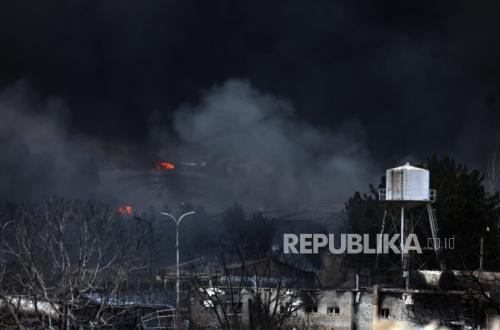
JAKARTA — The appointment of Ayatollah Mojtaba Khamenei as Iran’s supreme leader is viewed as a strong signal that Tehran will increasingly refuse to bow to pressure from the United States and Israel, according to Prof Yon Machmudi, a Middle East expert from the University of Indonesia.
“This is because demands from Trump and Netanyahu are that every new Iranian leader must involve the US. If not, then they will become the next assassination target,” said the professor of history at the University of Indonesia in comments to Republika on Monday, 10 March 2026.
Amid the ongoing escalation of conflict, continued Yon, the new leadership is expected to strengthen Iran’s stance of resistance. According to Yon, pressure from Washington and Tel Aviv actually reinforces resistance within Iran itself.
“This is a new form of resistance carried out by Iran. They do not wish to submit to the demands and desires of the United States or Israel,” he said.
In the current situation, Yon predicts that armed conflict between Iran and the Israel-US alliance will not subside in the near term. He assesses that the escalation of conflict remains at a high level.
Israel’s strike on an Iranian oil refinery in Tehran on Saturday, 7 March 2026, for example, is illustrative. Although US President Donald Trump subsequently voiced “disappointment” over the military action by Tel Aviv, this indicates the high tension in the fighting.
Most recently, Iran on Tuesday, 9 March 2026, claimed to have successfully carried out a retaliatory attack targeting an Israeli oil refinery in Haifa using its advanced drones.
Yon emphasised that attacks from either side on the energy sector potentially carry far-reaching consequences for the West Asian region. Global energy distribution routes could also be disrupted if the conflict continues.
“This will certainly have regional impacts. Oil supplies could be further reduced or even cut off from the Strait of Hormuz,” he said.
Therefore, Yon believes that the prospects for peaceful negotiations are currently far from being realised. Particularly given that there are no signs Iran will surrender, whilst the US and Israel remain ambitious about crippling Iran’s power.
“The meeting point towards negotiation appears not yet to have opened. The peak of this war, I believe, remains at very high tension,” he said.
“The resistance, retaliation, this war, I believe, will continue for several weeks ahead. Because there are no signs that Iran will surrender, whilst the US and Israel are ambitious about destroying Iran,” concluded Yon.