
ISNU East Java: Closure of Education Programmes Must Not Be Hasty
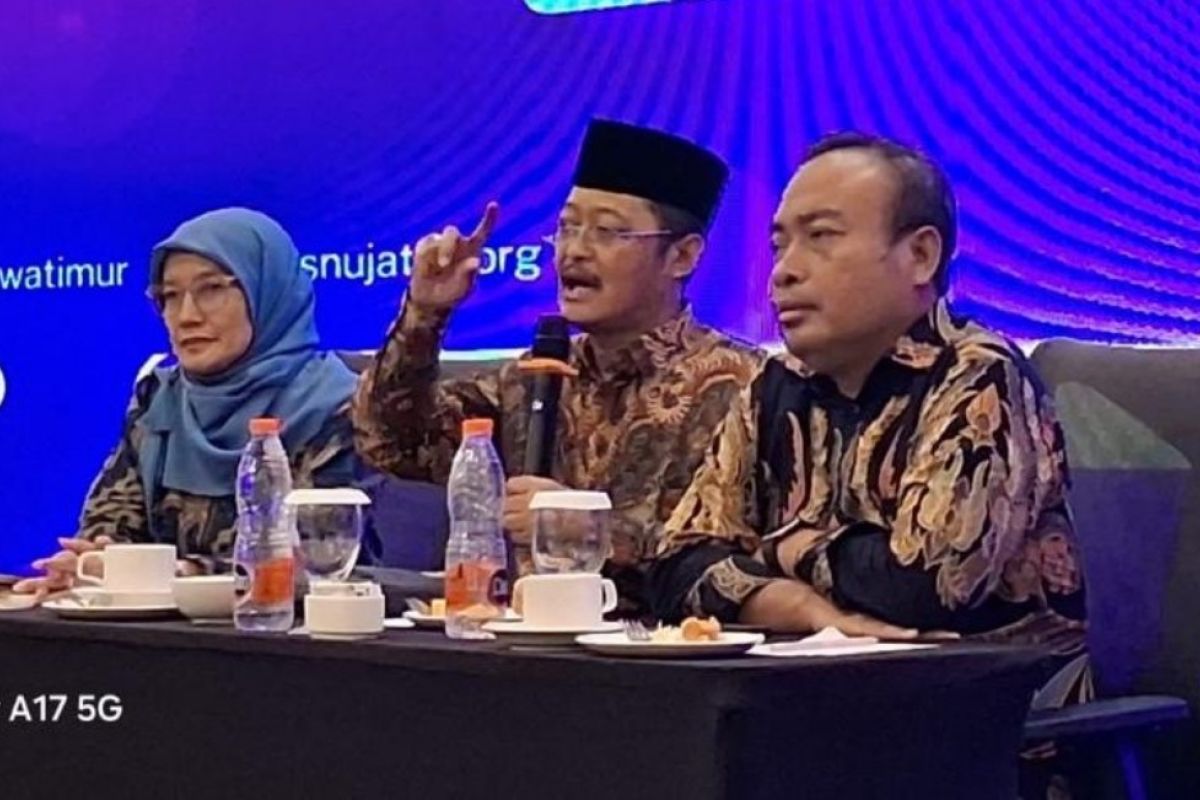
Surabaya (ANTARA) - The Regional Board of the Nahdlatul Ulama Scholars Association of East Java (PW ISNU Jatim) has stated that the closure of Education Programmes (Prodi) must not be hasty and has affirmed its readiness to engage in dialogue with the government regarding the policy to ensure it is targeted and based on comprehensive studies. “We are ready if actively involved in dialogue forums with the government and other stakeholders. We are prepared to provide academic perspectives while offering strategic solutions so that the policies taken are truly on target,” said Acting Chairman of PW ISNU Jatim, Prof Dr M Afif Hasbullah, in Surabaya on Tuesday. Afif emphasised that policies on closing programmes, especially in education, must not be carried out hastily without comprehensive studies and not solely based on short-term industrial interests. “We must differentiate between issues of graduate quality and limitations in job opportunities,” he said. ISNU Jatim also encourages the revitalisation of study programme curricula, particularly in teaching, through integration with industry needs and digital technological developments, including strengthening soft skills and connectivity with the business and industrial world (DUDI). Afif proposed the implementation of selective and evaluative moratorium policies on opening new programmes with stricter feasibility standards. “We must not allow oversupply in certain fields due to weak licensing controls,” he stressed. According to him, strengthening basic sciences, both in science, technology, engineering, and mathematics (STEM) as well as basic social sciences, forms the main foundation for long-term development in the digital transformation era. ISNU Jatim also proposes incentive and affirmative schemes from the government for strategic programmes, including funding support, improvement in lecturer quality, and strengthening of educational infrastructure. “Programmes that are needed should not just be left to survive but must be pushed to excel,” he added. In addition, he proposed the establishment of a national collaborative forum involving the government, universities, industry, and professional organisations to formulate sustainable higher education policy directions. In his view, education must not be reduced merely to meeting short-term industrial needs but as a foundation for civilisation. “Education is built to give birth to an excellent civilisation, not merely to serve industrial interests that can be short-term in nature. Education must go beyond (beyond) industry and technology, because it contains human values, morals, and ethics that form the soul of national development,” he stressed. As part of the academic community, he affirmed that intellectual organisations have a moral responsibility to also guide education policies to remain in the interests of the nation. “Education is not just about workforce absorption but also about character formation, values, and the nation’s future direction. Therefore, policies must be visionary, inclusive, and based on Indonesia’s long-term needs,” he said.