
Island Bazaar Debuts at Kura-Kura Bali Special Economic Zone During Ramadan
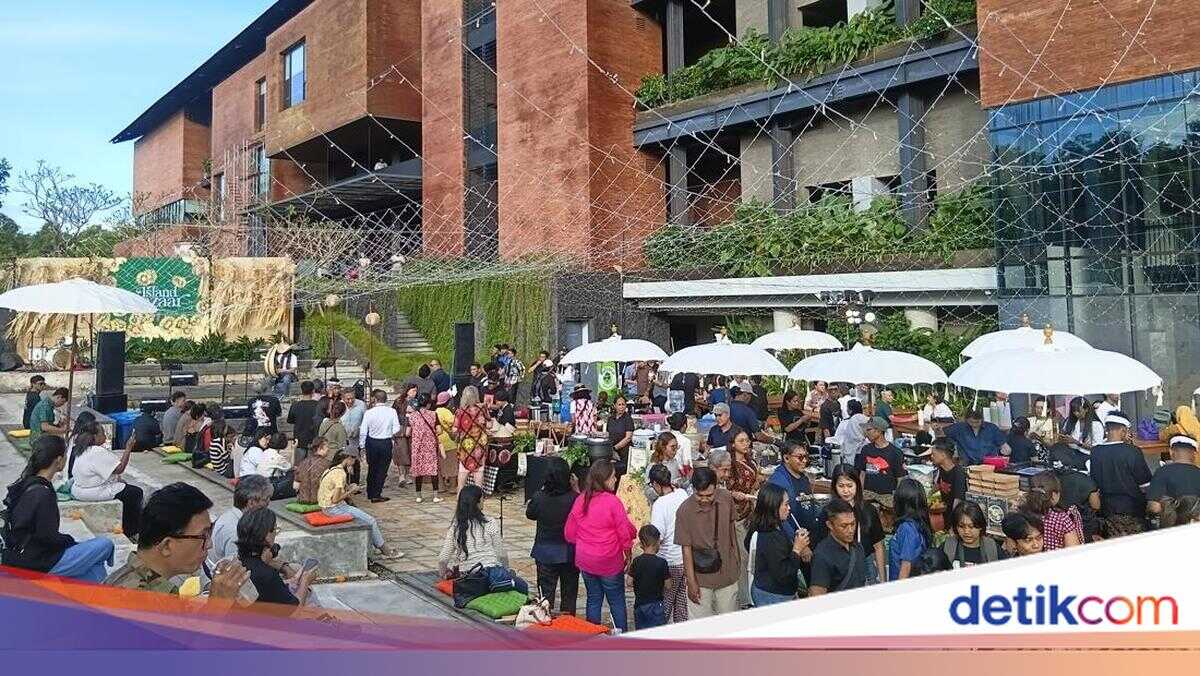
Bali Turtle Island Development (BTID), the manager of the Kura-Kura Bali Special Economic Zone (SEZ), held an Island Bazaar in the open-air area of the University in Diversity (UID) Campus Bali. The bazaar ran for two days on 27-28 February 2026.
Observations on site revealed dozens of local and national culinary vendors enlivening the bazaar area with diverse food offerings. Notably, all menus served were prepared without pork. This was implemented to align with the bazaar’s timing during Ramadan.
“Because it is Ramadan, we avoided such items. But we have beef offerings as alternatives,” explained Zefri Alfaruqy, Head of the Communications Department.
Beyond culinary offerings, the Island Bazaar adopted a pet-friendly concept. Visitors were permitted to bring dogs and cats to the event area. Several vendors even provided specialised care products and food specifically for pets.
The Island Bazaar also featured artistic performances from Oemah Seni Serangan, showcasing traditional dancing and joget performances in an evening atmosphere. Visitor enthusiasm was evident as dancers invited spectators to join them.
Zefri explained that the Island Bazaar represented the first time BTID had organised such an event.
“This event serves as a pilot, as many people are not yet aware of the Kura-Kura Bali SEZ,” Zefri stated.
He added that BTID plans to establish the Island Bazaar as a monthly recurring agenda. “In the future, it will be held at the end of each month, on weekends,” he noted.
The Island Bazaar involved a total of 45 micro, small and medium-sized enterprise (MSME) operators. This comprised 19 food and beverage MSMEs, nine retail tenants, and approximately 15 handicraft MSMEs such as bag makers, clothing vendors, and keychain producers.
The bazaar also provided a platform for MSMEs from Serangan residents. Three of the tenants were locally owned businesses offering signature products such as rujak bulung made from seaweed and fried kelejat.
“There are 19 food and beverage tenants, nine retail establishments, and approximately 15 handicraft businesses,” Zefri explained.
Zefri hopes that the Island Bazaar will attract visitor interest. “Visit targets were set at 250 people per day or 500 for the two days. Hopefully we can reach 1,000 visitors,” he concluded.