
Islamic Legal Analysis of Restrictions on Hajj Registration
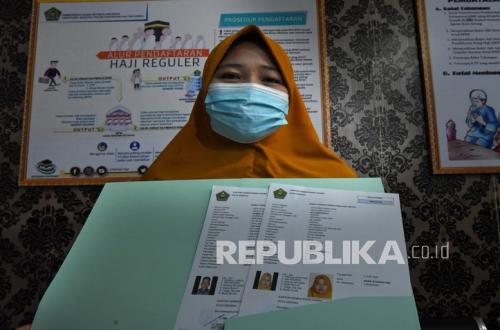
An Islamic legal analysis of the restrictions on Hajj registration (quotas) in Indonesia, with long queues and government regulations, is rooted in Maqashid Syariah as the grand theory. This approach evaluates government policies not merely as limitations on the right to worship, but as efforts in Hifz an-Nafs (preserving life/safety) and Hifz ad-Din (preserving religion) for pilgrims.
The following is a comprehensive breakdown of the Islamic legal analysis based on this case:
First, Grand Theory: Maqashid Syariah (Objectives of Sharia)
The policy of limiting Hajj quotas and registration in Indonesia (based on Law No. 8 of 2019 and related Ministerial Regulations) aligns with the principles of Maqashid Syariah. Among the Maqashid Syariah are Hifz an-Nafs (Preserving Life/Safety), meaning that quota limitations must be implemented to prevent extreme overcrowding (crowd management) that endangers pilgrims’ lives during Wuquf at Arafah or throwing Jamarat. This is in accordance with the fiqh maxim, “Dar’ul mafasid muqaddamun ’ala jalbil mashalih” (Preventing harm takes precedence over achieving benefits). Additionally, Hifz ad-Din (Preserving Religion) involves good Hajj management ensuring orderly and devoted worship, which is part of maintaining religious integrity.
Second, Fiqh Analysis: Long Queues and the Concept of Istitha’ah (Capability)
The long queues reaching 20-40 years raise fiqh discussions regarding the status of Istitha’ah; someone who is financially capable but has not yet received their turn (queue still far away) is considered not fully meeting the Istitha’ah requirements, especially the safety (security/availability of quota) condition. Also, regarding the non-lapsing obligation, the Hajj obligation remains attached, but its performance is delayed due to udzur (Sharia excuses) in the form of state restrictions. If death occurs while in the queue, the Hajj obligation is considered fulfilled from the perspective of intention and registration, though proxy Hajj is recommended.
Third, Government Regulation Analysis: Sadd al-Dhari’ah (Blocking the Path to Harm)
Government regulations (including Law No. 8 of 2019) that limit repeat Hajj (e.g., allowed to register again after 10 years) are analysed using the Sadd al-Dhari’ah approach, meaning the moral flaw of repeated Hajj, i.e., performing Hajj more than once when queues are very long, is considered a “moral flaw” according to Bahtsul Masail, because it takes the share of those obligatory for their first Hajj. As well as social justice issues, limiting repeat Hajj is a step towards realising proportional justice in public services, providing equal opportunities for every Muslim.
Fourth, Islamic Legal Solutions in Regulation
Islamic legal solutions in regulation include early-age registration, meaning the policy of allowing Hajj registration from an early age is permissible (mubah) as long as the funds used are halal, as an effort to circumvent long queues. As well as quota transfer, the policy of transferring Hajj quotas for pilgrims who have passed away is permissible as a manifestation of family welfare.
An Islamic legal analysis of the restrictions on Hajj registration (quotas) in Indonesia, which has implications for long queues, can be approached using the middle theory of Maqashid Syariah (objectives of Sharia) with the Maslahah Mursalah (public interest) approach. The following is a comprehensive analysis of the policy:
First, Legal Basis and Field Reality (Regulations)
Government regulations on Hajj quota restrictions in Indonesia are based on Law No. 8 of 2019 on the Implementation of Hajj and Umrah Pilgrimage. The Minister of Religious Affairs has the authority to set quotas, including regular and special quotas. However, as information, starting in 2026, the Ministry of Religious Affairs will no longer be actively involved as the technical manager of quotas; this task will be transferred to the Hajj Financial Management Agency, though it still holds a crucial role in bilateral/diplomatic Hajj relations.
Regarding quotas, Saudi Arabia’s stance is that these restrictions are fundamentally the result of the OIC decision in 1987 (1,000 pilgrims per 1,000,000 population) and the Kingdom of Saudi Arabia’s policy to maintain security and the capacity of worship sites.
Long queues are due to the limited quota ratio compared to the number of registrants; Hajj queues in Indonesia can reach two to three decades.
Second, Islamic Legal Analysis (Maqashid Syariah & Maslahah Mursalah)
In Islamic law, restrictions on Hajj quotas and registration are analysed as follows: Hifz Nafs (Preserving Life) & Hifz Maal (Preserving Wealth), meaning quota limitations aim to avoid extreme overcrowding (emergency) in Mina and other sacred areas, which could threaten pilgrims’ lives. This action aligns with the principle of dar’u al-mafasid muqaddam ’ala jalbi al-masalih (rejecting harm is prioritised over seeking benefits). Maslahah Mursalah (Public Interest) means that registration restrictions (through ministerial regulations) are istislah (welfare) actions not explicitly regulated in nash (Qur’an/Hadith), but necessary to ensure order and public safety. According to MUI fatwas and contemporary fuqaha, long queues do not nullify the Hajj obligation for those who are financially capable (istitha’ah). Registering and entering the waiting list is a form of compliance and legitimate effort (ikhtiar), so registrants are considered to have fulfilled their obligations administratively, and if they pass away before departing, the reward of Hajj still flows.
Third, Policy Implications
The policy of transferring Hajj quotas for pilgrims who have passed away is a derivative of the law that accommodates family welfare. The main challenge of this regulation is ensuring the principles of justice (first come first served) and transparency, especially regarding additional quotas.
An Islamic legal analysis of the quota restrictions and Hajj registration in Indonesia is a study on the adjustment between worship obligations (fiqh …