
Islamic Economics and New Initiatives Shaping Indonesia's Development
Popularising Islamic economics is akin to sowing seeds, whilst Islamising the people’s economy represents the endeavour to ensure that every development outcome embodies fairness, public welfare, and protection for all citizens.
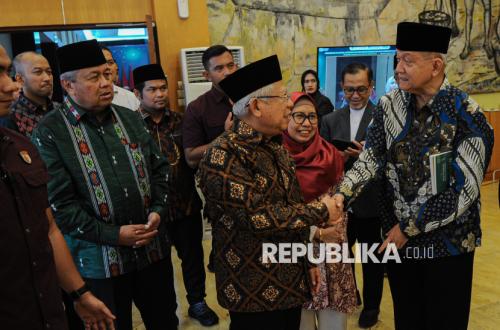
Addressing Islamic economy advocates at the BSI Ramadan gathering on 13 March 2026, KH Ma’ruf Amin, the patriarch of Indonesian Islamic economics, was essentially announcing a phase transition: from merely introducing the system towards embedding the spirit of Islamic principles into the daily pulse of economic practice.
Over the past quarter-century, the Islamic economics movement has traversed its first phase: popularising the concept, building institutions, and establishing foundational regulations. The emergence of various Islamic financial institutions, the formation of the Islamic economics movement, and the introduction of initial legal instruments demonstrate that Islamic economics is no longer a peripheral discourse but has secured a place within the national system.
KH Ma’ruf Amin characterises the 2000-2025 period as a phase when “the institutions exist, the regulations exist, and the movement is underway”. Now, on the threshold of a new era, he invites the nation to advance: Islamising people’s economics, making Islamic values the ethics of economic life, rather than merely a product label or institutional status.
The Spirit of Islamic Principles in Regional Development
Islamising people’s economics extends beyond merely increasing the number of banks, cooperatives, or Islamic financial institutions; the spirit must genuinely permeate how we design development, particularly at the regional level. Regional development planning must view Islamic principles not merely as a religious attribute but also as a source of normative values that can be deployed to formulate budgets, design programmes, and establish policies that are fairer and more sustainable.
Through various planning schemes and forums, including agreements at the e-Rakortekrenbang forum with 38 provinces, we are in the process of extending the spirit of Islamic principles into regional government programmes encompassing halal ecosystem development, strengthening Islamic social finance, and empowering the real sector based on MSMEs and pesantren. The objective is straightforward yet fundamental: regional development should not be viewed solely through growth but also through equitable distribution, support for vulnerable groups, and strengthening local economic morality.
Legal Infrastructure as the Backbone
Theoretically, Islamising people’s economics demands robust legal infrastructure. From the perspective of development law theory, law must do more than serve as a “night watchman” merely regulating; it must also function as a “social engineer” directing economic transformation towards the nation’s lofty objectives.
Law becomes the framework channelling society’s religious and moral energy into clear, enforceable rights and obligations binding all actors without discrimination.
From a legal theory perspective, every legal system fundamentally carries two principal mandates: affirming the basic values that constitute society’s normative orientation whilst regulating social relations to proceed orderly and justly.
In the usul fiqh tradition, this function is reflected in two roles of Islamic law: affirming normative values (tatsbit al-qiyam) and regulating muamalah relations in social life (tanzhim al-mu’amalat).