
Islamic Community Building at Bundaran HI: From Symbol of Presence to Centre for Islamic Economic Revival
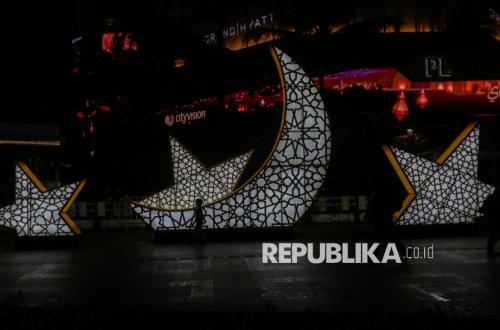
President Prabowo Subianto’s plan to prepare strategic land in the Bundaran HI area for the development of a building for the Indonesian Council of Islamic Scholars (MUI) and Islamic community institutions deserves high appreciation.
Amidst global economic dynamics fraught with uncertainty, this initiative is important not only symbolically but also strategically significant. It can serve as a new indication that the Islamic community is not merely the largest demographic group in Indonesia, but also an important actor in the architecture of the nation’s future economy, finance, and business.
Bundaran HI is one of the most prestigious locations in the country. It is a nexus of economic movement, business, diplomacy, and modern Indonesia’s image. Therefore, when the state prepares space in that area for Islamic community institutions, the resulting message is very powerful. The community is not placed on the periphery of history, but at the centre of national civilisation.
However, the greatest significance of this initiative must not stop at the matter of location. Far more important is how this project is understood and designed from the outset. The building should not be viewed merely as a physical structure, let alone simply a new address for various institutions.
This building must be positioned as a centre for consolidating ideas, strengthening institutions, and developing an integrated, modern, and globally competitive Islamic economic ecosystem.
This is the crucial point. Indonesia has had great potential in Islamic economy and finance, but has not yet fully been able to transform that potential into an organised force.
We have the world’s largest Muslim population, a vast halal market, growing Islamic finance industry, large networks of mosques and Islamic boarding schools, and vibrant Islamic philanthropy. However, these strengths often operate separately. The community’s energy is large but coordination is not always strong. Funds exist but management is not fully integrated. Ideas abound but institutionalisation often lags behind.
It is in this context that the development of an Islamic Community Building at Bundaran HI finds its relevance.
If designed with grand vision, this building could become a strategic hub bringing together Islamic scholars, regulators, academics, entrepreneurs, zakat managers, waqf trustees, Islamic financial institutions, halal industry players, and young Muslims in one collaborative ecosystem.
This is very important because the economic revival of the community cannot be built on good intentions alone. It requires institutions, governance, data, literacy, and space for synergy.
President Prabowo also mentioned the potential of community funds that could reach hundreds of trillion rupiah annually if managed well and professionally. Regardless of the methodological details, that statement contains one important message: the Islamic community in Indonesia actually possesses significant economic resources.
The problem is not merely whether funds exist, but whether we have an institutional architecture capable of managing, developing, and directing such funds professionally for common good.
This is where the building should take on a larger role. It can become a centre for orchestrating national Islamic economy. Not in the sense of standardising all institutions, but in providing meeting space, standardisation, coordination, and capacity strengthening.
The building can be designed as a centre for Islamic economic literacy, a halal business incubator, a policy forum for zakat and productive waqf, a research and data centre for community funds, a platform for promoting Islamic investment, and a node for Indonesia’s halal diplomacy at the global level.
With such orientation, this project ceases to be read as ordinary building construction. It becomes a long-term investment in developing Indonesian Islamic economic civilisation.
Because of this, positive reception from the public and the Islamic community must be accompanied by intellectual vigilance. Grand ideas often lose momentum because they stop at the level of speeches, ceremonies, and symbols.
Many projects begin with good intentions but then stall due to bureaucracy, unclear responsibility, or lack of mature operational design. The community certainly does not want such a large-scale project to be merely discourse that settles in public memory.
Therefore, follow-up action becomes very important. First, institutional clarity is needed. Who is the primary responsible party? Which ministry or institution will propose, design, and execute?
Because this project touches on aspects of religion, economy, finance, and infrastructure, cross-ministerial coordination is clearly unavoidable. Without firm designation of a leading sector, this project risks being pulled into administrative tussles.
Second, clarity regarding land status and asset management is required. If the land is under the management of a particular ministry, the administrative process must be resolved from the beginning. This sounds technical, but it is precisely such technical aspects that often determine whether an idea can move forward or not.
Third, a realistic and sustainable financing scheme is required. In a fiscal situation full of challenges, this project needs to be carefully designed. A multi-year scheme could be a reasonable option.
Financing could also be considered through creative approaches that remain accountable, provided they do not violate the principles of good state governance. Most importantly, ensure that development does not stall mid-way and create unproductive burdens.
Fourth, and most importantly, clarity regarding the building’s function after it is established is needed. This is fundamental. Many magnificent buildings ultimately lose relevance because they lack a clear vision of use from the outset.
The Islamic Community Building at Bundaran HI must be ensured to become a centre of activity that is lively, productive, and provides real added value. It must generate programmes, bring networks together, accelerate collaboration, and strengthen capacity.