
Islamic Civilisation Rose and Dominated the World: Here's the Key to Defeating the West-Europe
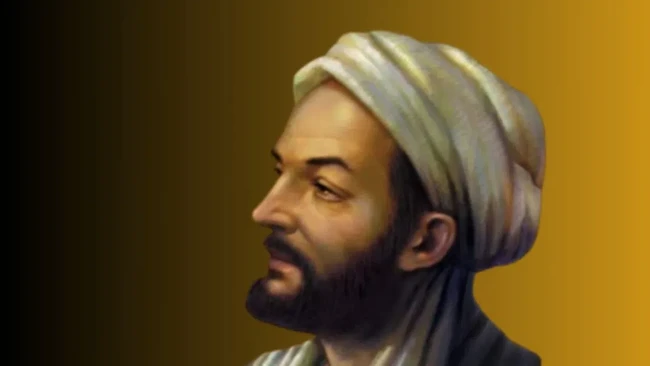
Jakarta, CNBC Indonesia - The Islamic world once achieved glory and dominated the world through discoveries in the fields of science, technology, and economics between the 8th and 11th centuries CE.
History records that during this period, many scientists and philosophers emerged whose ideas formed the foundation of modern science, such as Avicenna, Ibn Khaldun, Al-Khwarizmi, and others.
However, the current situation is quite the opposite. It is difficult to produce a new Avicenna in today’s world. Moreover, countries with predominantly Muslim populations are less prosperous compared to countries with predominantly non-Muslim populations.
In countries with predominantly Muslim populations, there are always conflicts, poverty, and high unemployment. This contrasts sharply with countries with predominantly non-Muslim populations.
One way to enable the Islamic world to rise again is to understand how Islam achieved glory hundreds of years ago. It turns out that the key to the Islamic world’s rise and dominance lies with merchants or entrepreneurs.
This fact was revealed by San Diego University lecturer Ahmet T. Kuru in “Islam, Authoritarianism, and Underdevelopment” (2019). He explains that merchants held the crucial key to Islamic progress during the 8th to 11th centuries, or the Umayyad and Abbasid dynasties period, as they provided funds for the development of knowledge for scholars and scientists.
At that time, scholars and scientists decided to distance themselves from those in power. They believed that drawing close to rulers could hamper freedom of thought. Consequently, to develop knowledge, they chose to work closely with merchants.
At the same time, merchants also needed scientists to develop knowledge according to their interests. Merchants who had large business networks extending to Europe, India, and China certainly needed skills in accounting, pricing, credit matters, and mathematics.
Realising they could not do this themselves, the only way was to request assistance from Muslim scientists to develop knowledge, particularly knowledge related to commerce. At this point, merchants held two positions: as funding providers for research and participants in the development of knowledge.
As a result, scientists were also able to freely develop scientific and religious knowledge with merchant support.
Thanks to such relations, Islamic civilisation experienced very rapid progress and dominated the world. From this point, Kuru states that “merchants became the main agents of economic activity in the Muslim world and were the backbone of Islamic civilisation’s brilliance.”
At the same time, a different condition occurred in Europe. While Islam and the Middle East were in a golden era, Europe experienced the opposite: science and economic activity stagnated. This could happen because of the strong dominance of religion and state intervention in scientists, a policy that Muslim scientists had avoided from the outset.
However, this situation changed from the 11th century onwards. In Europe, religion and the state no longer intervened in scientists, thus producing many new discoveries. From this point, its inhabitants were able to rise and create various innovations enjoyed by the world’s population today.
“With intellectual and socioeconomic dynamism, Western countries developed technology and military organisation, and dominated the world,” said Ahmet T. Kuru.
Unfortunately, at the same time, the Muslim world experienced decline. Governments began intervening in scientists, causing their authority to become increasingly limited. As a result, the Islamic world stagnated and has tended to decline to the present day.