
Isbat Session: History, Mechanism, and Determination of Eid
In just a few hours, the government through the Ministry of Religious Affairs will hold the Sidang Isbat to determine 1 Syawal 1447 Hijriah or Eid al-Fitr Day 2026. This forum determines when Muslims in Indonesia end their Ramadan fasting worship.
Sidang Isbat is an official forum organised by the government to establish the beginning of Hijriah months, such as Ramadan, Syawal (Eid al-Fitr), and Dzulhijjah (Eid al-Adha). Its purpose is to provide certainty for worship times in accordance with Islamic law while maintaining uniformity in society.
In practice, Sidang Isbat combines two main methods: hisab and rukyat. Hisab uses astronomical calculations to determine the moon’s position mathematically. Meanwhile, rukyat involves direct observation of the hilal or the first crescent moon after sunset.
The combination of both reflects efforts to balance scientific and religious approaches, while accommodating various views in determining the Hijriah calendar.
History of Sidang Isbat
The determination of religious holidays has been a concern of the government since the early days of independence. During President Soekarno’s administration, Government Regulation Number 2/Um of 1946 was born, regulating holidays, including Eid al-Fitr.
Since then, the Minister of Religious Affairs has been authorised to set holidays each year. The tradition of Sidang Isbat then developed as the official mechanism used to this day.
Several records indicate that Sidang Isbat began to be routinely held in the 1950s decade, while other sources mention 1962 as the start of its implementation. The session is usually held on the 29th of Sya’ban to determine the start of Ramadan, and on the 29th of Ramadan to set 1 Syawal.
During the tenure of Minister of Religious Affairs Saifuddin Zuhri, Sidang Isbat was further strengthened through Ministerial Decree (KMA) Number 47 of 1963. Its status was then reinforced through subsequent regulations, including Law Number 3 of 2006 on Religious Courts.
Determination Mechanism
Sidang Isbat begins with a presentation of the hilal’s position by the Ministry of Religious Affairs’ Hijriah Calendar Unification Team based on hisab calculations.
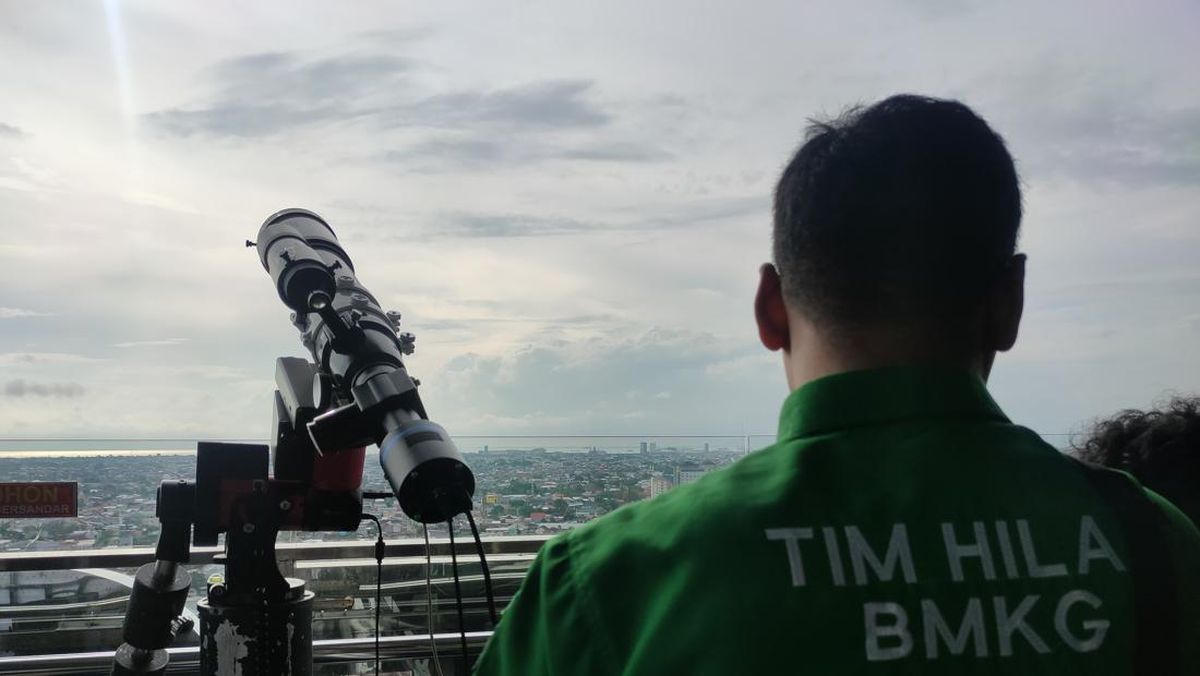
In parallel, hilal observations are conducted at hundreds of points across Indonesia. For determining Syawal 1447 H, observations are carried out at around 117 locations spread from west to east Indonesia.
Next, the Minister of Religious Affairs leads a closed session involving various parties, from representatives of Islamic community organisations, ambassadors of friendly countries, to institutions such as BMKG, BRIN, and astronomy experts.
The decision is made by considering hisab data and rukyat reports. The results are then announced to the public through a widely broadcast press conference.
Nevertheless, differences in determining the start of Hijriah months between the government and some Islamic mass organisations often occur. However, such differences are expected to be addressed with mutual respect to maintain harmony.
Analysis of Eid 2026 Determination
Director of Islamic Religious Affairs at the Ministry of Religious Affairs, Arsad Hidayat, stated that based on hisab, the hilal’s position at the end of Ramadan 1447 H does not fully meet the visibility criteria set by MABIMS member countries (Brunei, Indonesia, Malaysia, and Singapore).
On 29 Ramadan 1447 H, corresponding to 19 March 2026, the hilal’s altitude in Indonesia ranges from 0°54’ to 3°7’. Meanwhile, the elongation angle ranges between 4°32’ and 6°6’.
However, the MABIMS standard requires a minimum altitude of 3 degrees and elongation of 6.4 degrees. This means that although some regions may potentially meet the minimum altitude, the elongation aspect still does not meet the imkanur rukyat criteria.
This finding aligns with predictions from the Bosscha Observatory at Bandung Institute of Technology (ITB). Bosscha researcher, Yatny Yulianty, stated that the hilal’s position is very low and close to the sun at sunset, making it difficult to observe.
Bosscha data shows geocentric elongation ranging from 4.6 to 6.2 degrees, while topocentric elongation is between 4.0 and 5.5 degrees, still below the visibility threshold.
Nevertheless, the final decision remains in the hands of the government through Sidang Isbat. Field rukyat results will be the determining factor on whether the hilal can be seen or not.