
Is Trump Really Afraid of Being "Punished" by Wall Street Due to the Iran War?
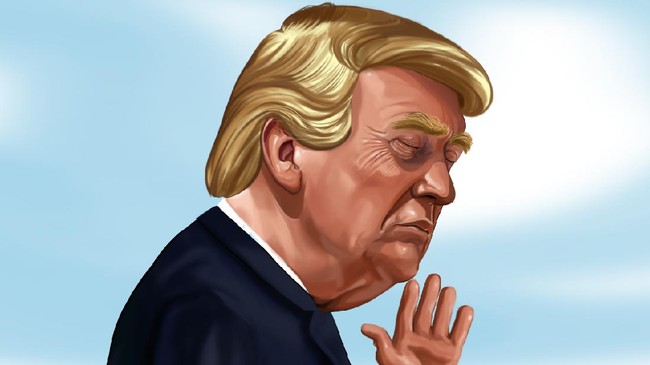
Geopolitical unrest in the Middle East has once again highlighted a major vulnerability in the administration of United States President Donald Trump. Behind his tough rhetoric towards Iran, Trump’s policy manoeuvres seem largely dictated by movements in the domestic equity markets. Fears of a collapse in Wall Street indices are suspected to be the primary reason behind various unilateral claims regarding a peace agreement. These self-proclaimed assertions appear aimed solely at quelling investor panic and maintaining economic stability on paper, suggesting that Trump’s apprehension lies in the destruction of prices on Wall Street while navigating the grey areas amid the current military operations. Wall Street Under Pressure and Market-Soothing Rhetoric Examining Tuesday’s (24/3/2026) trading data, the brief rally that occurred on the US stock exchange proved unsustainable. The Dow Jones Industrial Average (DJIA) weakened again and closed at 46,124.06. The S&P 500 corrected to 6,556.37, while the Nasdaq Composite closed at 21,761.89. This decline further emphasises the sharp correction trend sweeping the markets throughout March. For comparison, in mid-February, the DJIA had reached its all-time high of 50,188, the S&P 500 at 6,976, and the Nasdaq had peaked around 23,592. Amid threats of surging global oil prices due to escalating conflict in the Strait of Hormuz, Trump surprisingly delayed his military strike ultimatum. Within less than 48 hours from the start of the week, Trump has at least launched highly confident unilateral claims to the public. Trump claimed there had been very productive conversations, stating that Iran had approached for a deal, although the discussion remains closed based on his explanation on his social media account. However, this entire optimistic narrative was immediately refuted by Iranian authorities, who asserted that there are absolutely no direct negotiations underway with Washington at present, labelling it as a unilateral claim. Maintaining Public Perception and Capital Flight to Asia This contradictory dynamic reinforces the analysis that the United States government is deliberately using verbal diplomacy as the primary instrument for stock market intervention. When Wall Street sentiment worsens due to war uncertainties, unilateral claims of de-escalation serve as the quickest way to suppress commodity prices and boost market participant morale. Unfortunately, financial markets cannot be calmed with invalid rhetoric for too long. The lack of concrete evidence for the agreement has led US stock indices to close in the red again, as investors realise the statements are likely mere efforts to maintain public perception. Ironically, the uncertainty created by Washington’s policies has become a positive catalyst for stock markets in the Asian region. While Wall Street has experienced corrections in recent closing sessions, most major Asian indices have risen since Tuesday’s (24/3/2026) trading and also in today’s session (25/3/2026). In this week’s trading, stock exchanges in Japan, South Korea, Shanghai, Singapore, and Hong Kong have consistently opened strongly and dominated green for the past two days. This phenomenon indicates a massive global capital flow rotation. The inconsistency in statements from the US government has prompted institutional investors to shift their funds to safer harbours. Asian exchanges are now viewed as having a far more measured risk profile compared to Wall Street, whose movements are currently deemed overly dependent on unverifiable geopolitical claims. Additionally, cooperation among Asian countries is more consistent and neutral, as reflected in the Japanese government’s rejection of the US request to send troops to the Middle East to maintain the current war dynamics. If US authorities continue to play with market sentiment through unilateral narratives without real conflict resolution, capital flight to equity assets in the Asian region could become a structural trend that persists, rendering Trump’s primary goal of “Make America Great Again” another unilateral claim for the superpower.