
Is it Permissible to Shorten the Final Tahiyat Recitation in Tarawih Prayers?
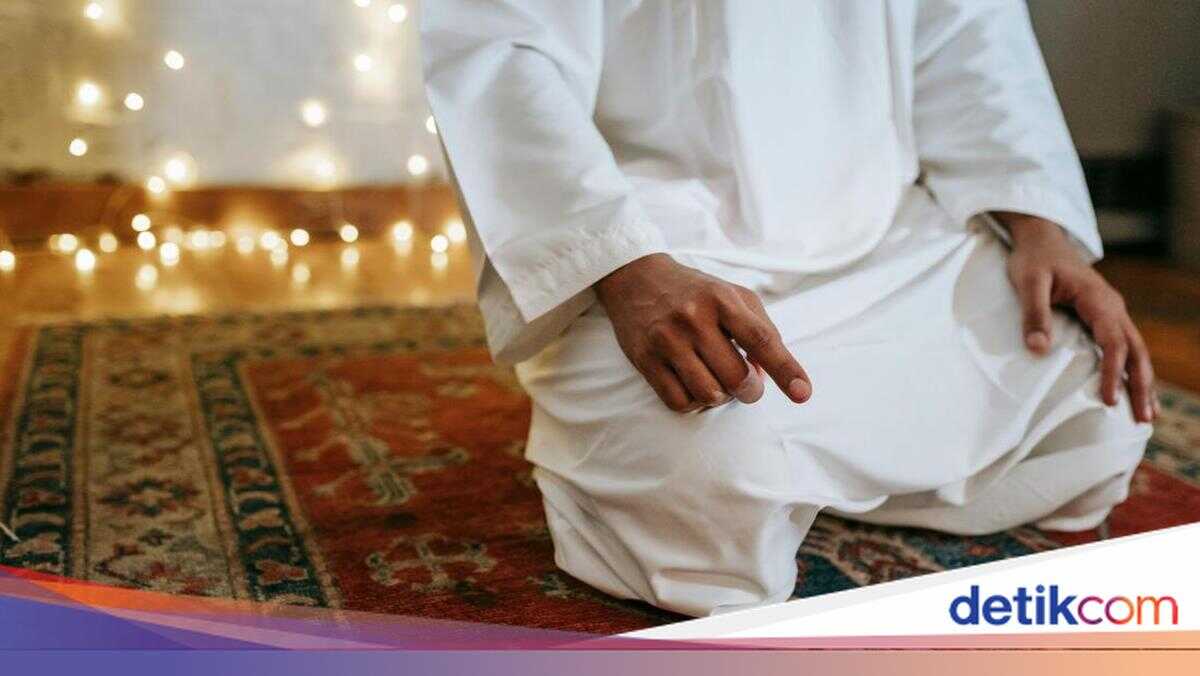
The phenomenon of fast-paced Tarawih prayers is often a topic of discussion among Indonesian Muslims. With a diverse congregation, including those who are tired or have urgent matters to attend to, imams are often expected to lead prayers in a shorter duration. This raises an important question: is it permissible to shorten the final Tahiyat recitation to ensure the prayer remains valid even when performed quickly?
According to Islamic jurisprudence, fast-paced Tarawih prayers are still considered valid as long as the essential elements are not neglected. The imam or the followers must still pay attention to thuma’nînah or tranquility during the obligatory movements (rukun fi’li), such as during the bowing (ruku), prostration (sujud), and sitting between the two prostrations.
So, is it permissible to shorten the final Tahiyat recitation in Tarawih prayers? Let’s examine the complete explanation.
The main points are:
The final Tahiyat recitation can be shortened by reciting only the obligatory phrases to make the prayer duration more efficient.
Even when recited quickly (hadr), the length and emphasis of the recitation must not be omitted, as this can invalidate the prayer.
Tarawih prayers can be performed in sets of two or four rak’ahs, depending on the needs and guidance of the hadith.
Is it permissible to shorten the final Tahiyat recitation in Tarawih prayers?
Quoted from NU Online, the obligatory recitations in prayer cannot be recited arbitrarily. The rules of tajwid must be maintained because a fatal error in recitation, such as omitting the emphasis, can invalidate the prayer. Sheikh Zainudin Al-Malyabari in the book Fathul Mu’in gives a stern warning:
Apabila ada orang yang sholat membaca idh-har dari nun yang seharusnya dibaca idgham pada kalimat ‘al lâilâha illallâh’ maka hal tersebut membatalkan sholat sebab meninggalkan tasydid di situ sebagaimana jika ada orang yang meninggalkan membaca idgham tanwin ‘dal’-nya ‘muhammad’ pada kalimat ‘muhammadar rasulullâh’.
Regarding the final Tahiyat recitation, Muslims can actually choose a level of speed called hadr in the science of tajwid. Even when recited quickly, the balance of long and short recitations must be maintained. To make the prayer duration more efficient while still meeting the minimum requirements, the book Fathul Mu’in explains that one can suffice by reciting only the obligatory phrases. The following is the shortest version of the final Tahiyat recitation that is still valid according to the teachings of Imam Syafi’i and At-Tirmidhi:
At-tahiyyâtu lillâh, salâmun ’alaika ayyuhan-nabiyyu wa rahmatullâhi wa barakâtuh, salâmun ’alainâ wa ’alâ ’ibâdillâhis-shâlihîn. Asyhadu al-lâ ilâha illallâh, wa anna muhammadar rasûlullâh.
After reciting the minimum phrases, the prayer must be continued by reciting the prayers for the Prophet as the next obligatory element:
Allâhumma shalli ’alâ muhammad, wa ’alâ âli muhammad.
This shorter recitation is a solution for those who often fall behind when following an imam who recites quickly. However, it should be remembered that in normal and calm conditions, it is highly recommended to recite the longer version of the tasyahud to gain greater virtues and rewards. Using the minimum recitation is permissible as a concession in certain conditions, but the quality of worship and the accuracy of tajwid remain the key to the acceptance of a prayer.
The Procedure for Performing Tarawih Prayers
Technically, the procedure and number of rak’ahs in Tarawih prayers are the same as in Tahajjud prayers. According to M. Khalilurrahman Al Mahfani in the book Buku Pintar Shalat, Muslims can perform this prayer with eight rak’ahs, followed by three rak’ahs of Witr prayer. In practice, the eight rak’ahs have two options for implementation, both of which are based on authentic hadith.
Praying Four Rak’ahs with a Final Salam
This format is performed by completing four rak’ahs before ending with a final salam. The legal basis refers to a hadith narrated by Bukhari and Muslim, sourced from Aisyah RA.
Praying Two Rak’ahs with a Final Salam
This format is performed by saying the salam after completing each set of two rak’ahs. This is based on a hadith narrated by Bukhari and Muslim, sourced from Ibn Umar RA.
Regarding the location, Muslims are allowed to perform Tarawih prayers in congregation or individually at home. However, the majority of scholars believe that performing it in congregation is much more preferable. The Prophet Muhammad SAW himself regularly performed Tarawih prayers in congregation, but he deliberately did not always come to the mosque to prevent this worship from being considered an obligation for his followers.
Thus, this is the explanation regarding the final Tahiyat recitation in Tarawih prayers, which can be shortened. Hopefully, it is useful!
FAQ
Is it permissible to shorten the final Tahiyat recitation?
Yes, it is permissible to shorten the final Tahiyat recitation by reciting only the phrases that are obligatory. According to the book Fathul Mu’in, the shortest version includes praise to Allah, greetings to the Prophet and the righteous servants, and the two statements of faith. This is a solution or concession (rukhshah) when praying in an emergency or when following an imam who recites very quickly.
Is the final Tahiyat recited during Tarawih?
In every Tarawih prayer, whether it is performed in sets of two or four rak’ahs, it is obligatory to recite the final Tahiyat before saying the salam. The final Tahiyat is one of the obligatory elements of prayer that must not be omitted under any circumstances. Without reciting the final Tahiyat and the prayers for the Prophet afterward, the prayer is not valid.