
Is Indonesia Experiencing Premature Deindustrialisation?
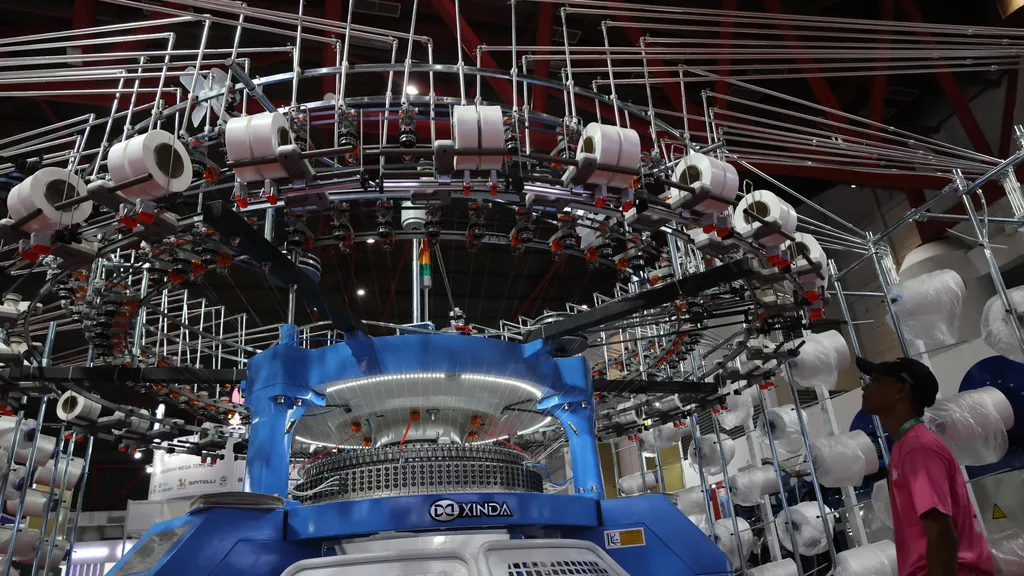
Legal uncertainty and inconsistent policies are seen as the main barriers to investment in Indonesia, accelerating the signs of premature deindustrialisation. During a Commission IX DPR Special Committee meeting on the Labour Law Draft with the Indonesian Employers Association (Apindo) on Tuesday (19 May 2026), Apindo’s Labour Affairs Head Bob Azam addressed premature deindustrialisation. Apindo hopes the new labour law will not merely replicate the substance of Law No. 13 of 2003 or the Omnibus Law on Job Creation. According to Bob, the new regulations should boost industrialisation, ensure legal certainty, and expand formal employment. Uncertainty in business operations, legal frameworks, wage systems, and formal job creation are factors pushing Indonesia towards premature deindustrialisation. ‘Why is deindustrialisation happening? Among other issues is legal uncertainty. We’ve had changing regulations—for example, government wage rules have changed four times in a decade,’ Bob said. Such regulatory changes make it difficult for labour-intensive industries to make long-term contracts. ‘They struggle to estimate labour costs, which constitute the majority of expenses for these industries,’ he added. ‘Businesses and labour unions share the same goal: protecting workers while ensuring business continuity. Workers are a company’s most important asset, so protecting them is also in the industry’s interest,’ Bob noted. ‘However, labour regulations should be framed within a broader context to promote national industrialisation.’ Looking at developed nations and East Asian countries like Japan and China, high economic growth has always been supported by a significant manufacturing sector. When China grew at 8-10% annually, its manufacturing contribution exceeded 30% of GDP. Conversely, Indonesia faces a declining trend in manufacturing’s contribution to the national economy. Between 2005 and 2025, the manufacturing sector’s growth consistently lagged behind overall economic growth, causing its GDP share to fall. ‘Once at 30% before the reform era, it’s now around 19%. Manufacturing has grown at an average 4% annually versus 4.98% GDP growth. Excluding palm oil (CPO), it drops to 16%,’ Bob said. ‘This reflects premature deindustrialisation—manufacturing’s decline before Indonesia reaches high-income status.’ ‘Our per capita GDP hasn’t reached $12,000, yet deindustrialisation signs are already present,’ he added. The impact is seen in declining formal employment. Currently, around 60% of Indonesia’s workforce remains in the informal sector, while the formal sector’s share continues to fall. Manufacturing has long supply chains and creates higher value addition. ‘Tax revenue primarily comes from formal workers. As the formal sector shrinks, the tax ratio drops—currently at 9.13%, below 10%,’ he said. Alongside deindustrialisation, Indonesia remains trapped in the middle-income trap, with the economy increasingly reliant on natural resource commodities, as 65% of exports remain commodity-linked. Bob cited Dutch disease, where heavy reliance on natural resources hinders high-value industrial development. ‘Dutch disease means abundant resources don’t make us wealthier but instead create economic issues,’ he said. On labour issues, Bob noted that Regional Minimum Wage (UMR) increases above inflation haven’t fully improved workers’ welfare. Most informal workers face real income growth below inflation, while some companies struggle to meet minimum wage due to financial constraints and production costs. The Ministry of Industry denies premature deindustrialisation in Indonesia’s manufacturing sector. Spokesperson Febri Hendri Antoni Arif, contacted on Sunday (24 May 2026), stated that manufacturing remains the primary contributor to the national economy. ‘We deny premature deindustrialisation or any deindustrialisation in Indonesia’s manufacturing sector. Data from Statistics Indonesia (BPS) shows an upward trend in manufacturing’s contribution to GDP,’ Febri said. According to BPS data, manufacturing’s GDP contribution rose from 17.92% in Q2 2022 to 19.20% in Q1 2026. This rising ratio means Indonesia’s manufacturing sector is not in a deindustrialisation phase. According to deindustrialisation theory (Rowthorn and Ramaswamy, 1999), an industry in a country is said to be deindustrialising when its GDP ratio to national GDP