
Iran's Special Strategy to Confront the United States and Israel: What Is It?
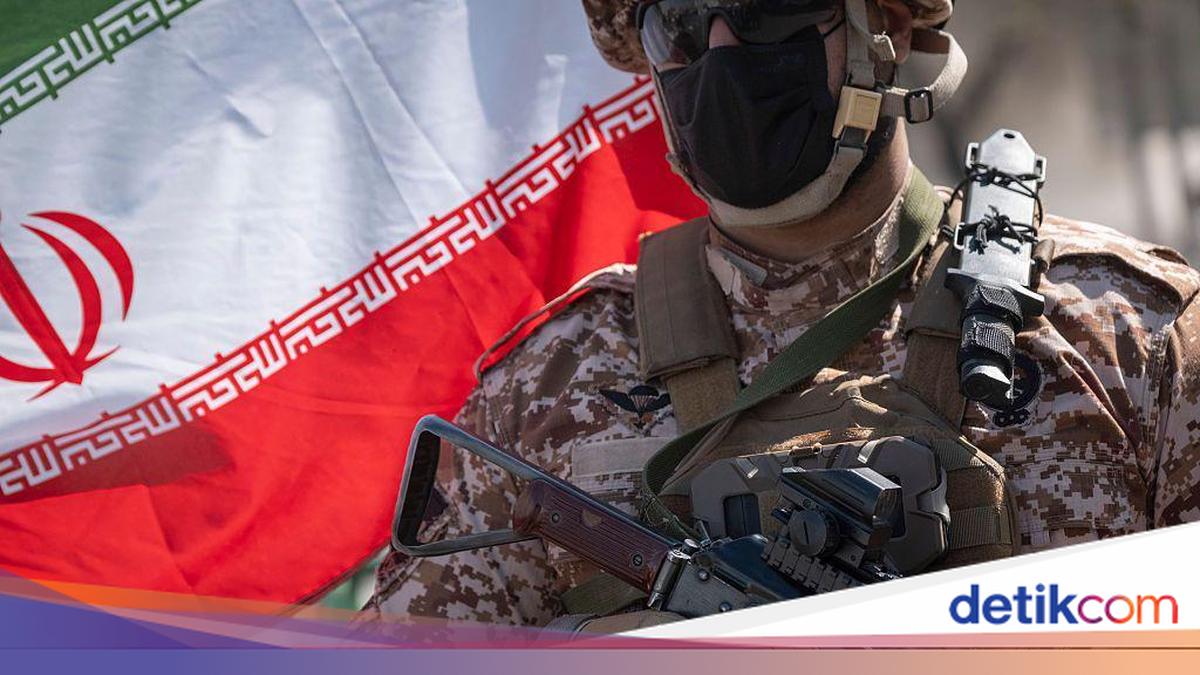
The United States and Israel claim that their combined sustained air strikes have significantly weakened Iran’s military capability.
“Their air defence, air force, navy, and leadership are already destroyed,” wrote United States President Donald Trump on his Truth Social platform on Tuesday, 3 March. “They want to talk. I told them, ‘Too late!’”
Iran has responded by launching attacks against Israel and Middle Eastern countries hosting United States military bases, citing self-defence justifications.
However, with Israel and the United States considered militarily superior, the question arises: what options remain available to Iran in this war, and what strategy is it currently pursuing?
Draining Resources
Dr H. A. Hellyer, a Middle East security expert at the Royal United Services Institute (RUSI) in the UK, said Iran’s current military approach is not to defeat the United States or Israel “in conventional warfare,” but rather to make the conflict “protracted, regionally dispersed, and economically costly.”
“Iran cannot win conventionally, but its strategy is to ensure that victory for the other side remains costly and uncertain,” he said.
Nicole Grajewski, an assistant professor at the Centre for International Studies (CERI) at Sciences Po, France, agreed.
She described Iran’s strategy as “war of attrition”—a military approach aimed at weakening the opponent by draining resources and inflicting sustained losses until the opponent’s combat capability diminishes.
There is also a psychological dimension. “During the 12-Day War [against Israel last year], Iran directed many attacks towards civilian areas,” said Grajewski.
“Precision is not the primary concern. The objective is to instil fear and psychological trauma amongst the population.”
Missiles and drones are believed to form the backbone of Iran’s defence doctrine.
Iran’s ballistic missile stocks have reportedly been significantly impacted during the 12-Day War, however “the exact number remains unclear because there is underground storage and ongoing reproduction efforts,” according to Nicole Grajewski.
Israel estimated Iran possessed approximately 2,500 missiles in February 2026, both short-range (up to 1,000 km) and medium-range (1,000–3,000 km).
Iranian officials stated they had used systems including the Sejjil missile, which is purported to be capable of reaching targets up to 2,000 km away, and the Fattah, which Tehran categorises as a hypersonic missile, far faster than the speed of sound.
‘Missile Cities’
Iranian media frequently refers to underground missile facilities as “missile cities,” although the size and ammunition stocks within them remain unverified.
However, General Dan Caine, the top United States military commander, said Iranian ballistic missile launches have declined 86% since the first day of fighting on Saturday, 28 February. The United States Central Command (Centcom) reported a further 23% reduction by Tuesday, 4 March.
Nevertheless, Dr. Hellyer assessed that Iran still possesses significant strike capacity to target “Israeli infrastructure, regional United States bases, and Gulf allies, whilst simultaneously threatening the global energy flow through the Strait of Hormuz.”
“Even limited disruption in that strait could have severe global economic consequences,” he said.
Approximately 20% of global oil passes through the narrow strait, which Iran has effectively closed whilst threatening to attack any vessel attempting to transit it.
Although Iran may face shortages of advanced missiles and solid propellant, Nicole Grajewski emphasised that the country’s drone capacity remains significant.
Iran is estimated to have produced tens of thousands of Shahed one-way attack drones before the war. The design has even been exported to Russia, and some aspects of its technology have been replicated by the United States.
These drones not only serve to cause direct damage but also have strategic objectives: “eroding air defence systems over time” by forcing the opponent to exhaust expensive interceptor missiles.
“Part of this strategy is draining interceptor capability,” explained Grajewski. “Iran is doing this with UAVs and drones. That is also what Russia is doing in Ukraine.”
However, the United States stated that Iranian drone launches have declined 73% since the first day of the conflict.
The National Institute for Security Studies (INSS), based in Tel Aviv, reported that the United States and Israel have conducted more than 2,000 multi-munition strikes, whilst Iran has launched 571 missiles and 1,391 drones, many of which have been successfully intercepted.
Experts assess that maintaining this tempo of fighting will become increasingly difficult for both sides as the war continues.
Prolonged Conflict
According to the International Institute for Strategic Studies (IISS), Iran possesses approximately 610,000 active personnel.
Iran also has one of the largest armed forces in the Middle East.
According to estimates from the International Institute for Strategic Studies (IISS) Military Balance 2025 report, Iran has approximately 610,000 active personnel, including:
350,000 regular army troops.
190,000 members of the Islamic Revolutionary Guards Corps (IRGC), which oversees the missile and drone programmes and manages many regional operations.
Iran also relies on a network of regional allies including Houthi insurgents in Yemen, armed groups in Iraq, Hizbullah in Lebanon, and Hamas in Palestine. However, the Axis of Resistance has suffered significant blows during waves of fighting across various regions since Hamas’s attack on Gaza in October 2023.
Despite current constraints, Iran has experience in managing prolonged conflict, said Grajewski.
Iran’s resilience is rooted in the Iran-Iraq War, when cities were