
Iran's Sidelined Position as Pakistan-Afghanistan Conflict Intensifies, Leaving China as Collateral Damage
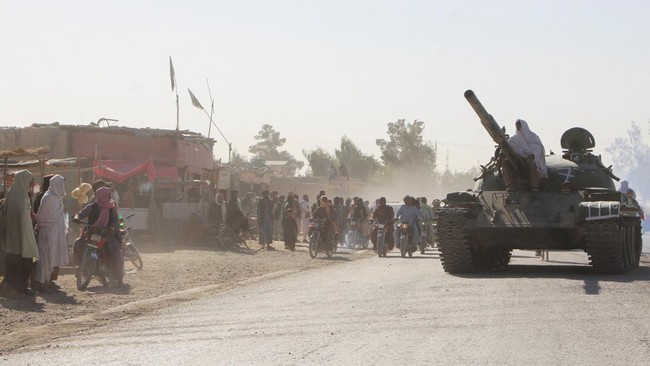
The relationship between Pakistan and Afghanistan has reached a critical low following the outbreak of open hostilities that marks the most serious confrontation since the Taliban’s return to power in 2021. After weeks of escalating cross-border clashes and retaliatory strikes, Islamabad has declared itself in a state of “open war” with the Taliban government following air attacks on Afghan border cities and provinces.
The violence has shattered a fragile ceasefire recently brokered in October 2025 and has quickly become the deadliest escalation along the 2,600-kilometre Durand Line in several years. Tens of thousands of civilians have been forced to flee, whilst the risk of a broader regional crisis continues to mount alarmingly.
The primary trigger for the conflict stems from disagreements over cross-border militancy, with Pakistan accusing Kabul of harbouring fighters from the Tehreek-e-Taliban Pakistan (TTP), an allegation vehemently denied by the Taliban. However, the geopolitical implications of this confrontation extend far beyond the border, particularly for China, which views the war not merely as a security crisis but as a direct challenge to its strategic vision of regional integration.
Ladislav Zemánek, a non-resident researcher at the China-CEE Institute and expert at the Valdai Discussion Club, assesses that China’s current position is severely compromised by the conflict between its two neighbours. “Among external stakeholders, China stands to lose the most from prolonged division between Islamabad and Kabul,” Zemánek said, as cited by Russia Today on Friday, 13 March 2026.
For years, Beijing has attempted to position Pakistan and Afghanistan as key nodes in a transregional economic architecture connecting Central Asia, South Asia, and western China. At the centre of this vision lies the China-Pakistan Economic Corridor (CPEC), a flagship Belt and Road Initiative (BRI) project encompassing transportation infrastructure, energy investment, and industrial zones spanning from Xinjiang to the port of Gwadar on the Arabian Sea.
Zemánek explains that in China’s strategic thinking, Afghanistan was meant to serve as a peripheral extension of this vast network. “Beijing has explored possibilities to link Afghan transportation routes, mineral resources, and transit corridors into the broader CPEC infrastructure system. Such integration would provide landlocked Afghanistan with access to maritime trade whilst bringing Central Asian markets closer to China’s western provinces,” Zemánek said.
The war between Pakistan and Afghanistan thus strikes directly at the geographic core of this economic vision. China’s relationships with both nations underscore why the stakes are so high, given that Pakistan has long been China’s “all-weather strategic cooperation partner” in defence, military technology, and deep economic ties.
China currently stands as Pakistan’s largest trading partner and the principal investor behind CPEC projects, with commitments worth tens of billions of dollars. Simultaneously, China’s involvement with Afghanistan has expanded since the US military withdrawal in 2021, with Chinese companies increasingly targeting Afghanistan’s untapped mineral wealth, including copper and rare earth deposits.
Xi Jinping’s Efforts
To manage these political sensitivities, China has established a trilateral dialogue mechanism between China, Pakistan, and Afghanistan. However, the outbreak of war between two participants in this framework has now exposed the fragility of Beijing’s economic diplomacy approach.
Zemánek highlights a fundamental mismatch between the tools China possesses and the forces driving the conflict. “The core of China’s dilemma lies in the mismatch between Beijing’s primary instruments, which are economic—such as infrastructure investment and development financing—and conflict dynamics driven by militant networks, disputed borders, ideological competition, and domestic political pressures,” he explained.
According to him, whilst economic integration can indeed promote cooperation in the long term, it cannot easily resolve active insurgencies or deeply entrenched security dilemmas. China’s current public messaging reflects an extremely delicate balance, wherein it urges both Islamabad and Kabul to resolve their differences through dialogue whilst expressing readiness to facilitate de-escalation.
However, diplomacy alone may prove insufficient to address deeper structural tensions, such as the Durand Line dispute—a colonial-era border dividing Afghanistan and Pakistan that remains unrecognised by Kabul. Moreover, this conflict occurs amid a global shift in which the threshold for confrontation between nuclear-armed nations appears to be shifting, given Pakistan’s status as a nuclear weapons state.
Zemánek emphasises that for Beijing, the war poses uncomfortable questions about the central assumption of its regional strategy—namely, that economic connectivity can pave the way to political stability. “Infrastructure can facilitate trade, but cannot by itself overcome ideological insurgency, disputed borders, or deep geopolitical competition. Economic corridors may promote stability over time, but cannot replace political reconciliation or effective governance,” Zemánek asserted.