
Iran's Shahed-136: a key weapon in attacks on Israel and the US, with components from Indonesia
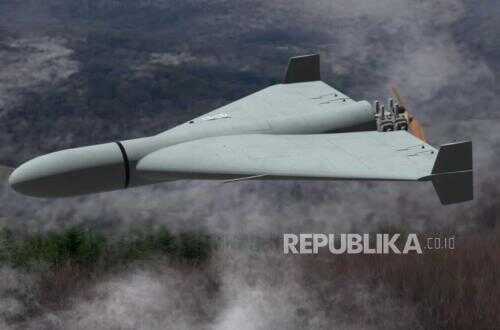
Iran has a flagship weapon for striking enemies, particularly Israel, namely the Shahed-136 drone. This kamikaze drone is mass-produced by Iran’s military to retaliate, including at several American military bases in the Gulf region. In a report by The New York Times on Tuesday, 3 March 2026, the reliability of domestically produced Iranian drones is reviewed. After proving its cheap and deadly effectiveness on the battlefield in Ukraine, the Shahed-136 drone was deployed across the Persian Gulf over the past weekend. It has caused significant damage amid Tehran’s retaliation against US and Israel. The Shahed-136 is a variant of the unmanned aerial vehicle family Shahed (Shahed means ‘witness’ in Persian) that is cheap to produce and can act like a guided missile as it flies towards a predetermined target. The drone was developed by a company affiliated with the Islamic Revolutionary Guard Corps (IRGC), the powerful ideological military branch that protects Iran’s system of governance. Iran has produced it since at least 2021 and has used it previously in Iraq. A New York Times-verified video since last Saturday shows the Shahed-136 ramming into buildings in Bahrain, Kuwait, and the United Arab Emirates. While in flight, the drone’s engine emits a distinctive buzzing sound. The sound is heard in a video of an attack on Manama, the Bahraini capital, targeting a high-rise apartment building. The triangular-shaped drone struck the side of the building, causing a fire and scattering debris. One-way attack drones have several advantages over traditional missiles, particularly their cost-effectiveness at around $35,000 per drone. They also have a relatively long range of about 2,000 kilometres. Seth Frantzman, a drone warfare expert, says that although the Shahed-136 is not as effective as other weapons, they can sometimes evade costly air defences. The Shahed-136 can sow chaos and fear, and can be produced in large numbers. ‘They give Iran a cheap weapons system similar to an air force,’ Frantzman said, whose book Drone Wars: Pioneers, Killing Machines, Artificial Intelligence, and the Battle for the Future was published in 2021. Another video from Saturday shows a Shahed-136 apparently striking infrastructure inside a United States Navy base in Bahrain. Black smoke billowed from the area as the drone’s buzzing was heard, and moments later it arced above the smoke and exploded on impact. A recording shot in the Jumeirah district of Dubai shows a Shahed-136 hitting the Fairmont Palm, a luxury hotel where standard rooms typically cost around $200 per night. ‘Oh my God,’ says the person filming the sequence. The Shahed-136 has also been used by Russia to target civilian infrastructure across Ukraine. Geran-2 is the name used by Russia for its domestically produced Shahed variant, which Russia now produces at a remote plant in the country’s east. Russia modified it during its invasion of Ukraine. Not to be outdone, the US government announced it has deployed a one-way strike drone known as Lucas. The drone, built by an Arizona-based company, SpectreWorks, is a reverse-engineered version of the Shahed. The United States Central Command (CENTCOM) announced that the US has deployed the Lucas drone for the first time in its campaign against Iran.