
Iran's Maritime Wealth Sought Globally: Fish Roe Reaches Rp50 Million Per Kilogramme
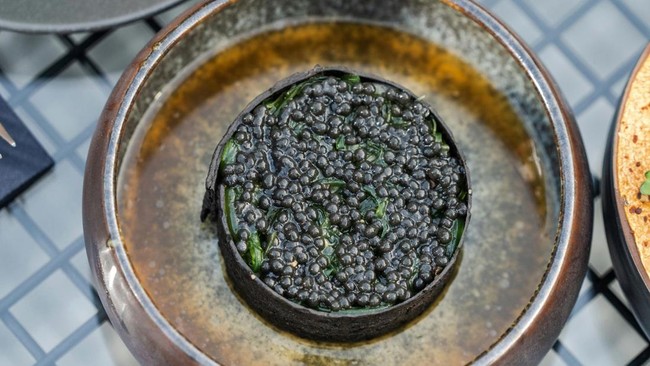
From tiny eggs produced by prehistoric fish in the Caspian Sea, a global trade chain has formed involving aquaculture, conservation, and world-class gastronomy.
Sturgeon roe from the Caspian Sea has long occupied the highest tier of global culinary markets. The product, known as caviar, is a commodity whose value exceeds most other seafood in the world. Iran stands at the centre of this story. The country manages one of the world’s most important sturgeon habitats, producing caviar that for centuries has been consumed by royal courts, Russian aristocrats, and fine dining restaurants across Europe.
The history of Iranian caviar extends far back into ancient Persia. Culinary records indicate that Persian society already utilised sturgeon roe as a high-value food and medicinal ingredient to enhance bodily vitality.
This tradition developed over centuries until it entered the modern industry in the late 19th century. During that period, an Armenian-Russian businessman named Lianazoff established a caviar processing industry on Iran’s coast. From that point, Iranian caviar trade began penetrating international markets and quickly became a favourite amongst Russian nobility and Europe’s elite dining tables.
The natural environment of the Caspian Sea provided the foundation for this reputation. Iran’s northern coastline stretches approximately 740 kilometres and directly borders the Caspian waters.
This sea reaches depths of around 900 metres and possesses a nutrient-rich ecosystem that has served as the natural habitat for sturgeon since prehistoric times. The combination of relatively clean water and stable temperature has made this region one of the world’s finest locations for sturgeon species development and caviar production.
Biologically, approximately 24 sturgeon species exist worldwide. However, only a few produce caviar of gastronomic quality.
On Iran’s coast, three main varieties dominate production: Beluga, Ossetra, and Sevruga. These three form the foundation of Iranian caviar’s international market reputation.
Beluga is considered the rarest and most expensive variety. Its eggs are large with colouring ranging from light to dark grey. The texture is fine and the taste is light, often described as buttery when it melts on the tongue.
Ossetra possesses a golden-grey colour with a flavour character often associated with hazelnut. Sevruga has smaller grains with amber-grey colouring and a sharper marine aroma. In European culinary tradition, this variety is often called “caviar for princes.”
Beyond these three classic varieties, the modern market recognises several other types derived from sturgeon aquaculture. One example is Baerii, originating from Siberian sturgeon species now widely farmed. In international trade, this product offers high quality at relatively lower prices compared to Beluga or Ossetra.
Caviar pricing reflects its position as an ultra-premium food. In international retail markets, a single 125-gramme tin of Iranian Beluga caviar can reach approximately €336 or Rp 6.64 million. When calculated per kilogramme, this equals Rp 53.12 million.
Another Beluga variant in the same size sells for around €312. Ossetra caviar at 125 grammes ranges around €263, whilst 125-gramme Baerii is sold for approximately €185. These prices place caviar among food products with the highest value per gramme.
Caviar quality is heavily influenced by the living environment of sturgeon fish. Iranian producers rely on natural water from the Caspian Sea for fish farming. This method differs from some European farms that use closed-pond systems. Natural water conditions help maintain the distinctive flavour profile that has long been associated with Iranian caviar.
The Iranian government also implements strict supervision of sturgeon populations. According to the international conservation body Convention on International Trade in Endangered Species of Wild Fauna and Flora, Iran is among Caspian nations with a system for recording catches and programmes to release millions of sturgeon fry into the sea to keep populations stable. This restocking programme is a crucial component in maintaining industry sustainability.
Nevertheless, the caviar industry has faced considerable pressure. Overexploitation in the late 20th century caused sturgeon populations to decline sharply. Within two decades, caviar production in the Caspian region fell by approximately one hundred times. Coastal pollution and illegal fishing practices further worsened conditions.
Fishing policy changes subsequently shifted production models towards more controlled aquaculture. Modern sturgeon farms in Iran now combine aquaculture techniques with natural Caspian water sources. This system helps maintain quality whilst reducing pressure on wild populations.
In the global market, caviar maintains its status as a symbol of gastronomic luxury. Michelin-starred restaurants, five-star hotels, and gourmet markets across Europe and America are primary consumers. Sturgeon roe from Iran’s coast retains a special position because of its taste reputation and long history.
This industry demonstrates how marine resources can transform into exceptionally valuable commodities.
For Iran, caviar represents a clear example of how marine ecosystems can produce products valued at hundreds of euros in a single small tin.