
Iranian Tensions Trigger Market Panic, Asian Markets Plunge
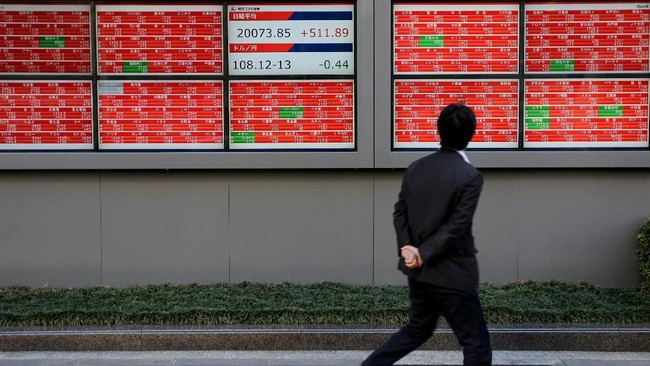
Jakarta — Asian stock markets plummeted due to sentiment stemming from the ongoing conflict in the Middle East region. Investors are concerned about tightening oil supplies, which could trigger fears of a global economic downturn.
Australia’s S&P/ASX 200 index fell 0.3% in early Asian trading, whilst Japan’s Nikkei 225 index dropped 2% and the broader Topix index fell 1.4%.
South Korea’s leading stock index, the Kospi, plunged nearly 3%, whilst the smaller-capitalised Kosdaq index declined nearly 2%.
Hong Kong’s Hang Seng Index is expected to open lower, with futures last traded at 25,467, compared to the previous close of 25,716.76.
According to CNBC International, Iran’s new Supreme Leader, Mojtaba Khamenei, stated that the Strait of Hormuz, a vital conduit for global oil trade, must remain closed and Tehran could open another front in the war if the conflict continues.
The Commander of the Naval Forces of the Islamic Revolutionary Guard Corps, Alireza Tangsiri, also reiterated this threat in a social media post, warning of the hardest blow against the aggressor enemy.
Bettors on the Kalshi prediction market raised their wagers that the US economy may enter a recession this year, with the probability increasing to 32%. This figure represents the highest level this year.
International benchmark Brent crude oil price surged 9.22% and closed at US$100.46 per barrel on Thursday. This is the first time Brent has closed above US$100 since August 2022.
Meanwhile, US West Texas Intermediate (WTI) crude oil price rose 9.72% and closed at US$95.73.
US President Donald Trump sought to dampen the rise in oil prices, stating that the US, as the world’s largest oil producer, would benefit from higher oil prices, whilst emphasising that his priority is to prevent Iran from acquiring nuclear weapons.
Overnight in the US, major stock indices recorded their lowest close for 2026, with the Dow Jones Industrial Average falling nearly 740 points to settle below 47,000 for the first time this year.
The S&P 500 fell 1.5% to end the session at 6,672.62, whilst the Nasdaq Composite lost 1.8% to close at 22,311.98. Futures contracts linked to the Dow 30 shares fell marginally by 0.03%.
S&P 500 futures gained 0.21%, whilst Nasdaq 100 futures increased by 0.12%.
Investors are awaiting crucial US inflation data. In addition, economists surveyed by Reuters estimate the PCE price index, which will be released on Friday, rose 2.9% in January, whilst the core PCE index is estimated to have increased to 3.1%.