
Iranian Sea Mines: Why This Weapon Is So Feared in the Strait of Hormuz
Geopolitical tensions in the Middle East have intensified following reports that Iran has begun planting sea mines in the Strait of Hormuz, one of the world’s most critical energy shipping corridors.
This move has raised serious concerns for global trade, particularly as approximately 20% of the world’s oil supply transits through this narrow passage. Since the conflict escalated, around 15 million barrels of crude oil per day and 4.5 million barrels of refined fuel have been reported stranded in the Gulf region due to security risks in the waterway.
United States President Donald Trump has called on Iran to immediately remove the mines that may have been deployed in the Strait of Hormuz, warning that Tehran will face severe consequences if it fails to do so. Meanwhile, the US military has stated that it has destroyed several Iranian naval vessels, including 16 mine-laying ships, in the waters around the Strait of Hormuz.
The Iranian Revolutionary Guards Corps (IRGC) previously warned that vessels transiting the region could become targets of attack, prompting the shipping lane to be described as a “death valley” because of the heightened risks to passing ships.
According to the Robert Strauss Center for International Security and Law, sea mines can contain explosives ranging from approximately 100 pounds to more than 2,000 pounds and can be used for both defensive and offensive purposes.
What Are Sea Mines?
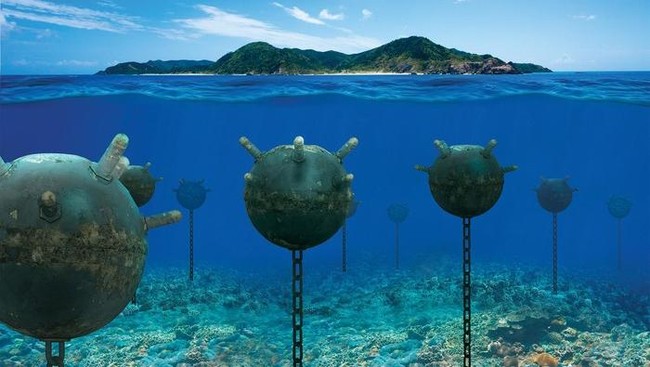
Sea mines are explosive devices placed underwater to damage or destroy passing vessels. Similar to land mines, these devices are deployed and left in place until triggered by detonation, either through direct contact with a ship or when a ship is in proximity to the mine.
Sea mines can be deployed in various ways. Additionally, there are seabed mines that can detect ships through acoustic or electromagnetic signals before detonating. Some types are even more sophisticated, such as the Chinese-made TE-1 mines that Iran possesses, which can fire rocket-propelled explosive charges when a ship passes overhead.
This threat is particularly significant in the Strait of Hormuz. At its narrowest point, the strait measures approximately 33 kilometres, whilst the main shipping lane is even narrower, at around 3 kilometres in each direction, making it relatively straightforward to place sea mines in the path of passing tankers.
Advantages of Sea Mines
Sea mines are often considered strategic weapons because of their relatively low production cost but considerable impact.
“One of the primary advantages of sea mines is their low cost compared to other naval weapons systems. A single mine, worth only a few thousand dollars, can sink or severely damage a civilian or military vessel worth millions or even billions of dollars,” said Commodore Srikant Kesnur to India Today Digital.
On the other hand, the process of detecting and clearing sea mines is slow, expensive, and risky.
This process can take weeks to months, meaning shipping lanes can be disrupted for extended periods even after conflict subsides. For this reason, NATO refers to sea mines as weapons of both economic and military warfare.
This threat also impacts the commercial sector. When mine risks increase, insurance and reinsurance companies may raise premiums or even withdraw coverage for passing vessels. Consequently, shipments of commodities such as oil and gas become more expensive or are delayed.
This strategy is seen as part of the economic pressure that Iran seeks to create through its announcement of plans to deploy hundreds of sea mines in the Strait of Hormuz.
Sea Mines Previously Used in 1987
Sea mines were previously deployed in the Persian Gulf during the “Tanker War” of the 1980s, which was part of the Iran-Iraq conflict. During that period, sea mines damaged numerous commercial vessels and forced the United States and its allies to conduct major operations to escort tankers and clear mines from shipping lanes.
One notable incident also occurred in 1987 when the supertanker Bridgeton, escorted by a US warship, struck an Iranian mine in the Persian Gulf, damaging the vessel’s hull and demonstrating how difficult it is to protect shipping lanes from the threat of sea mines.