
Iranian People Urged to Form Human Shield Against Trump's Threats
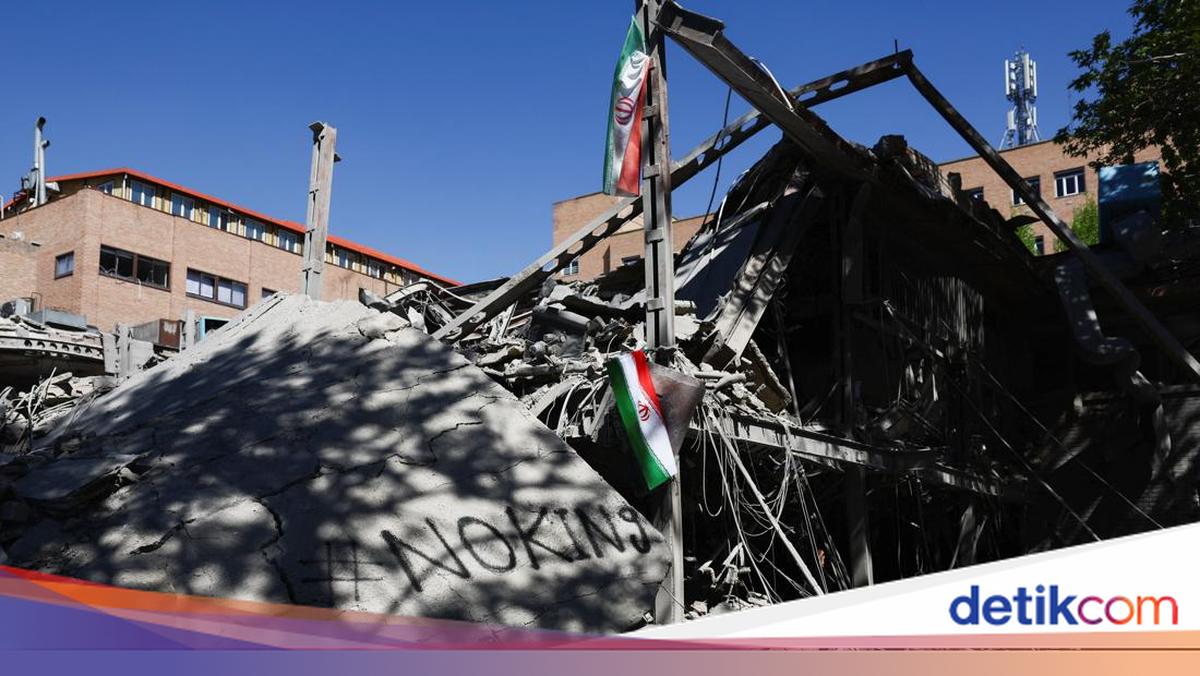
US President Donald Trump has threatened to bomb power plants and bridges in Iran. The Iranian people have been urged to prepare to face this threat.
Iranian authorities, as reported by NDTV on Tuesday (7 April 2026), have called on Iranian youth to symbolically form a human chain shield around the country’s main power plants. Iran’s Ministry of Sports and Youth has urged the nation’s youth, including athletes, artists, and students, to gather around these sites starting from Tuesday (7 April) afternoon.
Trump himself has given Iran a deadline to agree to a ceasefire deal or face massive attacks on power plants and other critical infrastructure. He demands that Tehran relinquish its nuclear weapons and reopen the Strait of Hormuz, which was closed due to US attacks.
Trump has set the deadline for Tuesday (7 April) night, around 8:00 PM Eastern Time in the US. This deadline falls on Wednesday (8 April) early morning, around 3:30 AM Iranian time.
“This action (human chain) was formed on the suggestion of the youth themselves,” said Iran’s Deputy Minister for Youth Affairs, Alireza Rahimi, in a video message.
“A number of university youth, young artists, and youth organisations proposed that we form a human circle or human chain around the state-owned power plants,” he said.
Rahimi described the action as a ‘symbolic act’ for Iran’s future. He stated that Iranian youth are committed to protecting their country.
“This symbolic action is called ‘Iranian Youth Human Chain for a Bright Future’. We hope that with the participation of youth across the country, this human chain will form around the power plants, and it will be a sign of the youth’s commitment to protecting the nation’s infrastructure and building a bright future,” Rahimi said in his video message.
As reported by the BBC, Iranian citizens are also reacting to Trump’s threats to destroy Iran’s power plants and bridges if the country does not reopen the Strait of Hormuz. Iranian officials have mocked the deadline given by Trump.
An aide to the Iranian President called his ‘insults and nonsense’ as stemming purely from ‘despair and anger’.
The BBC also spoke to several Iranian citizens, all of whom oppose the current government, though it is very difficult to contact people inside the country due to the internet blackout imposed by authorities more than five weeks ago. For their safety, their names have been anonymised.
“It feels like we are sinking deeper into the swamp. What can we do as ordinary people? We can’t do anything. We can’t stop it (Trump). I keep imagining a scenario where, a month from now, I sit with my family without water, without electricity, without anything. Then someone lights a candle and we go to sleep,” said Kasra, a young man in his 20s living in Tehran.
Meanwhile, Iranian state television has aired videos of grocery stores fully stocked. The BBC has heard reports that some citizens are starting to hoard supplies and are worried that water supplies will also be disrupted.
“My mother is filling every bottle she can find in the house with water. I don’t know what we will do now. I think more and more people in Iran are realising that Trump doesn’t care about them at all. I hate him from the bottom of my heart, and I also hate those who support him,” said Mina, also in her 20s from Tehran.
In January, when deadly anti-government demonstrations swept Iran, US President Donald Trump said that “help is on the way” for the demonstrators.
However, he did not intervene when Iranian security forces launched an unprecedented crackdown, killing at least 6,508 people and arresting 53,000 others, according to the US-based Human Rights Activists News Agency (HRANA).
Some of the BBC interviewees initially saw the US-Israeli attacks as the promised help. But now, most of them consider attacks on energy infrastructure as a red line.
“I have been thankful to Israel and the US for almost all the targets they have destroyed so far. They must have strong reasons for those targets. But I swear, hitting power plants will only cripple the country. It will actually benefit the Islamic Republic. I live about one kilometre from the largest power plant in Karaj, and if they hit it, all that remains is suffering for me,” said Arman, a young man in his 20s from Karaj, west of Tehran.
Iran says more than 30 universities have been affected, including Shahid Beheshti University in Tehran. (EPA) Many of those interviewed by the BBC admitted to being worried about the economic impact of the war.
“I think Trump is afraid of what Iran will do. I am sure Iran will strike across the region in retaliation. For me personally, I no longer have a routine, I can’t even work in the current situation because I am a building supervisor engineer and no one is building anything right now. Some small companies have started laying off employees,” said Bahman, a young man in his 20s living in Tehran.