
Iranian Leader Khamenei Dead—Who Will Succeed Him?
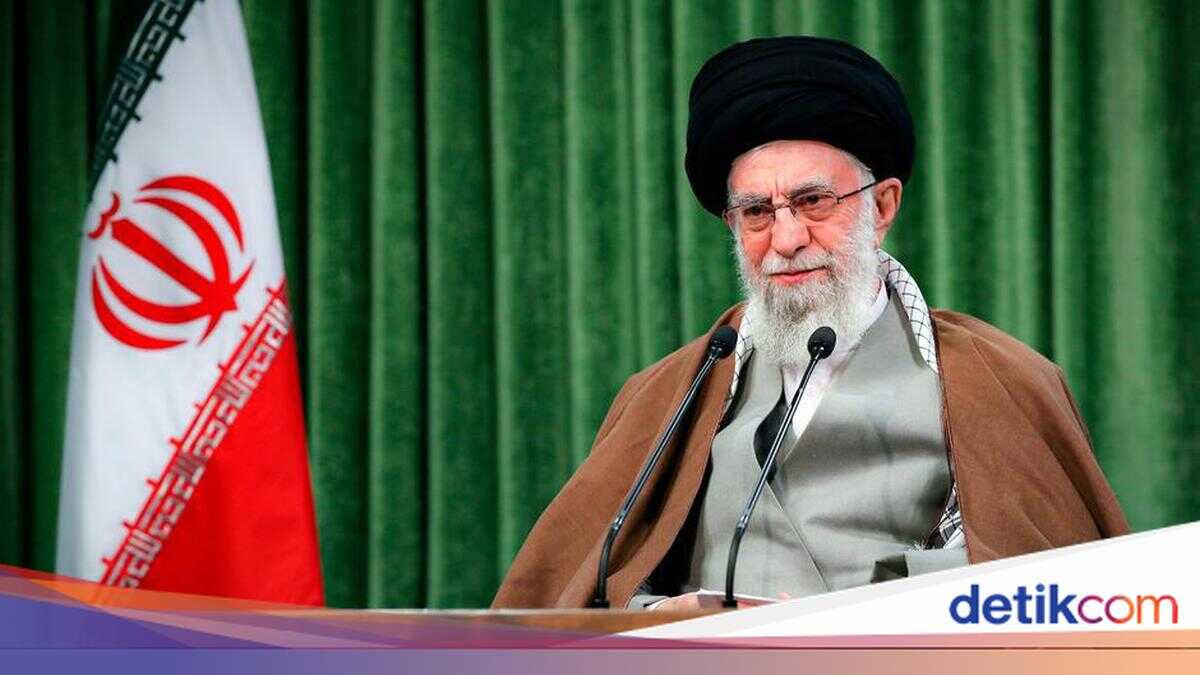
Iran’s Supreme Leader, Ayatollah Ali Khamenei, has died following an attack by the United States and Israel. What is the mechanism for selecting Khamenei’s successor?
According to Al-Jazeera and CNN, reported on Sunday 1 March 2026, the Iranian clerical regime now faces the challenge of finding a replacement for Khamenei following his death. The veteran leader, who governed with an iron fist for nearly four decades, had no officially announced successor.
Instead, an elected body consisting of 88 senior clerics, known as the Assembly of Experts, will select who becomes Khamenei’s successor. This body has only carried out this task once since the Islamic Republic was established in 1979, when Khamenei was hastily selected following the death of Ayatollah Ruhollah Khomeini more than three decades ago.
The government will seek to demonstrate stability in the republic quickly, with assembly members expected to gather soon to discuss potential candidates before appointing Khamenei’s replacement. However, it remains unclear whether they will dare take the risk of holding a meeting, given that US President Donald Trump has vowed that bombing attacks targeting the regime will continue.
The jurists must select a replacement who meets the qualifications set out in the constitution. The new leader must be male, a cleric with political competence, moral authority, and loyalty to the Islamic Republic. The Assembly can interpret the rules to exclude reform-minded clerics who support greater social freedoms and engagement with the wider world.
Al-Jazeera reported that Khamenei, before his death, had submitted four names. However, there is no information yet on who those four candidates are.
Another scenario involves a council of four people to run the state until a new leader is selected. In the meantime, Iran has formed a three-member council consisting of the country’s president, the head of the judiciary, and one constitutional law expert from the Guardian Council to temporarily take over all leadership duties in Iran.
Additionally, CNN has reviewed several candidates who, according to experts and analysts, have the potential to become Khamenei’s successor. Here is the list:
Mojtaba Khamenei
Khamenei’s second son, Mojtaba Khamenei (56), is known to have significant behind-the-scenes influence and strong relationships with the Islamic Revolutionary Guard Corps (IRGC), the country’s most powerful military body, as well as the volunteer paramilitary Basij forces. However, succession from father to son is unpopular among Shia Muslim clerics and particularly in revolutionary Iran, which emerged after overthrowing the deeply hated monarchy.
A further obstacle is that Mojtaba is not a high-ranking cleric and has no official role in the regime. He was sanctioned by the US in 2019.
Alireza Arafi
As a lesser-known figure, Alireza Arafi (67) is a prominent cleric with a track record in government institutions and is also a trusted confidant of Khamenei. He currently serves as vice chairman of the Assembly of Experts and has been an influential member of the Guardian Council, which reviews election candidates and legislation passed by parliament. He is also the head of Iran’s seminary system.
According to Alex Vatanka of the Middle East Institute, Khamenei’s willingness to appoint Arafi to senior and strategic positions indicates that he has “great confidence in his bureaucratic competence”. However, Arafi is not known as an influential political figure and does not have close ties to security institutions.
He is said to be skilled in technology and fluent in Arabic and English. He is also an active writer, having published 24 books and articles.
Mohammad Mehdi Mirbagheri
Mirbagheri (60) is a hardline cleric and member of the Assembly of Experts representing the most conservative wing of the clergy. It was recently reported that he justified the high death toll in the Israel-Gaza war, saying that deaths, even half the world’s population, would be “worth it” if it achieved closeness to God.
According to IranWire, an activist media outlet, he is strongly opposed to the West and believes that the conflict between the faithful and the infidel is inevitable. He currently leads the Academy of Islamic Sciences in the holy city of Qom in the north.
Hassan Khomeini (50)
Khomeini is the grandson of the founder of the Islamic Republic, Ayatollah Ruhollah Khomeini, which gives him religious and revolutionary legitimacy. He serves as custodian of Khomeini’s mausoleum but has never held public office and appears to have little influence over the state’s security apparatus or ruling elite.
He is known to be less hardline than many of his peers and was barred from running for the Assembly of Experts in 2016.
Hashem Hosseini Bushehri
Bushehri (in his 60s) is a senior cleric closely connected to institutions managing succession, particularly the Assembly of Experts, where he serves as first vice chairman. He is said to be close to Khamenei but maintains a low profile domestically and is not known to have strong ties with the IRGC.