
Iranian Elite Falls, Here Are the 10 Key Figures Now in Control
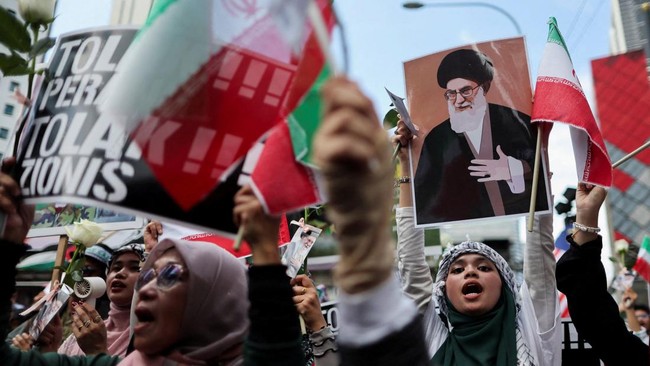
Although several Iranian leaders have been killed, power in the country has not been entirely paralysed. The layered system allows Iran to continue functioning, thanks to the increasingly prominent role of the Revolutionary Guard.
This is inseparable from the structure of the Islamic Republic of Iran, which was built from the outset with complex layers of power. The system born from the 1979 Iranian Revolution does not rely solely on one or two figures but is supported by institutions that mutually reinforce each other and share an interest in maintaining the theocratic regime.
In Iran’s official system, the Supreme Leader remains the centre of power.
Ayatollah Ali Khamenei, who has held the position since 1989, previously had full authority and the final say on major national issues. After he was killed in one of the early attacks of the war, his position was inherited by his son, Mojtaba Khamenei. However, unlike his father, Mojtaba is said not to have the same automatic authority within the system.
His condition has also raised questions. Mojtaba was reportedly injured in the attack and was described on Iranian state television as a janbaz or wounded veteran from the ongoing conflict. More than three weeks after his appointment, Iranians have yet to see recent photos or videos of him.
He has also issued only two written statements, raising questions about his condition and the extent of real control he possesses.
Although the military is now highly dominant, Iran’s political leadership has not entirely vanished. The Iranian political system combines clerical governance with a president and parliament elected through elections. All these elements still have roles in running the country, though their room for manoeuvre is now increasingly influenced by the Revolutionary Guard’s power.
The Revolutionary Guard Now Increasingly Dominant
In this situation, the Islamic Revolutionary Guard Corps (IRGC) has become even more central. Over the past few decades, the Revolutionary Guard’s influence has continued to grow. Now, following the death of Ali Khamenei and the rise of Mojtaba Khamenei, their position in strategic decision-making has become even more important.
One of the Revolutionary Guard’s main strengths is its organisational structure, which is designed to handle situations where their top leadership is attacked or killed.
They have a mosaic-like organisational pattern, where every commander already has a designated successor, and each unit can continue to operate independently according to pre-planned strategies. Therefore, even though many senior commanders were killed at the start of the war, they could quickly be replaced by other experienced figures.
This resilience reflects the depth of the Revolutionary Guard’s command. The Corps was once the spearhead in the Iran-Iraq War from 1980 to 1988, and over decades it has also led Iran’s close involvement with various armed groups in numerous conflicts in the Middle East.
In other words, when several key figures are lost, the Revolutionary Guard still has enough layers of leadership to keep the war machine running.
Who Are the Remaining Names?
Among the major names still remaining, one of the most important is Ahmad Vahidi.
He now leads the Revolutionary Guard after two predecessors were killed. Vahidi is not a new name. He has long been influential in the Revolutionary Guard, fought in the Iran-Iraq War, led the Qods Force, served as defence minister, and was involved in suppressing domestic resistance.
Another important name is Esmail Qaani, head of the Revolutionary Guard’s Qods Force. He is known as a secretive figure, but since 2020 he has held a key role in managing Iran’s relations with proxy groups and allies in the region, following the death of Qassem Soleimani in a US drone strike.
In addition, there is Alireza Tangsiri, head of the Revolutionary Guard’s navy. He is said to have played an important role in closing the Strait of Hormuz, a move that has now become one of the greatest sources of pressure on the global energy market.
From the civilian political line, Mohammad Baqer Qalibaf is one of the heaviest figures still alive.
A former Revolutionary Guard commander, former mayor of Tehran, and former presidential candidate, he now serves as Speaker of Parliament.
In recent weeks, he has become increasingly vocal in stating Iran’s position as the war develops. He is also said to be involved in talks with the US in the past few days, though this position remains sensitive and debated.
Another important figure is the Head of the Judiciary, Ayatollah Gholamhossein Mohseni-Ejei. He is a former intelligence chief and widely known as a hardliner. He was also sanctioned for his role in the deadly suppression of major protests in 2009.
Meanwhile, President Masoud Pezeshkian remains the highest official directly elected by the people.
Although the presidency in Iran is now not as strong as it once was, his status as the top electoral figure still makes his voice important. However, the limits of his influence were clearly seen this month, when he angered the Revolutionary Guard by apologising to Gulf countries for Iran’s attacks in their territories, and then had to retract part of his statement.
In addition, there is Saeed Jalili, former head of the Supreme National Security Council, a wounded veteran of the Iran-Iraq War, and one of the hardest figures in Iranian politics. He lost the 2024 presidential election but remains an important name due to his very hardline stance and experience as a former nuclear negotiator.
From the clerical ranks, Ayatollah Alireza Arafi is also on the list of important figures. He is a senior member of the Guardian Council, the body authorised to determine which candidates may or may not run in elections. He is also considered very loyal.