
Iranian Delegation Visits UIII, Establishes Educational and Cultural Cooperation
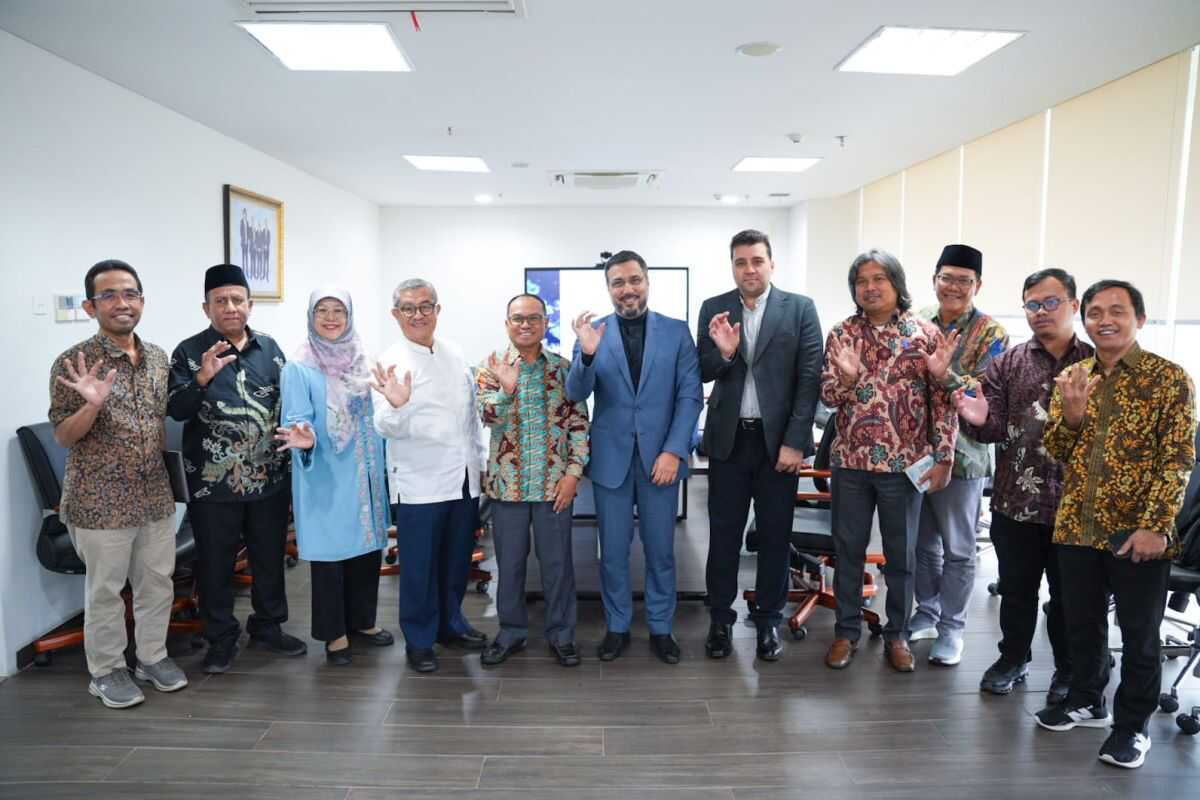
Depok — Universitas Islam Internasional Indonesia (UIII) received a visit from a cultural delegation of the Iranian Embassy, resulting in agreements for several cooperation programmes in education and culture to be implemented throughout 2026.
UIII Rector Prof. Jamhari Makruf welcomed the cooperation in Depok on Friday as an effort to expand the university’s international network whilst enriching cultural life within the campus and the Depok community.
“This cooperation further strengthens Depok’s position as an education city active in global Islamic civilisational dialogue, with UIII as its central hub. The permanent calligraphy mural that will be created is expected to become one of the new icons on the UIII campus,” he said.
The Iranian delegation was led by Cultural Counsellor Dr. Yahya Jahan Giri, accompanied by Dr. Amir Rezaeipanah from the Contemporary Islamic Civilisation Festival Secretariat.
They were received by UIII Rector Prof. Jamhari and the university leadership, including vice-rectors, deans, and the head of international relations.
Several cooperation initiatives agreed upon between the parties include the sending of Iranian students to pursue studies at UIII to strengthen academic exchanges, and the organisation of an exhibition of paintings by Iranian artists on the UIII campus this year.
Subsequently, two female Iranian calligraphy artists will visit to create a permanent artwork in the form of a traditional Iranian calligraphy mural on one of the campus walls.
This artwork is expected to serve as a symbol of friendship between Indonesia and Iran, whilst enriching the aesthetic value of the campus area.
Additionally, UIII received a formal invitation to participate in the Contemporary Islamic Civilisation Festival in Iran in the coming year.
The Iranian delegation also invited UIII representatives to participate in high-level dialogue involving scholars from Iran, Africa, and Arab nations, acknowledging Indonesia’s important role as the country with the largest Muslim population in Southeast Asia.