
Iranian Conflict: Government Anticipates Impact of Middle Eastern Airspace Closure
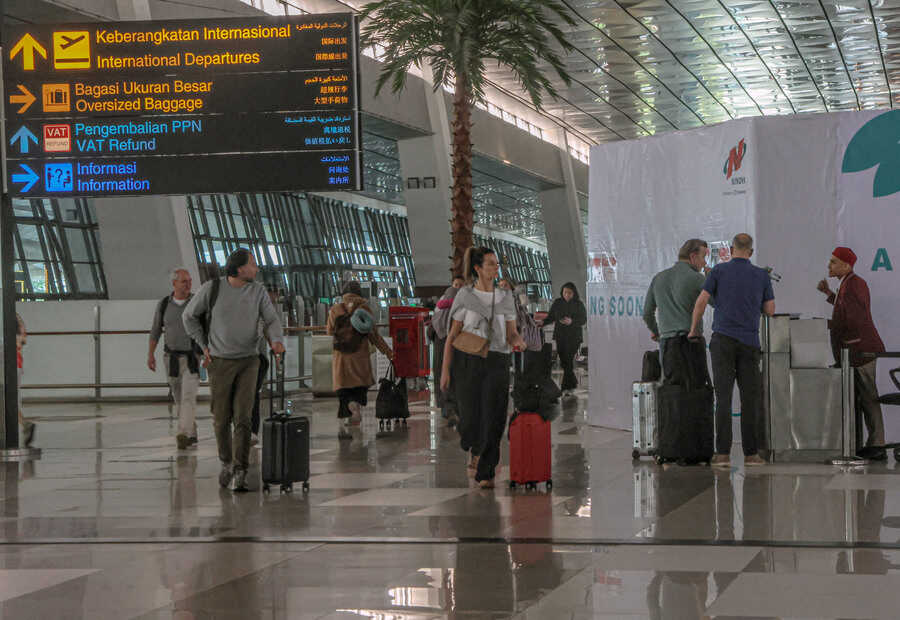
Following escalating tensions in the Middle East region, several Arab nations neighbouring Saudi Arabia have taken measures to close their airspace for incoming and outgoing flights. The countries that have closed their airspace include Qatar, the United Arab Emirates (UAE), Bahrain, Kuwait, Iraq, and Syria.
Meanwhile, Saudi Arabia alongside several other nations such as Oman, Jordan, and Lebanon continue to operate flights with restricted capacity under alert status, adjusting according to future security developments.
The government has assured that the situation and conditions within Saudi Arabian territory remain secure and controlled. General activities are proceeding normally with heightened vigilance in accordance with applicable security standards.
To anticipate potential flight delays or cancellations that could leave umrah pilgrims stranded at airports, the Hajj Affairs Office (KUH) in Jeddah has taken swift mitigation measures.
Muhammad Ilham Effendy, Technical Staff for Hajj Affairs at KUH Jeddah, stated that the office has prepared anticipatory measures intensively.
“The KUH has established three teams working in three shifts deployed across three airport terminals: Terminal 1, Terminal 2 (formerly Saudia), and the Hajj Terminal. This step ensures optimal support and coordination for pilgrims affected by flight schedule changes,” said Muhammad Ilham Effendy in Jeddah on Sunday (1 March).
Additionally, KUH Jeddah has opened intensive communication with airlines, travel organisers, and travel partners in Saudi Arabia to seek the best solutions for pilgrims whose return has been delayed due to flight cancellations or schedule adjustments.
Meanwhile, the Indonesian Embassy in Riyadh has issued guidance to all Indonesian citizens in Saudi Arabia to remain calm and not panic in the face of regional security dynamics.
“Indonesian citizens are also asked to continue monitoring official information developments from local authorities and representations of the Republic of Indonesia,” it stated.
The Indonesian government through its representations in Saudi Arabia continues to monitor and coordinate with relevant authorities to ensure the security, safety, and comfort of Indonesian umrah pilgrims.
The public is urged not to be easily influenced by unverified information and to always refer to official government sources.
Iran’s Supreme National Security Council Secretary, Ali Larijani, has affirmed that the Assembly of Experts will hold a meeting on Sunday (1 March).
The government has urged Indonesian umrah pilgrims scheduled to depart in the near future to postpone their travel following the security dynamics in the Middle East region.
UN Secretary-General António Guterres expressed regret over attacks by the United States and Israel on Iran that resulted in the death of Iran’s Supreme Leader Ali Khamenei, rendering nuclear negotiations futile.
United States President Donald Trump issued a stern warning to Iran to refrain from launching retaliatory strikes following the death of Iran’s Supreme Leader Ali Khamenei.
Iran has launched fresh missile and drone attacks targeting Israeli territory and United States military bases in the Middle East region.
Israel has closed all crossings in the West Bank and Gaza from Sunday (1 March) until further notice, following joint military operations with the United States against Iran.
Geopolitical tensions between Iran and Israel are assessed as posing a risk of triggering a surge in global oil prices.
Global gold prices are estimated to spike sharply following the escalation of conflict between Iran against Israel and the United States.