
Iranian Citizens Grapple with Anger, Fear, and Hope
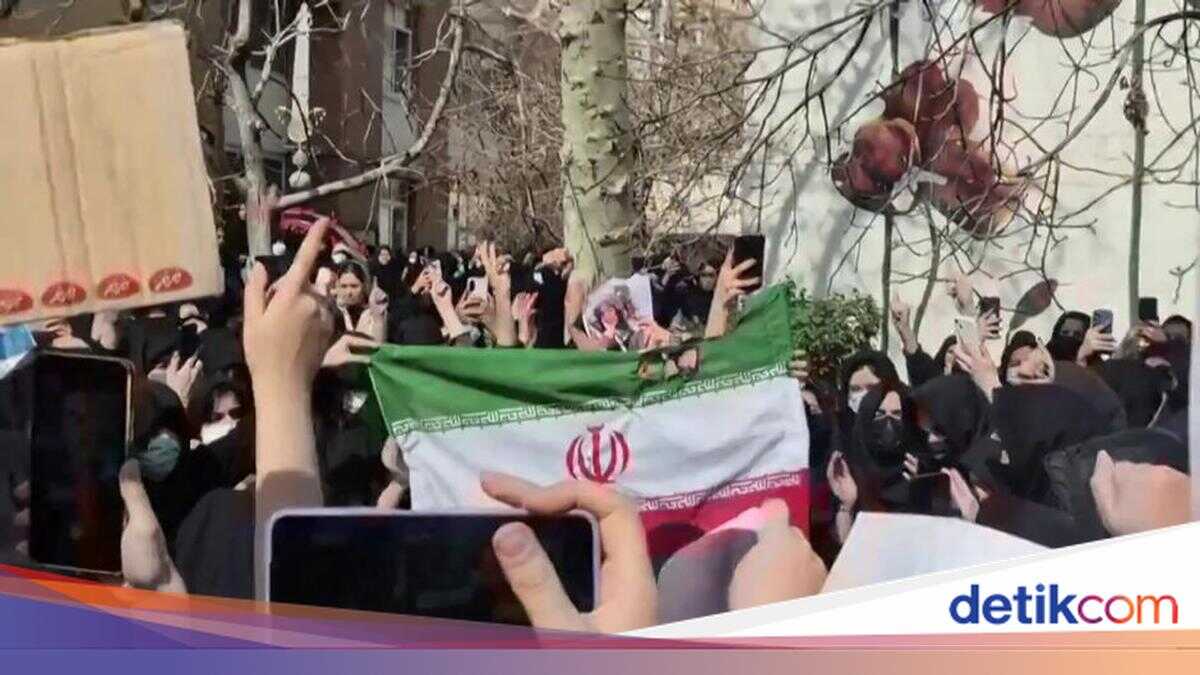
The new semester is set to begin in Iran, but students returning to campuses are continuing to voice their opposition to the Khamenei regime.
Since last Saturday (February 21), images and videos of student protests have been circulating online. Witnesses from seven Iranian universities reported that memorial ceremonies were held for the victims who died during the wave of protests in January.
However, the current protests are much smaller than those held last month.
Although citizens are still “shaken” by the deaths of thousands, some students are still “staunchly” displaying anti-regime slogans such as “Death to the Dictator” or “Death to the Islamic Republic”.
Some are also calling for the return of the monarchy with the exiled crown prince, Reza Pahlavi, who has emerged as a prominent figure in the opposition to the regime.
A number of students demonstrating chanted “monarchy”-themed slogans at the elite University of Sharif in Tehran, the Iranian pro-regime news agency Fars reported over the weekend.
The news agency described the small protests as separate incidents from the memorial ceremonies for the martyrs killed in the national protests and insisted that those killed were not victims of the security forces’ repression, but rather “terrorists” who had infiltrated the demonstrators.
The latest student demonstrations and almost all other protests by the media are often described as “riots”.
Basij militia monitors students
A 19-year-old student from Tehran, who asked to remain anonymous, told DW that the anger felt by fellow students is palpable.
The student participated in the anti-regime protests in December, along with millions of other Iranian citizens across the country.
Many were shocked by the brutality of the security forces, especially that of the Basij militia, a paramilitary group within the Revolutionary Guard, which was deployed to crack down on protesters since January 18.
Members of the Basij militia, which has a representative office at each university, also participated in the student protests, as seen in videos of clashes on campus that have circulated online.
Basij members are now reportedly tasked with checking everyone entering the campus area, recording the number of students present, and how long they stay.
Iranian citizens demand accountability
Iranian citizens who spoke to DW said they want those responsible for the deaths of protesters to be held accountable. Some even hope that the United States will kill specific individuals involved.
“When people start relying on foreign assistance or attacks to fight against state repression, it reflects despair,” said a sociologist at the University of Tehran who chose to remain anonymous for security reasons. This despair means that people have lost hope that civic engagement, including large-scale demonstrations demanding reform or a referendum, can change the situation.
There is almost no legitimacy left for the Iranian leadership in the eyes of its people. This happened even before the large-scale protests erupted in December and January. The regime’s response to these protests was the harshest response to criticism of the regime since the 1979 Islamic Revolution.
Concerns about US-Iran war escalate
US President Donald Trump had previously threatened Iran with military action over the crackdown on protesters. In recent weeks, Trump has again threatened the use of military force, denouncing Iran’s nuclear program.
Iran warned the United States on Monday (February 23) that any attack would be met with a “strong response”. Trump, in turn, warned that the time for negotiating a nuclear deal is running out.
With negotiations between Tehran and the US scheduled for February 26 in Geneva, tensions in the Middle East have escalated. The US insists that Iran halt its nuclear enrichment capabilities, while Iran insists that its nuclear program is solely for peaceful purposes.
Matthew Hoh, a former US Marine captain and analyst at the Center for International Policy think tank, told DW that the possibility of war with Iran is very high. This is indicated by the increased US military presence in the Middle East. “In my opinion, all of this is preparation for war. The most likely way to avoid war at this time is for Iran to surrender,” he said.
Regime change in Iran?
Analysts are skeptical that military escalation will lead to a secular democracy in Iran. Kamran Matin, a lecturer in international relations at Sussex University, refers to the US National Security Strategy document published in November, which states that the era of “nation-building democracy” is over and that the US focus has now shifted from the Middle East to China. Without a political alternative to the current regime in Iran, a deal with the current regime is the most realistic option for the US.
Damon Golriz, a strategy analyst at the Hague-based Institute for Geopolitics, also doubts that a US attack will pave the way for a secular democracy: “The resilience of the Tehran regime after killing more than 30,000 protesters, without significant internal defections, shows how far a democratic transition still is from reality.” A more likely scenario is the emergence of an authoritarian military government or, in the worst-case scenario, the collapse of the state and a regional war.
This article was first published in German.
Adapted by Sorta Caroline
Watch Live DetikPagi:
Watch the video ‘US Vice President Claims to Have Evidence That Iran Is Rebuilding Nuclear Weapons’:
(ita/ita)