
Iranian Ambassador: China and Russia Can Guarantee Middle East Peace
The government faces a policy dilemma with no truly comfortable options.
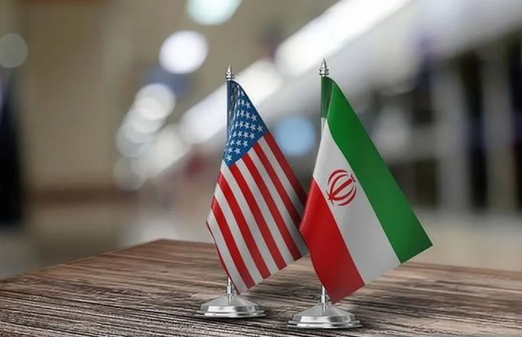
Iran’s Ambassador to Beijing has stated that several major countries and mediating parties have the potential to play a crucial role in maintaining regional stability, following the announcement of a temporary ceasefire between Iran and the United States (US).
In his statement on Wednesday (8/4), Iran’s Ambassador to China, Abdolreza Rahmani Fazli, noted that international collaboration is necessary to ensure the conflict does not reignite.
“We hope various parties can guarantee that the US will not continue the war,” he told reporters in Beijing.
He added that the role of international institutions and influential countries is crucial in maintaining peace.
“We hope the UN Security Council, major countries like China and Russia, and mediating countries like Pakistan and Turkey can work together to guarantee peace in the region,” Fazli said, as quoted by the South China Morning Post daily on Wednesday (8/4).
Furthermore, Fazli emphasised the importance of concrete guarantees so that the reached agreement is not temporary.
“We hope the war can stop and the ceasefire can last long, and we also need reliable guarantees,” he added.
The statement was made just hours after indirect talks between Washington and Tehran, mediated by Pakistan, resulted in a two-week ceasefire agreement.
Several countries have welcomed the move positively as an initial opportunity towards de-escalation of the conflict.
Nevertheless, geopolitical dynamics still show tension. On Tuesday, China and Russia vetoed a UN Security Council draft resolution proposing coordinated defence measures to ensure freedom of navigation in the Strait of Hormuz.
The conflict in the region escalated since 28 February, when Israel, along with the United States, launched attacks against Iran.
The attacks reportedly killed more than 1,340 people, including Iran’s Supreme Leader at the time, Ayatollah Ali Khamenei, although Iranian authorities have not updated the casualty figures in recent days.
In retaliation, Iran launched drone and missile attacks targeting Israel and several countries in the region, including Jordan, Iraq, and Gulf states hosting US military assets.
Those attacks caused casualties, infrastructure damage, and disruptions to global markets and the aviation sector.
In another development, at least 13 US soldiers were reported killed and dozens others injured during the conflict.
Russia vetoed the UN Security Council draft resolution related to the Strait of Hormuz proposed by Middle Eastern countries. Moscow and China are preparing a counter-draft that is more balanced.
According to him, Japan also needs to consider that option to obtain large supplies at lower prices.
Russia and Iran also highlighted attacks on civilian facilities, which they deem violations of international law. Both called for a halt to attacks on non-military targets.
Diplomatic sources also mentioned that differences in views occur not only among permanent members but also among the 10 non-permanent members of the Security Council.
Medvedev called Trump’s statement mere “bluff”.