
Iran Will Not Attend Second Round of Talks with US in Pakistan
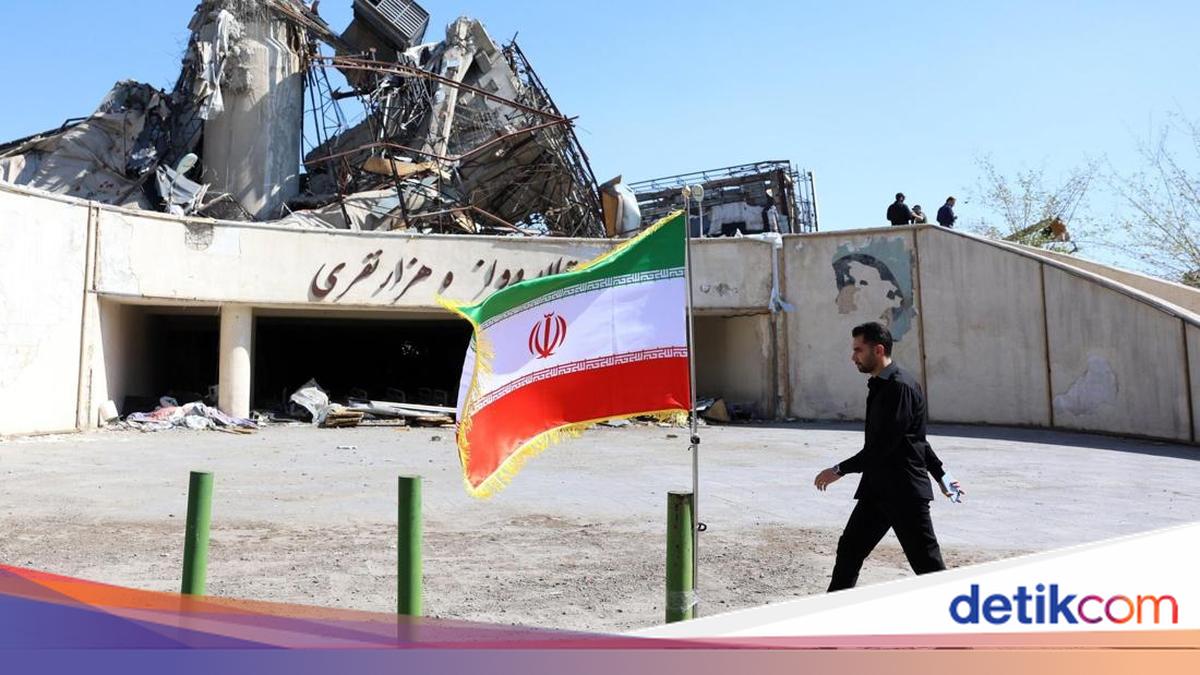
Iran currently has no plans to attend talks with the United States (US). This comes after US President Donald Trump ordered US negotiators to Pakistan just days before the Middle East ceasefire expires.
According to AFP on Monday (20/4/2026), the ongoing US blockade of Iran’s ports has become a significant point of contention, and the issue is likely to become more complicated following Trump’s announcement on Sunday (19/4) that a US destroyer had fired upon and struck an Iranian vessel attempting to evade it.
Iran’s state broadcaster IRIB, on Sunday (19/4), quoted Iranian sources as saying “there are currently no plans to participate in the next round of Iran-US talks”.
News agencies Fars and Tasnim had previously quoted anonymous sources as saying “the overall atmosphere cannot be assessed as very positive”, adding that lifting the US blockade is a prerequisite for negotiations.
Meanwhile, Iran’s government-run IRNA pointed to the blockade and “unreasonable and unrealistic demands” from Washington, stating that “in this situation, there is no clear prospect for beneficial negotiations”.
Iran and the US, along with Israel, have only three days left until the end of the two-week ceasefire that halted the Middle East war, which was triggered by a sudden US-Israel attack on Iran on 28 February.
So far, there has been only one 21-hour negotiation session held in Islamabad on 11 April, which ended without conclusion, although preparations for new talks continued afterwards.
“We offered a very fair and reasonable deal, and I hope they accept it,” Trump said in a post on Sunday (19/4), while also renewing his threats against Iranian infrastructure if no deal is reached.
Trump has been under pressure to find a way out since Tehran moved at the start of the war to close the Strait of Hormuz. This vital waterway is the route for one-fifth of the world’s oil and liquefied natural gas in peacetime, and its closure has hammered the global economy and disrupted markets.
After failing to force the strait reopened, Trump retaliated with a US naval blockade of Iran’s ports in an effort to cut off Tehran’s oil revenues.
On Sunday (19/4), he announced that a large Iranian-flagged cargo ship “tried to run our naval blockade, and it did not go well for them.”
A US destroyer warned the vessel to stop and then forced it to halt by “putting a hole in the engine room,” Trump said, adding: “US Marines have now secured the vessel.”
Trump said the Iranian-flagged ship, Touska, was under sanctions from the US Department of the Treasury “due to a history of previous illegal activity.”
Iran had briefly reopened the strait on Friday (17/4), in recognition of the Israel-Hezbollah ceasefire in Lebanon, but closed it again the next day in response to the maintained US blockade.
Iran’s Revolutionary Guard warned that any attempt to pass through the strait without permission “will be considered cooperation with the enemy, and violating ships will become targets”.
Iran’s Foreign Ministry spokesman, Esmaeil Baqaei, said on Sunday (19/4) that the blockade constitutes a “violation” of the ceasefire and an illegal collective punishment against the Iranian people.
A small number of oil and gas tankers crossed the strait on Saturday (18/4) morning during the brief reopening, but on Sunday (19/4) morning, tracking data showed the waterway empty of ships. In the previous afternoon, three incidents involving gunfire and Iranian threats against commercial vessels highlighted the dangers of any crossing attempt.