
Iran Warns Ships Crossing Hormuz Without Permission Will Be Destroyed
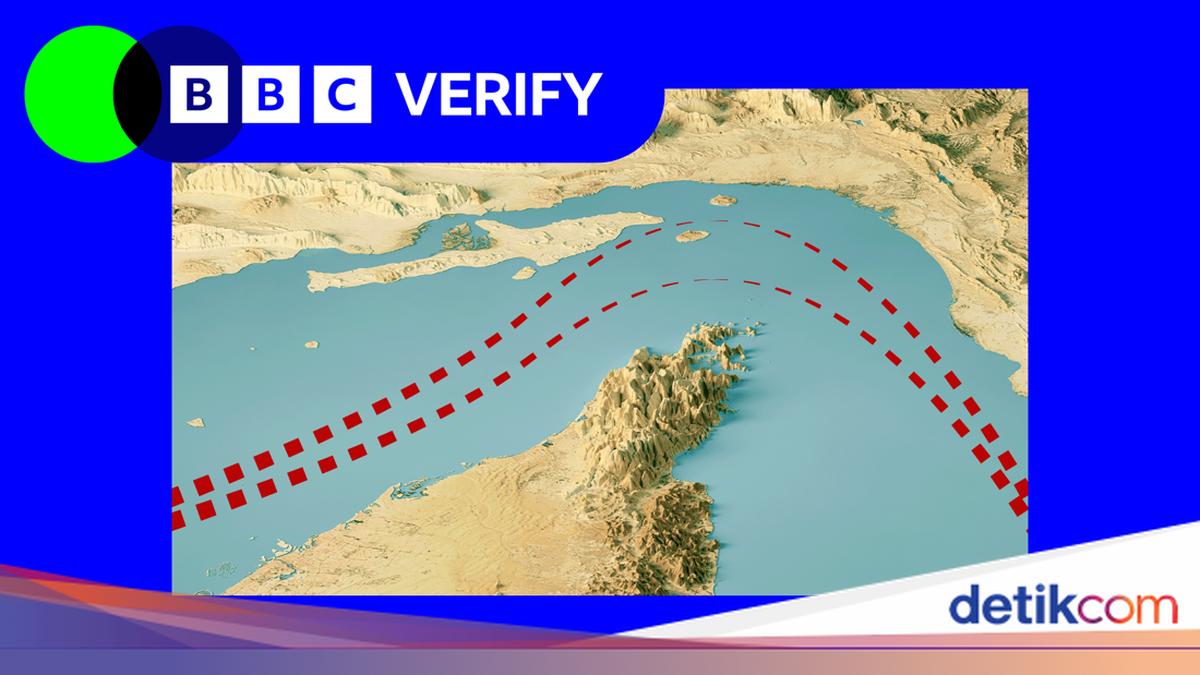
Ships in the Gulf waters have received warnings from the Iranian Navy that any vessel attempting to cross the Strait of Hormuz without permission 'will be targeted and destroyed', as confirmed by shipping broker SSY to BBC Verify.
The United States and Iran have agreed to a two-week ceasefire on the condition that Iran opens maritime traffic in the Strait of Hormuz. Iran's Foreign Minister, Abbas Araghchi, announced that 'during the two-week period, safe shipping lanes through the Strait of Hormuz will be possible'.
However, in reality, since the ceasefire was agreed, only a few ships have crossed the vital strait.
The Strait of Hormuz has become the focal point of the US-Israel war with Iran after Tehran blockaded the strait, which is only about 33 km wide at its narrowest point.
The situation over the past five weeks has sent shockwaves through the global economy. Crude oil prices have risen sharply, given that the strait is used by ships carrying around one-fifth of the world's oil and liquefied natural gas.
Ships carrying chemicals needed to process products like microchips, pharmaceuticals, and fertilisers also rely on the strait.
Although oil prices have fallen following the ceasefire news, shipping analysts warn that maritime traffic in the Strait of Hormuz is currently very limited.
'Most shipping companies want details and assurances about what is actually required to cross, and those details are not yet available,' Lars Jensen of Vespucci Maritime told the BBC.
Based on BBC Verify's analysis of ship tracking data from MarineTraffic, only three cargo ships – NJ Earth, Daytona Beach, and Hai Long 1 – have crossed the Strait of Hormuz since the ceasefire was announced on Tuesday (07/04) evening until Wednesday (08/04) at 20:00 WIB.
That number is very low compared to the average of 138 ships per day that crossed the strait before the conflict began on 28 February.
The BBC does not know whether the three ships that crossed on Wednesday (08/04) are a result of the ceasefire, or whether they had planned the trip beforehand.
'It is still too early to conclude whether this reflects a broader reopening driven by the ceasefire or pre-approved exceptions,' said Ana Subasic from shipping analytics firm Kpler.
'Nothing has really changed yet,' added Jensen.
According to him, it will take time before crews feel confident enough to cross the Strait of Hormuz safely.
He emphasised that the current situation is a 'very dangerous' time for ship owners who still face enormous uncertainty.
'We know that Iran basically still controls the strait, and the assumption is that ship owners still need to seek permission from the IRGC [Islamic Revolutionary Guard Corps] and how the mechanism works is still unclear.'
BBC Verify's analysis of the routes taken by the three ships shows they took the northern route through the strait near the Iranian coastline and entered its territorial waters.
Before the conflict, ships usually took a more southern route through the middle of the waterway.
'Nearly 800 ships trapped'
If ships start crossing the Strait of Hormuz again, Richard Meade estimates that fully laden tankers will be the first to do so.
'There are already nearly 800 ships trapped there for several weeks. Most are now fully laden, so the priority is to get them out,' he said.
The duration of the ceasefire, set to last two weeks, also brings uncertainty for ships, said Niels Rasmussen, a shipping analyst from BIMCO.
'I doubt there will be a large influx of ships into the Gulf because they do not want to risk getting trapped after the two-week period ends.'
Another uncertainty is the possibility of sea mines, said Thomas Kazakos, secretary general of the International Chamber of Shipping.
'We need to ensure there is clear confirmation that navigation safety for ships and seafarers has been agreed,' he told BBC Verify.
Toll payments
Beyond those concerns, ships are likely to have to make payments to Iran to cross the Strait of Hormuz safely, following reports that tolls may be part of the ceasefire agreement.
'Iran's negotiating position appears to be that ships need to pay tolls to cross the strait, and shipping companies will also be reluctant to pay those tolls,' said Jensen.
Several countries – including India, Malaysia, and the Philippines – have asked Iran for their ships to be allowed to cross.
However, paying tolls could create complications for countries and shipping companies because that action 'might actually violate some US sanctions against Iran, which would have other implications for shipping companies,' added Jensen.
Several years ago, the US imposed economic sanctions on the Iranian government, certain individuals in Iran, and its entities.
Parties making payment transactions to individuals, companies, and organisations on the sanctions list will be subject to criminal violations, explained James Turner, a shipping lawyer from Quadrant Chambers, to BBC Verify.
Therefore, paying tolls to individuals and entities on the sanctions list is categorised as a violation unless the US makes an exception.
Although few ships have crossed the Strait of Hormuz so far, the market has reacted positively after the ceasefire was announced.
Brent crude fell around 13% to US$94.80 per barrel, while US-traded oil fell more than 15% to US$95.75.
However, Meade said expectations need to be tempered.
'Oil prices are responding because this is a positive directional move, but I do not think it indicates that we will soon see 20% of global energy flowing back through that route at normal levels.'