
Iran War Without a Winner, Netanyahu Faces Bitter Reality
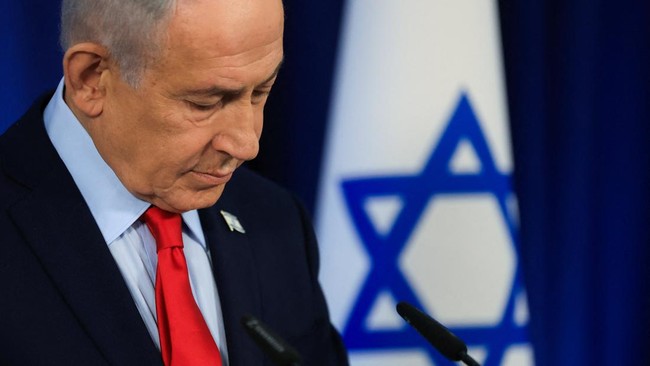
The fragile ceasefire agreement in the Middle East has instead prompted assessments that the conflict could leave the heaviest political impact on Israeli Prime Minister Benjamin Netanyahu. After a war that produced no clear winner, Netanyahu’s position is deemed to have weakened, both domestically and on the international stage.
Quoting an analysis from The Guardian on Thursday (9/4/2026), for years Netanyahu has been known for aggressively threatening Iran, including through his speeches at United Nations forums, presenting controversial documents to international media, and diplomatic pressure on US presidents to support war against Iran. However, the conflict that finally occurred is said to have yielded no strategic gains for Israel.
The US intelligence community previously assessed Israel’s predictions of regime change and revolution in Iran as “ridiculous”. That assessment proved correct, while Israel’s estimate that the war would last only a few days or at most a few weeks was wildly off the mark.
According to a report from Israel’s Channel 12, two days before the ceasefire, Netanyahu was still pushing US President Donald Trump not to approve the cessation of hostilities. Trump initially issued strong threats against Tehran before backing down and, according to some sources, even sidelining Israel in the decision-making process.
Israel’s main opposition leader, Yair Lapid, issued sharp criticism. “There has never been a political disaster like this in our entire history. Israel wasn’t even close to the table when decisions were made about the core of our national security,” Lapid wrote on platform X.
“The military carried out everything asked of it, and the public showed extraordinary resilience, but Netanyahu failed politically, failed strategically, and achieved none of the goals he set for himself. We will need years to repair the political and strategic damage caused by Netanyahu due to arrogance, negligence, and lack of strategic planning.”
The chairman of Israel’s left-wing Democratic Party, Yair Golan, also called the ceasefire a “strategic failure” for Netanyahu.
“He promised a historic victory and security for generations to come, and in reality, we got one of the worst strategic failures Israel has ever known,” Golan said on X.
“This is a total failure that endangers Israel’s security for years to come.”
Factually, Netanyahu is seen as having staked everything on the war. Yet he failed to topple Iran’s legitimate government, failed to seize Tehran’s highly enriched uranium stocks, and did not succeed in significantly weakening the country. This situation is deemed to further damage Israel’s global position, which was already under pressure due to its military operations in Gaza accused of genocide.
On the security side, although Trump claimed success, Iran’s Islamic Revolutionary Guard Corps (IRGC) is said to have actually strengthened. Tehran at least achieved its main goal of surviving a month-long attack by two of the world’s major military powers.
The attacks did injure the Iranian regime but did not destroy it. Iran still possesses significant military assets and is likely to accelerate rearmament while seeking opportunities for retaliation.
Netanyahu also continues to insist on attacks in southern Lebanon. This move is considered risky because Israel’s plan to establish a new security zone could trigger direct ground conflict with Hezbollah, which has historically been capable of fighting effectively in its own territory.
In that context, The Guardian writes, the major unannounced airstrikes on Lebanon are seen as punitive action after Israel failed to achieve its goals in Iran.
The diplomatic and public opinion impacts are also expected to be heavy for Israel. In the US, the political consensus that has held since the 1960s appears to be cracking.
Israel’s role in pushing Trump to go to war with Iran has been criticised by both progressive groups and hardline MAGA right-wing factions. Support for Israel is also at its lowest point, even among Jewish voters.
Domestically in Israel, the impact emerges in an election year. Rather than strengthening security, Netanyahu is seen as emerging from the war without achieving the main goals he promised.
For the Israeli public, the threat he has long called “existential” remains unchanged.
Iran’s Supreme Leader Ali Khamenei has indeed been killed, but his hardline son has replaced him. Instead of shutting down Iran’s nuclear programme, Tehran’s 10-point plan, which Trump called the basis for negotiations, appears to include acceptance of Iran’s right to enrich uranium, although Trump denies that was part of the deal.
For the time being, the US-Iran talks framework is deemed closer to the international nuclear deal from Barack Obama’s era, which Netanyahu previously sought to derail and which Trump later withdrew from.
Haaretz’s military affairs correspondent, Amos Harel, assesses that this failure was embedded in Netanyahu’s war plan.
“Many weaknesses in the current US administration and the Israeli system under Netanyahu are clearly evident: a tendency to gamble based on unfounded hopes, shallow and half-baked plans, ignoring experts, or using aggressive pressure to make them align with political leadership’s wishes,” Harel said.
For Israel, the conflict over the past month is also seen as a rare opportunity to launch a large-scale operation with full US support. The chances of a similar conflict recurring in the near future are deemed small.
Trump also halted the most dangerous escalation, including the possibility of ground troop deployment, which