
Iran War Threatens Indonesian Textile Industry with Raw Material Crisis
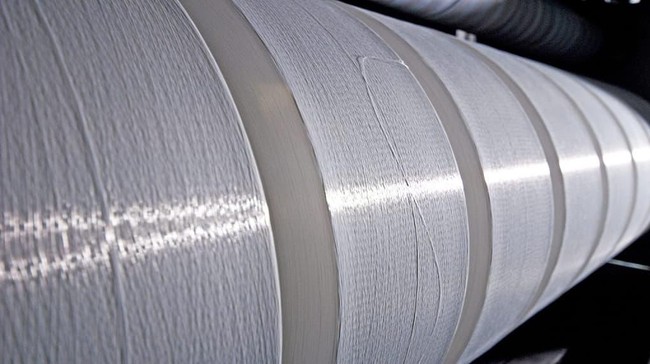
Jakarta — The escalating conflict between Iran, Israel and the United States is raising concerns across various global economic sectors, including Indonesia’s textile and textile products (TPT) industry. Business operators are beginning to calculate potential supply chain disruptions and rising logistics costs resulting from the Middle East conflict.
Redma Gita Wirawasta, Chairman of the Association of Synthetic Fibre and Filament Producers Indonesia (APSyFI), stated that the most significant impact is likely to affect raw material supplies that have traditionally relied on the Middle East, specifically imports of Monoethylene Glycol (MEG).
“From the raw materials perspective, we import 85% of MEG from the Middle East, and this seems to be what will be disrupted. We are attempting to redirect imports from Malaysia. Currently we have MEG stocks for more than two months,” Redma told CNBC Indonesia on Monday (2 March).
MEG (Monoethylene Glycol) is a crucial raw material in the production of synthetic fibres such as polyester, widely used by Indonesia’s textile industry. High dependence on Middle Eastern supplies has prompted the industry to urgently seek alternative sources to mitigate potential distribution disruptions.
Although MEG from the Middle East is cheaper compared to Malaysian supplies, Redma stated that diverting imports represents an alternative to ensure domestic raw material security.
“The Middle Eastern product is indeed cheaper compared to Malaysia, which is somewhat more expensive. However, the price difference is not significant. There is no problem with redirecting imports from Malaysia, because we have been importing from Malaysia in small quantities anyway,” he said.
Nevertheless, Redma noted that other primary raw materials are in relatively safe condition and are not affected by the escalating Middle East conflict.
“Other main raw materials such as PTA (Purified Terephthalic Acid) are supplied 95% from domestic sources,” he said.
PTA (Purified Terephthalic Acid) is another crucial component in polyester production. Dominant domestic supplies mean that the risk of disruption from this geopolitical conflict is relatively limited for this commodity.
However, challenges extend beyond raw material supplies. Redma confirmed that logistics costs will certainly increase as shipping risks in international trade routes rise.
“Logistics costs will definitely increase, related to insurance premiums and extended transportation times,” he said.
Rising ship insurance premiums and the potential for extended shipping routes to avoid conflict zones are key factors driving higher freight costs. The impact is felt not only on raw material imports but also on exports of national textile products.
According to Redma, the European market is among the hardest hit.
“Exports to Europe will certainly be disrupted due to logistics costs and delivery times. Imports do not appear to be heavily affected because we import yarn and fabric 90% from China,” he explained.
He assessed that yarn and fabric imports from China make supplies for domestic production relatively secure from a sourcing perspective. However, exports are expected to face considerable pressure.
He outlined the current structure of Indonesia’s TPT export markets. Indonesian TPT exports to Europe account for approximately 30% of total exports, whilst 40% goes to the US, which is still constrained by reciprocal tariffs.
“This will disrupt the overall ecosystem performance. To maintain and improve performance, the government needs to implement policies to encourage the industry to capture the domestic market, which is currently dominated 60% by imported products,” said Redma.
The data reveals that nearly 70% of Indonesia’s TPT exports depend on two major markets: Europe and the US. When Europe is pressured by logistics disruptions and the US faces tariff constraints, the industry faces potentially simultaneous pressures.