
Iran War Threat Cuts Foreign Tourist Arrivals, Indonesia Seeks Alternative Cash Sources
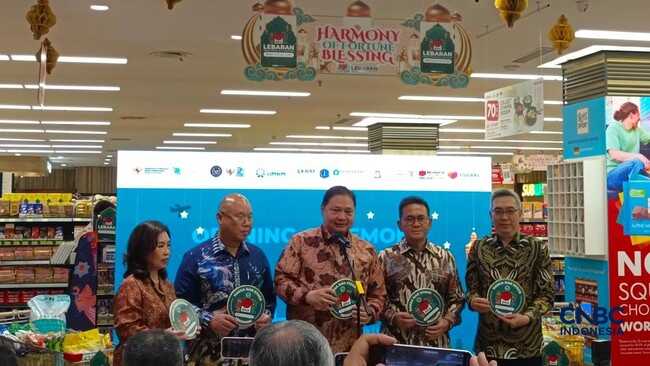
Jakarta, CNBC Indonesia - The government is wary of the impact of geopolitical conflict in the Middle East on the global tourism and transport sectors. Coordinating Minister for Economic Affairs Airlangga Hartarto said the Iran-Israel war has the potential to disrupt international flight mobility, which has long been the main transit route for world tourists.
He said a number of flight routes in the Middle East region are starting to be affected due to the escalation of the conflict. This situation is feared to constrain international tourist movements, including those to Asia and Indonesia.
‘We do not yet know how long the war will last, and how long transportation will be disrupted, especially from the Middle East. And some flights are currently not taking off. Imagine in the Middle East; Dubai, Qatar, Doha not flying, whereas annually they have 90 million transit passengers. So it is very influential, both to Europe and to Asia,’ Airlangga said when opening the BINA event at The Food Hall Senayan City, Jakarta, on Friday (6/3/2026).
According to him, not only flights could be disrupted. Shipping lanes are also starting to be affected, so the government needs to prepare mitigation steps.
‘Also regarding ships, ships are also not operating to some extent. So this is a period we must be careful how we navigate until the end of the year. But we are also looking for alternative options because this is not the first time we have experienced this,’ he added.
Nevertheless, the government remains committed to safeguarding domestic economic resilience. One way is by strengthening domestic consumption through various stimulus disbursed in the first quarter of 2026.
Airlangga outlined that the government has prepared various social assistance programmes and consumption stimulus of substantial value.
‘As we can see, in January-February our consumers were quite active. The consumer confidence index is also high at 127. Then the government also pushed various stimuli in Quarter I and various social assistance, including promoting 20 kg of rice, 10 kg per month, and 2 litres of oil to be provided for two consecutive months. And that is for 35 million Beneficiary Families and a total budget of Rp11.92 trillion,’ he explained.
In addition to social assistance, the government also encouraged transport discounts during Ramadan and Idul Fitri to increase public mobility.
‘Then the average transport tariff discount is 30% except for aircraft. Aircraft around 17-18%, but economy class, sir,’ Airlangga said.
The government also relied on the timing of disbursement of the festive allowance (THR) to boost consumption.
‘THR has been announced; civil servants, the military, police amount to Rp55 trillion. Then for the private sector, we also calculated from BPJS Ketenagakerjaan with an average expenditure of Rp124 trillion. And also for ride-hailing drivers, BHR; also costs from the players, from the players amount to Rp220 billion,’ he said.
According to Airlangga, these stimuli are expected to maintain domestic consumption amid global uncertainty.
‘So basically the funds disbursed are large and I monitor BINA; the target now is Rp53 trillion and this is up 20% from last year. And we hope this will continue to increase domestic consumption,’ he said.
The government targets economic growth in the first quarter of 2026 to reach 5.5%.
‘This momentum could push economic growth in the first quarter. In the first quarter we must accelerate and the hope is higher than last year,’ Airlangga said.
He stressed that the government will continue to strengthen the domestic market, including protecting domestic production amid global uncertainty due to geopolitical conflicts.
‘Indonesia with 287 million people is the largest market in ASEAN,’ he concluded.