
Iran War Still Hot, Indonesia Feels the Impact Through These 3 Shocks
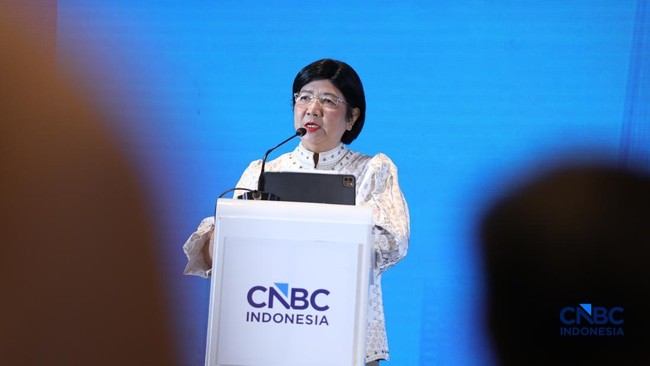
The war between the United States (US) and Iran, which has been ongoing since late February 2026, continues to loom over global markets. Although both sides are currently observing a two-week ceasefire, concerns have not fully subsided. This is because the latest official meeting between US and Iranian representatives last weekend ended without agreement, thereby increasing global uncertainty once again. At the same time, Bank Indonesia’s (BI) Senior Deputy Governor Destry Damayanti, in her opening speech at the Central Bank Forum 2026 in Jakarta on Monday (13/4/2026), explained that the US-Iran war has widespread impacts, not just on one sector but across multiple markets. “We see that the impact of this US, Israel-Iran war has multi-sectoral and multi-market effects. We try to break it down into three channels,” said Destry. According to her, there are at least three main channels that explain how this war affects the global and Indonesian economies, namely through financial channels, commodity prices, as well as trade and production. 1. Financial Channel The first is the impact of the war on the financial channel. Destry explained that from a financial perspective, the direct impact of the conflict in the Middle East is actually limited because Iran and Israel are not global financial centres. However, the indirect effects are significant because this conflict involves the United States, which is the world’s financial hub. As a result, uncertainty in global financial markets has increased. Investors tend to avoid risky assets and shift funds to safe assets. This situation triggers a risk-off phenomenon, where investors prefer to hold funds in instruments considered safe, particularly the US dollar. Capital flows to developing countries have also decreased, including to Indonesia. This pressure is evident from the strengthening of the US dollar index (DXY), rising global yields, and pressure on the currencies of many countries. “There is a risk-off, meaning investors are avoiding risk, so there is safe haven activity. Like it or not, flows go to advanced economies, including the US. DXY has increased. Flows to emerging markets, not just to Indonesia, have also decreased,” said Destry. As a note, based on Refinitiv data, the US dollar index has strengthened by around 3% to 99 from around 96 before the war, up to trading this morning on Monday (13/4/2026). In fact, DXY once breached the psychological level of 100. Bank Indonesia also highlighted the rise in US Treasury yields, which are in the range of 4.5%-4.6%. This condition is seen to put greater pressure on the currencies of developing countries. Thus, the first channel of the war’s impact is evident from the tightening of global financial conditions, the strengthening of the US dollar, and reduced capital flows to emerging markets. 2. Commodity Price Channel The next channel is commodity prices, particularly energy. According to her, the most direct impact comes from oil. This is inseparable from the strategic position of the Strait of Hormuz, a vital route for global energy distribution. Although Iran’s share of global supply is not dominant, the region is highly sensitive because around 20% of global oil supply passes through the Strait of Hormuz. When the area is disrupted, oil prices react immediately. The market is reassessing this risk as very serious following the failure of the latest peace talks. The deadlock in negotiations in Islamabad was followed by the US decision to initiate a maritime blockade against access to Iranian ports, a move feared to worsen shipping disruptions and push oil prices higher. Destry said that the price surge is not only occurring in oil. According to her, prices of gold, coal, aluminium, CPO, and even agricultural commodities have also risen. For example, coal prices are being driven up as the market prepares energy alternatives amid uncertainty in oil supply and distribution routes. “The indirect impact is quite good for Indonesia because of coal, CPO, gold. The impact has two sides: oil prices rise, but export commodities also increase,” said Destry. This means that for Indonesia, this commodity channel brings two consequences at once. On one hand, rising oil prices can pressure the domestic economy. On the other hand, Indonesia can also benefit from the strengthening prices of several flagship export commodities. 3. Trade & Production Channel In addition to finance and commodity prices, the conflict in the Middle East also impacts the global trade and production channel. In terms of economic size, Iran is indeed not a major player in the world economy. Its contribution to global GDP is only around 1%, while its share of global exports-imports is also below 1%. However, disruptions in the Strait of Hormuz and the Gulf region still cause widespread ripple effects to many countries. This occurs because obstacles in strategic shipping routes will affect the smooth distribution of goods, energy, and raw materials. As a result, shipping and logistics costs increase, then pressuring the global supply chain. The situation on the ground is starting to show this direction. Ahead of the implementation of the US blockade, several tanker ships are choosing to avoid the Hormuz area, while shipping players are increasing vigilance due to the risk of new escalation in the region. Destry emphasised that the end result of this pressure is disruption to global production. “So this increases shipping and logistics costs, leading to global supply chain disruptions,” said Destry. She added that the subsequent effects are even starting to be seen in sectors not directly related to energy. One of them is plastics, which are beginning to be affected by supply chain disruptions. Ultimately, if logistics costs continue to rise and supplies are disrupted, production in various sectors could weaken. Overall, the US-Iran war is not just a geopolitical issue. This conflict has spread to financial markets, commodity prices, and global trade and production. For Indonesia, the impacts indeed come from external pressures.