
Iran War: How the World is Coping with the Energy Crisis?
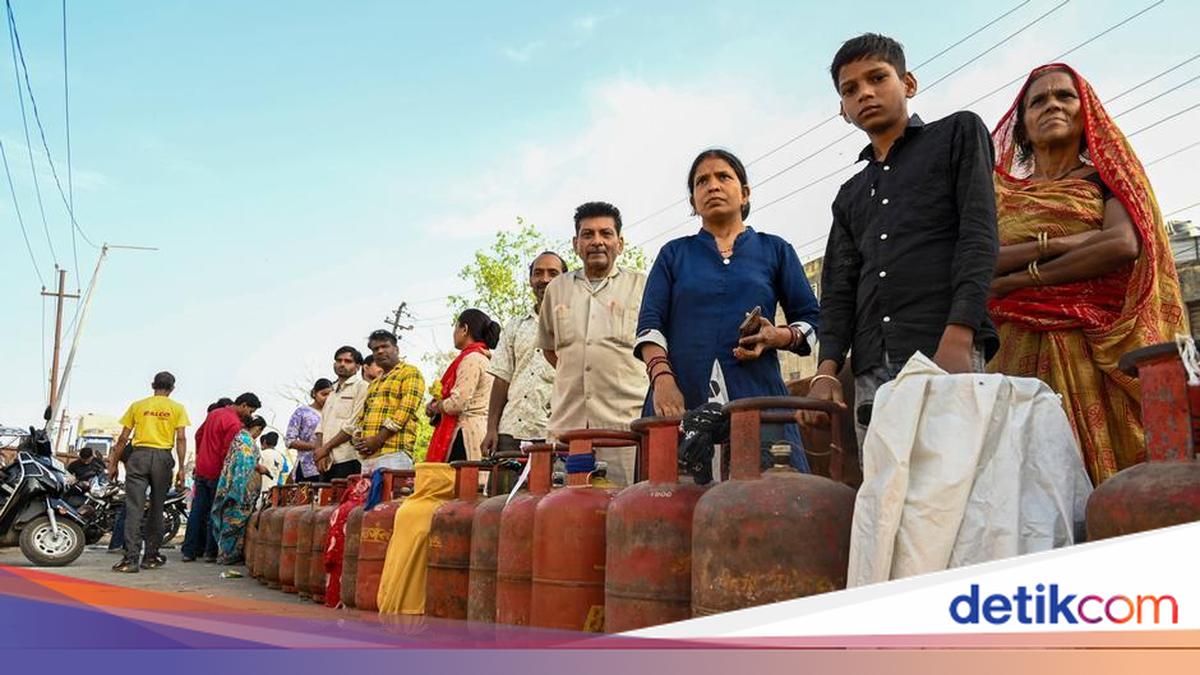
The soaring energy prices amid the closure of the Strait of Hormuz are forcing countries to adopt policies to suppress fuel consumption, from work-from-home arrangements to restricting air conditioner use.
The near-total closure of the Strait of Hormuz has sparked a global energy crisis
Countries worldwide are struggling to cope with the surge in energy and oil prices
Various measures are being pursued to reduce demand: from fuel rationing and working from home to avoiding air travel
When 20% of the world’s oil supply cannot pass through the Strait of Hormuz, crude oil prices have skyrocketed to US$100 (approximately Rp1.68 million) per barrel. Meanwhile, emergency oil reserves totalling 400 million barrels have been released into the market. In this situation, countries around the world are devising strategies to curb energy consumption.
The International Energy Agency (IEA) has described this as the “largest supply disruption in the history of the global oil market” and proposed several steps to reduce consumption. However, differences in energy infrastructure, transportation, and each country’s energy challenges lead to varied responses. Some countries have already taken action, while others are waiting for further developments.
According to the IEA, the land transportation sector accounts for about 45% of global oil demand. It is no surprise that many countries are targeting it as the starting point for savings.
Fuel rationing becomes a popular choice
In Sri Lanka, private vehicle owners can only obtain 15 litres of petrol per week through a QR code-based system. In Cambodia, a third of petrol stations have been closed. Myanmar has opted for an odd-even rationing system based on vehicle registration numbers. This means odd-numbered plates can only buy fuel on certain days, while even-numbered plates on others.
Meanwhile, in Indonesia, President Prabowo Subianto stated that several efficiency efforts could be implemented. Kompas reported that, in addition to pay cuts for parliament members and cabinet officials, there will also be a reduction in fuel use by up to 50% of the government’s total consumption. The Indonesian government is also considering a policy of one day of work from home (WFH) per week.
In New Zealand, the government is reconsidering the “car-free day” policy, which designates one day a week when drivers are prohibited from using private vehicles.
In Europe, Slovenia became the first European Union member state to implement fuel rationing earlier this week. Private car owners are limited to 50 litres of fuel per week, while businesses and farmers are capped at 200 litres.
The European Union and Germany are slow to respond to the crisis
The International Road Transport Union (IRU) is urging the European Union to act swiftly.
“If diesel supplies are disrupted, the impact will be immediately felt across the EU’s logistics network. This will slow down supply chains and affect goods distribution to businesses, shops, and households,” said Umberto de Pretto, IRU Secretary General.
“Coordination at the European Union level is crucial to stabilise the fuel market, avoid fragmented national responses, and ensure logistics chains continue to function,” he added.
Since the European Union has not yet reached a collective agreement, each country must make its own decisions.
Over the past two weeks, petrol and diesel prices have risen by 18% to €2 (approximately Rp39,000) per litre. This is putting pressure on Germany. A draft law has been proposed to allow fuel stations to raise prices only once a day.
Katherina Reiche, Germany’s Minister of Economic Affairs, said that options such as fuel price caps, discounts, and a “windfall tax” are under consideration. However, each option must be carefully weighed for costs and benefits.
Despite the crisis, Berlin has reaffirmed that it will not use gas from Russia, which was previously a mainstay before the invasion of Ukraine.
Work from home to save petrol
In addition to fuel rationing, work-from-home policies are a strategy adopted by many countries. The Pakistani government has mandated four working days for civil servants. The Dominican Republic is also encouraging businesses to reduce employees’ office hours.
In Africa, Egypt is seeking to suppress energy consumption by restricting shopping centre and restaurant operating hours until 9:00 PM. Meanwhile, all government buildings close at 6:00 PM.
Kenya has responded by banning exports and tightening fuel restrictions. Zambia even plans to impose fines on anyone hoarding petrol. Africa, like Asia, is heavily dependent on oil supplies from the Middle East.
“The situation now is like ‘every man for himself’,” Anibor Kragha, Executive Secretary of the African Refiners and Distributors Association, told the Financial Times.
“Even exporting countries are now prioritising domestic needs first. This is not just about refinery capacity, but also storage, distribution, pipelines, and ports. Overall, it shows how vulnerable Africa is,” Anibor continued.
Meanwhile, in Bangladesh and Thailand, which have set maximum temperature limits in government buildings at 25 and 26 degrees Celsius respectively to save on air conditioning use.
In Indonesia, Fabby Tumiwa, Chief Executive Officer of the Institute for Essential Services Reform, stated that the government’s plan for one day of work from home per week needs to be complemented with other strategies to save total national fuel consumption.
“Indonesia’s energy consumption also comes from logistics activities, goods transport, inter-city travel, and non-office economic activities such as industry. Therefore