
Iran War Could End in US "Defeat"
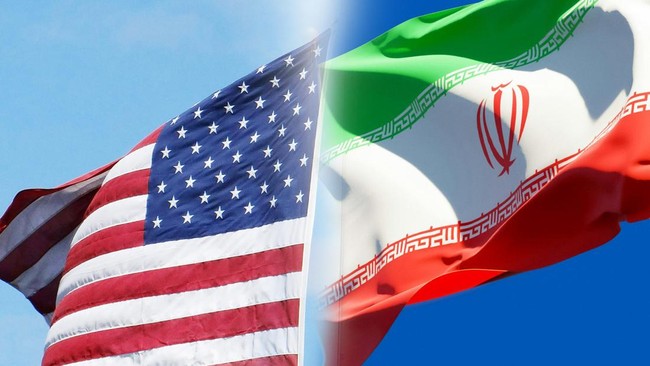
The war launched by the United States (US) and Israel against Iran is said to be poised to end with a setback for Washington. Two geopolitical observers assess that the US will not be able to sustain a prolonged conflict due to the military, political, and economic costs deemed too high compared to the gains achieved.
In an opinion piece written by Jeffrey Sachs, professor and Director of the Center for Sustainable Development at Columbia University, alongside Sybil Fares, Middle East and Africa advisor for the UN Sustainable Development Solutions Network, the Iran war is viewed as evidence of the weakening of US global dominance. “The war against Iran is likely to end with America’s retreat,” they write, as quoted by Al Jazeera on Monday (11/5/2026).
According to them, the US-Israel strategy since the attacks began on 28 February 2026 has centred on a “decapitation strike” scenario targeting Iran’s political and military elite. The operation is said to have been designed to cripple Tehran’s command structure, destroy its nuclear programme, and trigger the collapse of the Iranian regime.
That plan, according to the opinion, was pitched to US President Donald Trump by Israeli Prime Minister Benjamin Netanyahu and Mossad Director David Barnea. However, the outcomes on the ground are assessed as far from Washington’s expectations.
The Iranian government is said to remain solid. The Islamic Revolutionary Guard Corps (IRGC) has instead strengthened domestic security control, while the Iranian people are assessed as united in facing external pressures.
“Two months have passed, and Trump and Netanyahu have no replacement government for Iran under their control, no Iranian surrender to end the war, and no military path to victory,” write Sachs and Fares.
They assess that the only realistic option for the US at present is to withdraw from the conflict. And perhaps, when that happens, Iran will still hold significant influence in the Gulf region and the Strait of Hormuz.
In their analysis, the two highlight that Washington has gravely misread Iran’s strength. The Persian nation is said to possess a history of thousands of years of civilisation, strong nationalism, and rapidly developing military technology capabilities despite decades of Western sanctions.
“Iran has built a domestic defence industry capable of producing ballistic missiles, combat drones, and its own orbital launch systems,” they state.
Moreover, modern warfare is assessed as now favouring Iran in terms of costs. Iranian drones are said to cost only around US$20,000 or approximately Rp348 million, whereas US air defence interceptor missiles reach US$4 million or about Rp69.6 billion per unit.
Meanwhile, Iranian anti-ship missiles valued at hundreds of thousands of dollars are said to be capable of threatening US destroyers worth US$2 billion to US$3 billion.
“The underlying war technology has shifted against the US,” they write.
Sachs and Fares also spotlight the decision-making process in Washington, which is said to be increasingly irrational. They assess that the war was decided by a small circle of Trump loyalists without strong inter-agency mechanisms.
They also mention the resignation of US National Counterterrorism Center Director Joe Kent on 17 March 2026. In his open letter, Kent is said to have described an “echo chamber” that misled the president in the war decision-making process.
According to them, the war is not a strategic necessity. Rather, it is driven by ambitions to maintain US global hegemony and Israel’s regional dominance.
“The United States is trying to preserve a global dominance it no longer possesses,” they write.
Looking ahead, Sachs and Fares predict that the conflict’s end result will likely only return the situation close to the pre-war status quo, but with three major changes: increased Iranian control over the Strait of Hormuz, strengthened Iranian military deterrence, and reduced long-term US military presence in the Gulf region.
“The American empire cannot win a war against Iran at an acceptable financial, military, and political cost,” they write, assessing the Iran war as a signal that the era of absolute US dominance is beginning to fade.