
Iran War Continues to Claim Victims as Neighbouring India's Business Faces Bankruptcy
The Expanding Impact of War in Iran
Jakarta — The escalating impact of the Iran war is triggering severe shocks across India’s food industry sector.
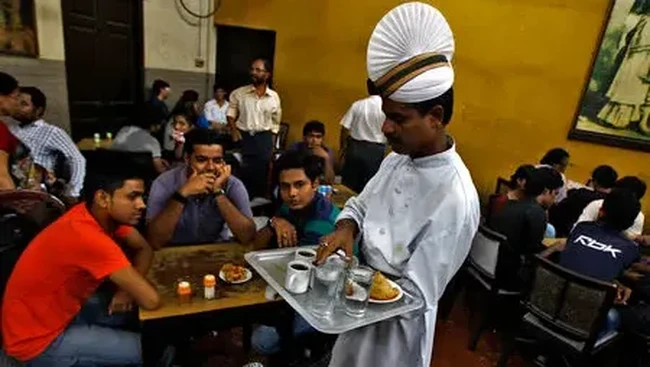
The war has caused disruption to the global liquefied petroleum gas (LPG) supply chain. Millions of restaurants across India now face the prospect of mass closures.
The majority of India’s LPG supplies are met through imports. Disruption to distribution routes through the Strait of Hormuz has rendered the nation’s energy supplies critical, given that the majority of shipments must transit through this vital global trade chokepoint.
Furthermore, India’s Ministry of Petroleum and Natural Gas formally instructed oil refineries to prioritise LPG supplies for 330 million households as the primary cooking fuel source on Tuesday. This policy sacrifices more than 3 million business operators who have so far depended on commercial LPG cylinders.
The Indian government, via a social media post on X, stated that in addition to prioritising households, it would redirect imported liquefied natural gas for essential commercial sectors. Public facilities such as hospitals and educational institutions will receive access before entertainment and food industries.
According to CNBC International on Wednesday (11 March 2026), Sagar Daryani, President of the National Restaurant Association of India (NRAI), stated that the prioritisation policy has created an extremely worrying crisis situation. He warned that the measure would force many restaurants to cease operations within the coming days.
“Approximately 90 per cent of restaurants in India are heavily dependent on LPG cylinders to operate their kitchens. The industry has already faced weak demand and high costs; if the LPG supply problem continues, it will cause business closures and job losses,” said Sagar Daryani.
The NRAI itself represents more than 500,000 restaurants across India. This industry is an important economic pillar with annual turnover exceeding 5.7 trillion rupees (IDR1.077 trillion) and employing over 8 million people.
Sagar Daryani added that the organisation is currently pressuring the government to implement protective measures for the culinary sector. The NRAI is calling on the government to immediately classify the restaurant industry as an essential service to ensure energy supply certainty.
India currently holds the status of the world’s second-largest LPG importer, with consumption rates reaching 31.3 million metric tonnes in fiscal year 2025. A report from S&P Global indicates that India’s domestic production capacity can only meet approximately 41 per cent of total demand.
Manish Sejwal, Senior Vice President of the commodities market at Rystad Energy, explained how vulnerable India’s position is in this conflict. Dependence on currently turbulent sea routes represents a major weakness in the nation’s energy resilience.
“India imports approximately 67 per cent of its LPG requirements, with approximately 90 per cent of these imports transiting through the Strait of Hormuz,” said Manish Sejwal.
On the Brink of Bankruptcy
Conditions on the ground are deteriorating further for small business operators. A hotel and restaurant advocacy group based in Mumbai, AHAR, has reported this shortage issue to local authorities and issued a stern warning that many of its members are already on the brink of bankruptcy.
In the southern region, the situation is even more dire for hotel entrepreneurs. M. Ravi, President of the Chennai Hotels Association, revealed that massive operational shutdowns will be unavoidable in the near term due to fuel shortages.
“Nearly 10,000 businesses will close on Wednesday across Tamil Nadu state. This will encompass the majority of small and medium-sized restaurants there,” said M. Ravi.
Although the government did not initially explicitly halt supplies to hotels and restaurants, the latest instructions to domestic oil marketing companies have tightened gas flow. Distributors are now prohibited from supplying remaining stocks to the commercial sector.
Chandra Prakash, President of the All-India LPG Distributors Federation, confirmed that the directive from the centre is very clear. Distributors are being asked to cut supplies to the commercial sector to preserve stock reserves for the general public.
“Restaurants must seek alternative fuel sources such as firewood or kerosene or switch to electric cookers,” concluded Chandra Prakash, whose organisation represents nearly 25,000 LPG distributors across India.
A Sensitive Issue
The LPG issue is an extremely sensitive political matter in India, particularly because it concerns Prime Minister Narendra Modi’s social welfare scheme that subsidises LPG for poor households. As of November, the government had provided 103 million subsidised gas connections, and gas prices are predicted to become a contentious issue in elections across five Indian states during the first half of 2026.