
Iran War; Agriculture Minister Amran Ensures Indonesia's Food Reserves Safe for 324 Days
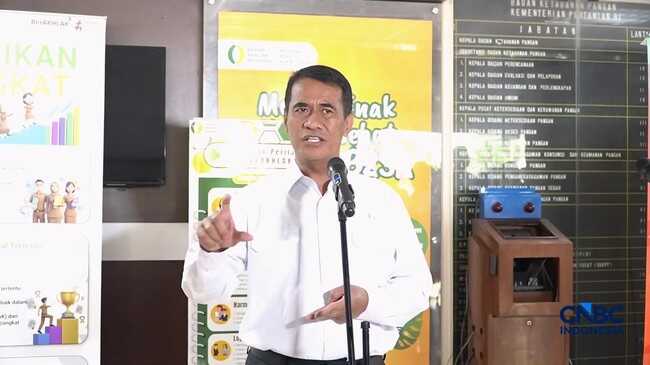
Jakarta — Agriculture Minister Amran Sulaiman has assured that Indonesia’s national food stock remains safe even as global geopolitics tense due to the United States and Israel’s confrontation with Iran.
Amran said the government has calculated the strength of the national food stockpile and the results show inventories are sufficient for long-term needs. He noted that the food security figure of 324 days is the stock currently available, while national food production continues and harvests occur each month.
‘We know that there is a war between Iran and Israel. We are announcing the current food condition. Alhamdulillah after we calculated, our food strength under the geopolitics heating up, our stock is available up to 324 days today,’ Amran said at a press conference at the Ministry of Agriculture in Jakarta on Friday (6 March 2026).
‘Be careful, do not misinterpret. It does not mean 324 days are finished. Today we are prepared for 324 days. But also monthly production is 2.6 million tonnes minimum, could reach 5.7 million tonnes,’ he added.
He said the stock comes from various sources, from government reserves to stocks in hotels, restaurants, and catering (HOREKA).
‘From Bulog reserves, that is 3.7 million tonnes, then Horeka 12 million tonnes plus. Standing crop (still in the process of being planted) also 10-11 million tonnes,’ he said.
National food needs are about 2.5 million tonnes per month, so production continues to keep supply safe.
‘Each month we produce 2.6 million tonnes up to 5.7 million tonnes. That’s the range. Meanwhile our needs are 2.5 million tonnes per month. So, food is safe. No need to worry,’ Amran said.
As for the most crucial commodity, and assured to be safe in national food security going forward, rice, because it is the staple food for the majority of Indonesians.
‘The most vital is rice. Because if there is no rice, the Republic is in trouble. That’s why we call it food, because rice makes up the highest share of daily consumption—around 65-70% (rice), without vegetables, eggs, or other dishes,’ he explained.
He explained that other commodities can substitute, but not with rice. ‘If there is no meat, you can substitute with eggs. If there are no eggs, you can substitute with fish. But if there is no rice. Cassava can replace it, but that is not its taste; generally Indonesians eat rice,’ he added.
Beyond geopolitical tensions, the government is also preparing for possible drought due to the El Niño phenomenon. Amran assessed that Indonesia has experience facing a similar condition in 2023.
‘This will be El Niño according to BMKG; the announcement will come in April. We faced the worst El Niño in 2023, and, alhamdulillah, we managed. At that time the plan was to import 10 million tonnes. We sat down, and, alhamdulillah, we could reduce to just over 3 million tonnes,’ he said.
Amran noted that the El Niño of 2023 was more severe than the forecast for this year. Therefore, he asked the public not to worry about the national food security situation. ‘El Niño in 2023 was far more severe than what we predict now. So there is no need to worry. We have prepared everything,’ he said.