
Iran versus USA-Israel War: Who Will Win?
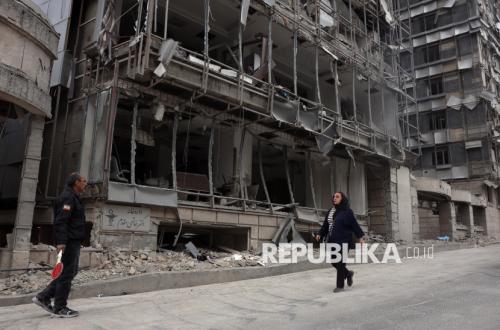
JAKARTA — The conflict between the United States and Israel against Iran has entered its third week with both sides maintaining maximalist positions. The escalation began on 28 February when the US and Israel launched a combined assault on Iran, killing Tehran’s Supreme Leader Ali Khamenei and more than 1,300 military personnel and civilians.
Iran responded by bombarding Israel, US military bases, and American allies in the Persian Gulf, including civilian infrastructure, using missiles and unmanned aircraft. Consequently, energy traffic through the Strait of Hormuz has been disrupted, triggering instability in global energy markets.
President Donald Trump has rejected immediate ceasefire negotiations. He claims that Iran wants a ceasefire, but the US is not prepared to agree because the terms are inadequate.
For its part, Iran denies seeking a ceasefire. Iranian Foreign Minister Abbas Araghchi described claims that Tehran is pursuing a settlement through negotiation as “fantasy”.
In a social media post, he stated, “Our Mighty Armed Forces will continue shooting until the US President realises that the illegal war he has imposed on the American and Iranian peoples is wrong and must never be repeated.”
International Crisis Group Analysis
According to Ali Vaez, Director of the Iran Project at the International Crisis Group (ICG), the conflict is increasingly becoming a war that cannot be absolutely won by anyone, but has the potential to harm all parties.
In a statement to TRT World, Vaez emphasised, “An immediate ceasefire will be fragile, incomplete, and politically unsatisfying, particularly because it will leave the hardest questions unanswered, ranging from Iran’s nuclear future to regional security architecture. But it remains a wiser course of action.”
The latest ICG report revealed several key points:
The Washington narrative (and Israel’s) will focus on damage inflicted on Iran’s nuclear, missile, and drone capabilities.
Iran can construct a narrative of victory by demonstrating their resilience and destabilising the global economy, conveying the message that suffering will expand if war resumes.
Vaez argues that continuing the war for cleaner outcomes is entirely pointless.