
Iran versus United States: 70 Years of Vendetta, Betrayal, and Shadow War
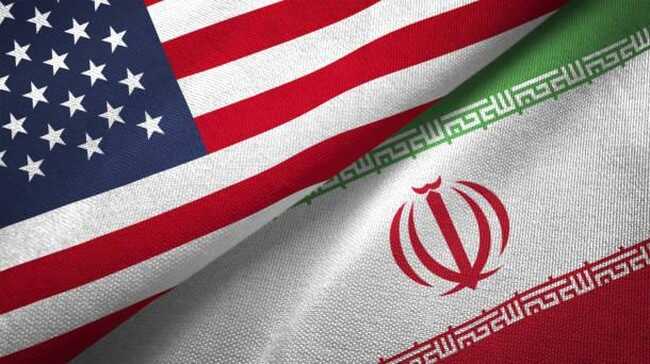
The United States officially launched military strikes against Iran on Saturday, 28 February 2026. This occurred following weeks of escalating tensions between the two nations.
The United States President has continued to threaten Iran regarding its nuclear development programme, despite Tehran’s denial that the programme is intended for nuclear weapons. Trump stated that if Iran does not agree to an agreement, the United States will launch strikes.
Although final negotiations took place on Thursday, no agreement was reached. On Saturday, Israel launched a surprise attack, followed by the United States striking Iran.
These strikes further extend the conflict between Iran, the United States, and Israel. The conflict has already lasted decades. The following is a chronology of Iranian-American relations from friendship to open conflict:
THE 1953 COUP AND 1979 REVOLUTION
Hostility began in 1953, when the United States intelligence agency, the CIA, helped overthrow Iran’s Prime Minister, Mohammad Mossadeq, who had nationalised the oil industry.
The coup restored Shah Mohammad Reza Pahlavi to power, a pro-Western figure who was, however, deeply unpopular domestically. American support for the Shah became the primary catalyst for the Iranian Revolution of 1979, which made Iran an Islamic republic under Ayatollah Khomeini and openly opposed American dominance in the Middle East.
The peak of early tension occurred during the hostage crisis at the United States embassy in Tehran (1979-1981), which led to the severance of diplomatic relations and the imposition of economic sanctions.
The Iran-Iraq War became one of the bloodiest conflicts in the Middle East during the twentieth century. Iran faced invasion from Iraq under the leadership of Saddam Hussein, who feared that Iran’s Islamic revolution would spread within his own country.
Although the United States was not directly involved in combat, Washington provided intelligence, weapons, and logistical support to Iraq as part of its effort to contain Iran’s revolutionary influence in the region.
The war lasted eight years without clear victory for either side, but it resulted in enormous loss of life and severe economic damage.
Iran leveraged this conflict to build a narrative of resistance against foreign powers and to reinforce its revolutionary ideology. For the United States, support for Iraq at that time reflected realpolitik strategy to maintain regional power balance and protect oil interests in the Gulf.
OPERATION PRAYING MANTIS (1988)
After a United States frigate struck an Iranian mine, the United States Navy launched a major assault against Iranian warships and oil platforms. This was the only direct military confrontation between the two nations.
The strikes destroyed several Iranian vessels and damaged its oil infrastructure, simultaneously sending a clear signal that the United States would not hesitate to use military force to protect its interests in the Middle East. This operation also became a crucial point leading to the end of the Iraq-Iran War.
THE 1979 HOSTAGE CRISIS AND SANCTIONS RETALIATION
The seizure of the United States embassy in Tehran and the hostage-taking of 52 diplomats for 444 days triggered the severance of diplomatic relations. Since then, United States-Iran relations shifted to an arena of indirect confrontation: economic sanctions, pressure diplomacy, and covert operations.
In response to this incident, the United States began imposing a series of increasingly stringent economic sanctions, targeting critical sectors such as oil, banking, and Iran’s military industry.
PROXY WARS: IRAN VERSUS THE UNITED STATES THROUGH THIRD PARTIES
In Lebanon, Iran supports Hezbollah, which frequently launches attacks against Israel and Western forces. In Iraq, Tehran strengthened Shiite militias that for years were enemies of United States forces following the 2003 invasion. Meanwhile, in Syria, Iran stands with supporters of the Bashar al-Assad regime, which opposes pro-Western opposition groups.
In Yemen, Iran provides support to the Houthi movement, which is engaged in conflict with a coalition led by Saudi Arabia—the United States’ principal ally in the region.
Iran’s pattern of support for these groups reflects Tehran’s geopolitical strategy to counter the influence of the United States and its allies indirectly, whilst expanding its influence in the region through ideological and military alliances.
THE ASSASSINATION OF QASSEM SOLEIMANI (2020)
Qassem Soleimani, Iran’s most influential general, was killed by the United States in Baghdad. Iran retaliated with missile strikes against a United States military base in Iraq. This tension nearly triggered an open war.
The incident triggered a wave of anti-American protests in Iran and deepened nationalist sentiment domestically.
The international community highlighted the potential for escalation into open warfare between these two major powers. Although full-scale conflict was avoided, Soleimani’s assassination strengthened Iran’s commitment to continue resisting American influence through military and diplomatic channels in the region.
FROM AMERICAN-IRANIAN FRIENDSHIP TO SWORN ENMITY
Iran and the United States were once close friends for more than two decades before 1979. In the 1950s, seventy years ago, they were very close allies. However, that friendship transformed completely into prolonged hostility that continues today.
During the era from the 1950s to 1979, the era of Shah Iran, Iran was an American ally. Following the 1953 coup supported by the CIA and Britain, Shah Mohammad Reza Pahlavi returned to power. The United States became the Shah’s primary supporter, providing massive military, economic, and intelligence assistance.
Iran during the Shah era was known as a principal American ally in the Middle East, particularly to contain Soviet influence.
America helped Iran build a modern economy, a strong military, and even Iran’s first civilian nuclear programme (through the Atoms for Peace programme).
Their rupture was compounded by Iran becoming a crucial oil supplier for the United States and Western allies. Many American companies invested heavily in Iran (oil, infrastructure, defence).
The Iranian military was equipped with the most advanced American equipment (F-14 Tomcats, radar systems, weapons).